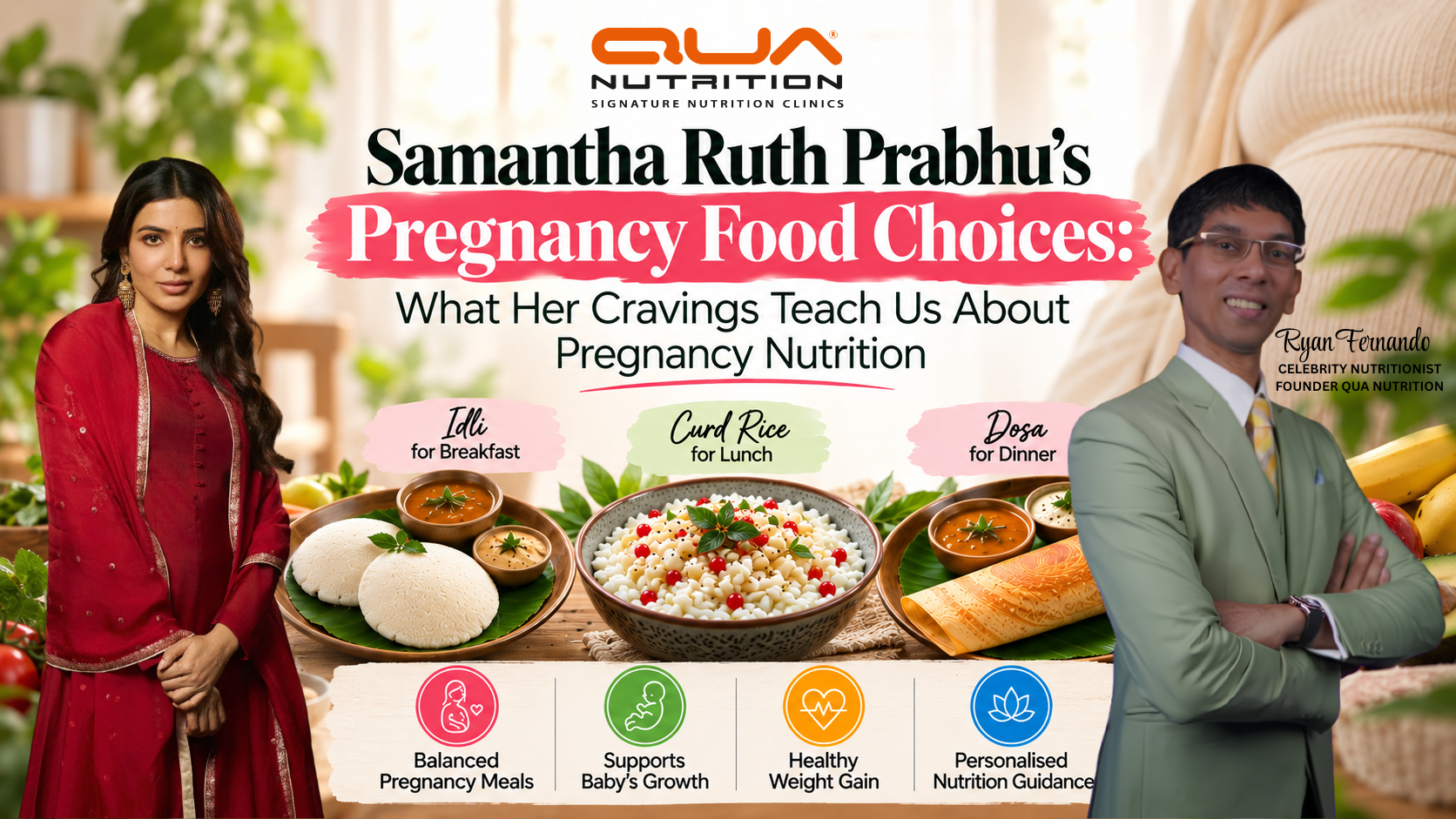
Pregnancy can change the way food tastes, smells, and feels can change; things that had previously seemed ordinary may suddenly seem reassuring, while favourite foods can become easier to tolerate. Recently, Samantha Ruth Prabhu talked about the food cravings she has been experiencing during her pregnancy, saying that she had idli for breakfast, curd rice for lunch, and dosa for dinner. She also admitted that her choice of food could be due to her present pregnancy cravings and might vary over time.
It is because the foods that she has chosen are ones that are very familiar to many Indian homes that they have attracted attention. However, there is a more general lesson concerning nutrition. The question of what to eat during pregnancy is not one of copying a celebrity’s diet; it is about learning how to combine familiar foods so as to obtain the adequate amount of energy, protein, vitamins, minerals and other nutrients needed in pregnancy.
We at Qua Nutrition hold the belief that pregnancy nutrition should be practical, culturally suitable, and tailored to the individual. A diet during pregnancy need not give up traditional Indian foods; rather, it should aim at creating balanced meals based on them.
What exactly did Samantha Ruth Prabhu say regarding her choices of food during her pregnancy?
On being asked what foods she would select for her meals, Samantha said that she would have idli for breakfast, curd rice for lunch, and dosa for dinner. She also stated that her preference might just be due to the cravings she currently has for eating certain foods and that it could change afterwards.
That distinction matters. The fact that a person has a food craving does not mean that their body is lacking in a specific nutrient; during pregnancy, cravings may be affected by changes in appetite, taste, smell, food preferences, and individual experiences.
From a nutritional point of view, however, each of these foods can be included in a well-balanced diet for pregnancy.
Idli is made with a batter consisting of fermented rice and pulses and mainly supplies carbohydrates, together with some protein from the pulses. When sambar is added, pulses and vegetables are included, which makes the meal more varied and nutritious.
Curd rice offers carbohydrates from the rice as well as protein and calcium from the curd. It may be especially comforting in cases where the appetite is diminished. Yet curd rice on its own might not include all the nutrients needed during pregnancy, so it is advisable to add vegetables, pulses, nuts, seeds or another suitable protein source in order to make the meal more balanced.
Dosa, especially that made from a batter consisting of rice and pulses, not only gives energy but also contains a certain amount of protein; the nutritional variety of the meal can be increased by serving it with sambar, vegetables, chutney or curd.
This shows a basic principle that we adhere to at Qua Nutrition, namely that the nutritional value of a meal depends not just on the primary food but also on the other foods that go with it.
A meal consisting of dosa and chutney and another meal which consists of dosa together with sambar, vegetables, and an appropriate protein source are different in terms of nutrition.
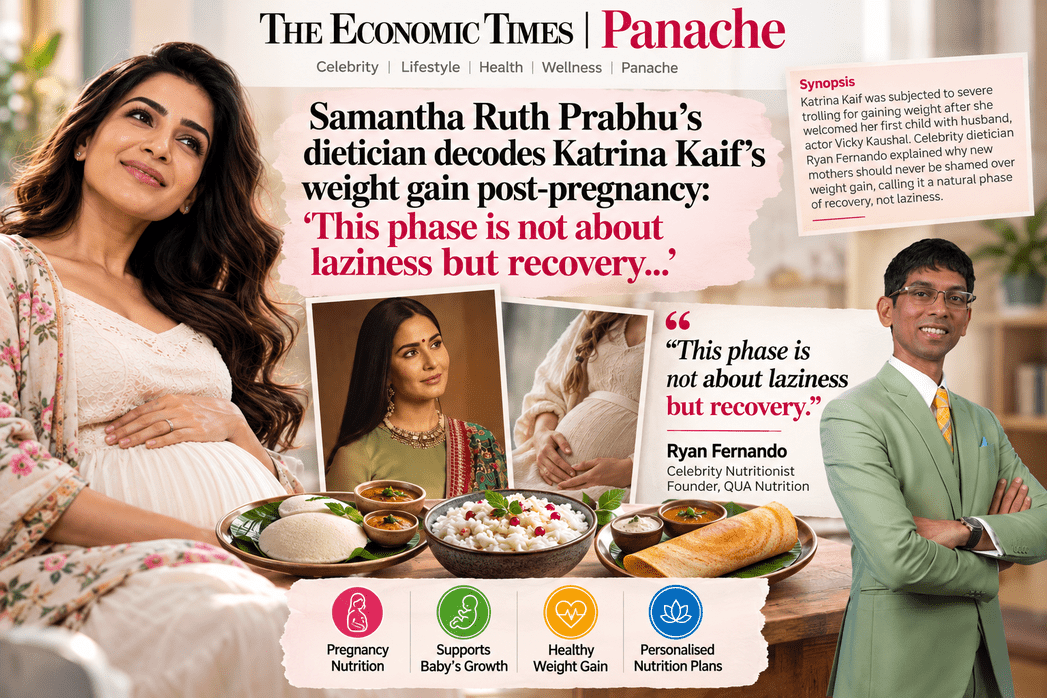
Ryan Fernando’s Perspective on Pregnancy & Postpartum Nutrition
Ryan Fernando, celebrity nutritionist and founder of Qua Nutrition, has worked with Virat Kohli on personalised nutrition and has also been associated with Samantha Ruth Prabhu’s nutrition support. His recent comments on postpartum weight gain provide an important perspective for understanding pregnancy and recovery: after childbirth, a woman’s body goes through significant physiological changes, and the postpartum period should be viewed as a phase of recovery rather than a race to return to a pre-pregnancy body. Fernando has specifically spoken out against judging new mothers by their weight and highlighted the importance of adequate nutrition, recovery, and support during this period. Economic Times of India: This same principle applies to pregnancy nutrition: rather than copying a celebrity’s food choices or focusing on a particular number on the weighing scale, women should receive personalised nutrition guidance based on their trimester, nutritional status, dietary preferences, medical requirements, and individual pregnancy journey.
Can idli, dosa and curd rice form part of a healthy diet during pregnancy?
Yes, it is absolutely possible to include traditional Indian foods in your diet during pregnancy.
Because a woman is pregnant, the need for a well-balanced diet becomes more important. The diet should contain a variety of food groups, including cereals and millets, pulses and legumes, vegetables, green leafy vegetables, fruits, nuts and seeds, milk and milk products, and appropriate protein sources.
For example, a balanced South Indian breakfast could include:
Idli + sambar + vegetable preparation + fruit
Alternatively:
Dosa + sambar + vegetable side dish + curd
What we are aiming for is not that each meal should be perfect; rather, nutritional variety should be spread out throughout the day.
Lunch might consist of rice or roti together with dal, vegetables, leafy greens, curd and an appropriate protein such as egg, fish or chicken for women who eat animal foods.
A meal that is vegetarian can get its protein by combining pulses, legumes, dairy, nuts and seeds.
Snacks can include seasonal fruits, nuts, roasted legumes, sprouts or other traditional nutrient-dense foods depending on individual tolerance and requirements.
At Qua Nutrition, we also take into account the fact that pregnancy is different for each woman; dietary needs vary according to a woman’s nutritional status before pregnancy, the stage of her pregnancy, her appetite, her level of activity and any medical considerations.
Women who are suffering from nausea or vomiting will generally find it easier to eat smaller meals more frequently than three large ones. A woman with gestational diabetes might need a different arrangement and combination of carbohydrates. One who has anaemia should receive special attention to foods high in iron together with any prescribed medical supplements.
Hence, no one celebrity pregnancy diet can be universally recommended.
Which nutrients are most important during pregnancy?
It’s much more than a matter of calories that concerns pregnancy nutrition, since both the developing baby and the mother’s changing body need sufficient amounts of various nutrients.
Protein: Protein is important for the development of the mother’s tissues and for the growth of the fetus. Foods such as pulses, legumes, dairy products, eggs, fish, chicken, nuts and seeds can all be included in one’s daily protein intake.
Iron : Iron is so important because the volume of the mother’s blood increases during pregnancy. Foods high in iron are legumes, green leafy vegetables, meat and other appropriate foods. Foods containing vitamin C can also be used to enhance the iron obtained from plant sources.
Folate : Folate is important for the early development of the fetus; it is possible to obtain it through the consumption of green leafy vegetables, legumes and other foods which contain folate, and supplementation should nevertheless be carried out on the basis of medical advice.
Calcium and vitamin D : It is important to take account of calcium and vitamin D when considering the bone health of both the mother and the fetus. Calcium intake can be obtained from dairy products, appropriately fortified foods and other foods that can be eaten.
Vitamin B12 : Vitamin B12 should be given special consideration in the case of vegetarian and vegan diets since natural B12 is mainly present in foods of animal origin. Whether or not supplementation is needed will depend on each individual’s diet and on a clinical evaluation.
Iodine and omega-3 fatty acids : Iodine and omega-3 fatty acids are also important during pregnancy, mainly since they play a role in thyroid function and in fetal development.
Hydration should by no means be ignored either. Drinks such as water, milk, soups and other appropriate fluids can all help to meet the daily fluid requirement, especially when it is hot or when physical activity rises.
Food safety is just as important; pregnant women should take care when eating uncooked meat and eggs, unpasteurised products, food that has been poorly handled, and other foods which may raise the risk of foodborne infection.
Caffeine was also mentioned by her. It is generally recommended nowadays to limit caffeine consumption to 200 mg or less each day when pregnant, even though the amount of caffeine differs among drinks.
The full view is straightforward in that pregnancy nutrition is concerned with nutrient density, variety, and adequacy not with removing familiar foods.
Samantha Ruth Prabhu’s 11 kg Pregnancy Weight Gain: How to Maintain a Healthy Weight
Samantha Ruth Prabhu is said to have put on about 11 kg during her pregnancy, a fact which has also come under attention in light of her most recent remarks regarding pregnancy food cravings. Yet, any consideration of weight gain during pregnancy must always take into account the individual woman’s pre-pregnancy weight, height, BMI, stage of pregnancy and general health.
An eleven kilogram weight gain should not be set as a target for all pregnant women. The amount of weight that is considered healthy during pregnancy differs from person to person, and the correct range is usually decided according to the woman’s pre-pregnancy BMI and her particular pregnancy situation.
The key point is that staying at a healthy weight during pregnancy has nothing to do with cutting down on food or aiming to stay at a specific body weight; it is instead a matter of supplying adequate energy and nutrients to meet the needs of both the mother and the developing baby while at the same time avoiding unnecessary overconsumption.
A balanced approach can include:
- Include protein at every major meal: foods such as pulses, dal, legumes, curd, milk, eggs, fish, chicken, nuts and seeds can be used to meet your higher protein needs.
- Include traditional foods on the plate: Traditional foods such as idli, dosa, and rice can form part of a diet during pregnancy as long as they are combined with protein, vegetables, and other foods that are rich in nutrients.
- Choose snacks rich in nutrients: Fruits, nuts, roasted legumes, sprouts, curd, and other good options can give you nutrients between meals.
- Include vegetables and fruits daily: Make it your habit to include vegetables and fruits every day since a wide range of vegetables, leafy greens and seasonal fruits can provide vitamins, minerals and fibre.
- Don’t overeat: although pregnancy does increase your nutritional needs, this doesn’t mean that your food intake should be doubled. Instead, attention should be paid to the quality of the nutrition and to serving sizes.
- It is advisable to stay physically active when it is appropriate to do so: for women who have no medical limitations, appropriate physical activity can contribute to their general health during pregnancy. The kind and how intense the activity should be discussed with the healthcare team.
- Keep an eye on your weight as part of your antenatal care: Frequently monitoring your weight can help determine if the weight gain is progressing appropriately for that particular pregnancy.
Above all, Samantha’s reported weight gain of 11 kg should not be used as a standard by other pregnant women to measure their own weight gain. Two women may have different amounts of healthy weight gain and still have well-nourished pregnancies.
Pregnancy nutrition is not concerned with aiming for a certain figure on the weighing scale; it is instead about establishing an eating pattern which is sustainable and promotes maternal wellbeing, fetal growth and healthy pregnancy outcomes.
At Qua Nutrition, when providing personalized pregnancy nutrition it is possible to consider a woman’s pre-pregnancy BMI, the trimester she is in, her dietary preferences, her appetite, her nutritional requirements and her medical considerations. As a result, common foods such as idli, dosa and curd rice can stay part of a balanced diet while at the same time helping to ensure appropriate pregnancy weight gain.
How Qua Nutrition Can Help With Pregnancy Nutrition
At Qua Nutrition we see pregnancy nutrition as a personal matter rather than as a general diet plan.
A pregnancy diet plan should take into account the woman’s food preferences, her cultural eating habits, her appetite, the trimester she is in, her nutritional status and any medical requirements; a South Indian woman who likes rice, idli, dosa and curd rice need not give up these foods merely because she is pregnant.
They can instead be arranged into meals that are balanced.
For instance, idli can be served with sambar and vegetables, dosa can be accompanied by a protein-rich side dish and vegetables, and curd rice can be included as part of a balanced lunch rather than being the whole meal.
The principle is just as applicable to snacks: it is possible to include fruits, nuts, legumes, sprouts and dairy products depending on individual requirements and tolerance.
Nutrition planning can be especially useful in cases where pregnancy is associated with problems such as anemia, gestational diabetes, severe nausea, a poor appetite, insufficient weight gain, too much weight gain or dietary restrictions.
You shouldn’t compare the weight gain during pregnancy with that of a celebrity or with that of another pregnant woman since the appropriate amount of weight gain will depend on factors such as the woman’s nutritional status before pregnancy and on the individual circumstances of the pregnancy. Monitoring should therefore be carried out in conjunction with the woman’s healthcare team rather than by means of comparisons on social media.
One should not conclude from Samantha’s recent food choices that every pregnant woman ought to have idli for breakfast, curd rice for lunch and dosa for dinner. It is possible for comfort foods and pregnancy nutrition to exist together. By making careful choices regarding the combinations of foods, the quantities consumed and the variety of the diet, a meal which is already familiar can be made more nutritious.
At Qua Nutrition, we aim to assist women in dealing with pregnancy by using food that is familiar, nutritious, practical and tailored to individual needs.
It has nothing to do with eating like a celebrity to maintain good pregnancy nutrition. It involves caring for two people, one meal at a time.