
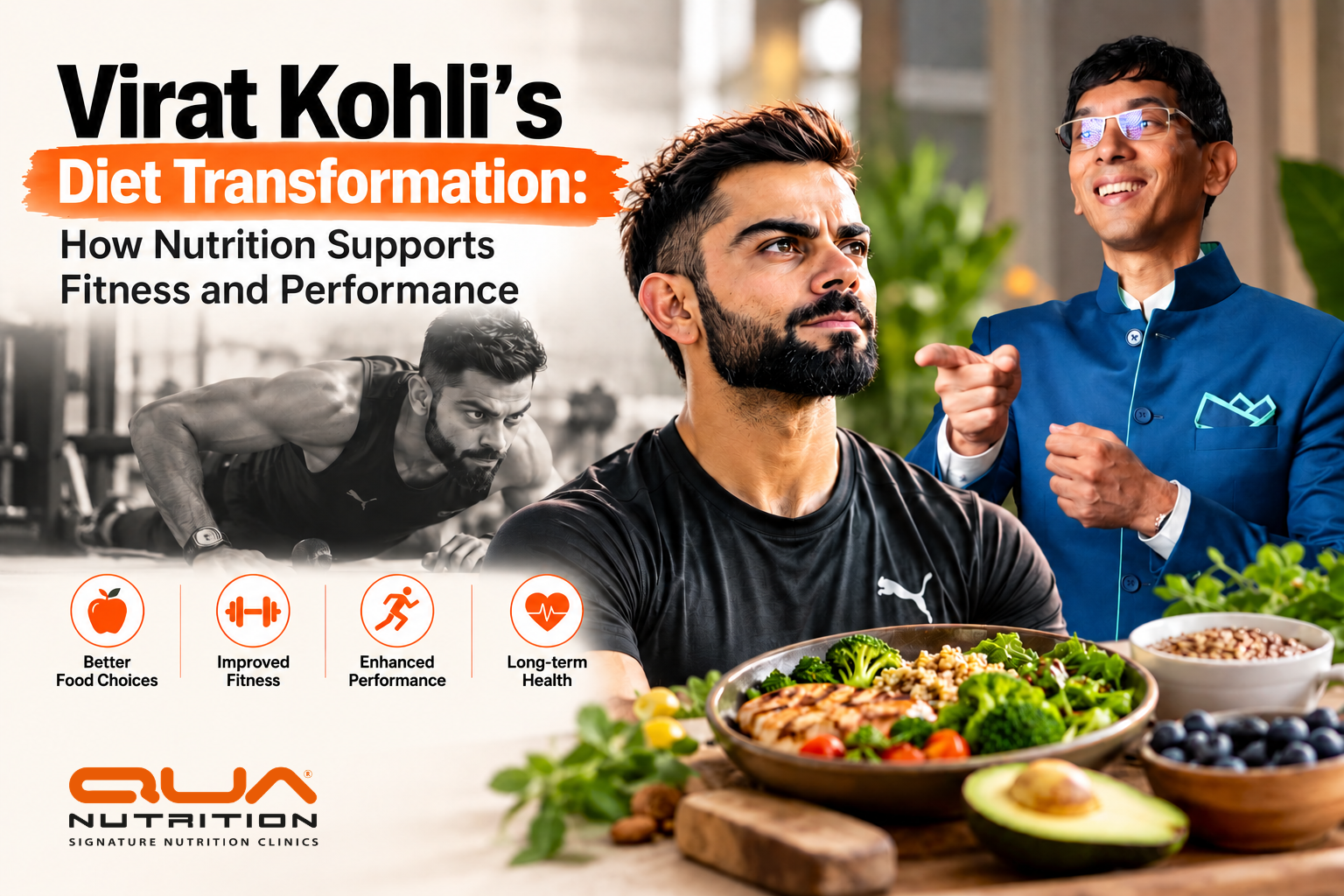
Virat Kohli’s journey towards better fitness is perhaps the most well-known in the history of Indian cricket; however, lying behind the obvious changes was a more basic alteration in the way he dealt with food, training, and recovery.
Following the 2012 IPL season, Kohli mentioned having an instance when he looked in the mirror and realised that his way of life was not in line with the standards he wished to attain as a professional cricketer and therefore made major changes to his fitness, training, and eating habits.
From a nutritional point of view, this situation provides a valuable lesson: athletic transformation is seldom down to one “ideal” food and instead results from developing an eating pattern that continually supports training, recovery and performance.
The Mirror Moment That Changed His Approach to Fitness
Kohli has in the past talked about the way he lived when he was younger, mentioning that his eating habits were rather unstructured and that he ate things like sweets and butter chicken as well as alcohol. After the 2012 IPL season, he started to take his physical preparation and nutrition much more seriously.
The key point regarding nutrition is not that these foods by themselves caused his poor performance or that getting rid of them caused his improvement. The real change was in his intentionality.
For a professional cricketer, nutrition must support repeated high-intensity activity, strength, endurance, concentration and recovery; carbohydrates provide an important source of fuel for intense exercise and help to replenish glycogen; protein aids muscle repair and adaptation, while fats provide energy and assist in normal physiological functions; vitamins, minerals, fibre and fluids all contribute to general health and recovery.
What distinguishes sports nutrition from merely attempting to “eat healthy” is this.
The question, then, is whether the entire diet supports the kind of activity the athlete asks their body to carry out.
Ryan Fernando: The Nutritionist Behind Virat Kohli’s Performance Nutrition
Celebrity nutritionist Ryan Fernando has worked with Virat Kohli, helping him approach nutrition with greater structure and a focus on fitness, recovery, and performance. Fernando has discussed Kohli’s nutrition journey publicly, including the importance of personalized nutrition, meal timing, protein intake, hydration, and consistency rather than simply following popular diet trends. Kohli’s experience highlights an important sports-nutrition principle: there is no single “superfood” or celebrity diet that guarantees performance. Instead, an athlete’s nutrition strategy should be tailored to their training demands, body composition goals, recovery needs, lifestyle, and individual response to food.
Why a Superfood Salad Can Fit Into an Athlete’s Diet
It is known that Kohli has a preference for a nutrient-dense superfood salad, but from the point of view of sports nutrition, the interesting aspect is not the term “superfood” itself but rather the way in which the meal is put together.
A large salad can include a number of valuable ingredients. Vegetables and leafy greens provide fibre, vitamins, minerals and a wide range of plant compounds. Protein sources such as legumes, beans, tofu, paneer, eggs, chicken or fish can make the meal more satisfying and help to meet the body’s daily protein needs. Nuts and seeds can add healthy fats and other nutrients.
Carbohydrates may also be incorporated if needed. Potatoes, corn, quinoa, whole grains, or legumes can offer extra carbohydrates for athletes who have high training demands.
It is important because a salad that is friendly to sports need not be a bowl of lettuce.
For an athlete to eliminate carbohydrates just because they are regarded as “fattening” or “unhealthy” might be to their disadvantage. The correct amount will vary according to the sport, the intensity and duration of the training and the individual’s goals.
An athlete can therefore have the salad adapted rather than the salad being treated as a fixed recipe.
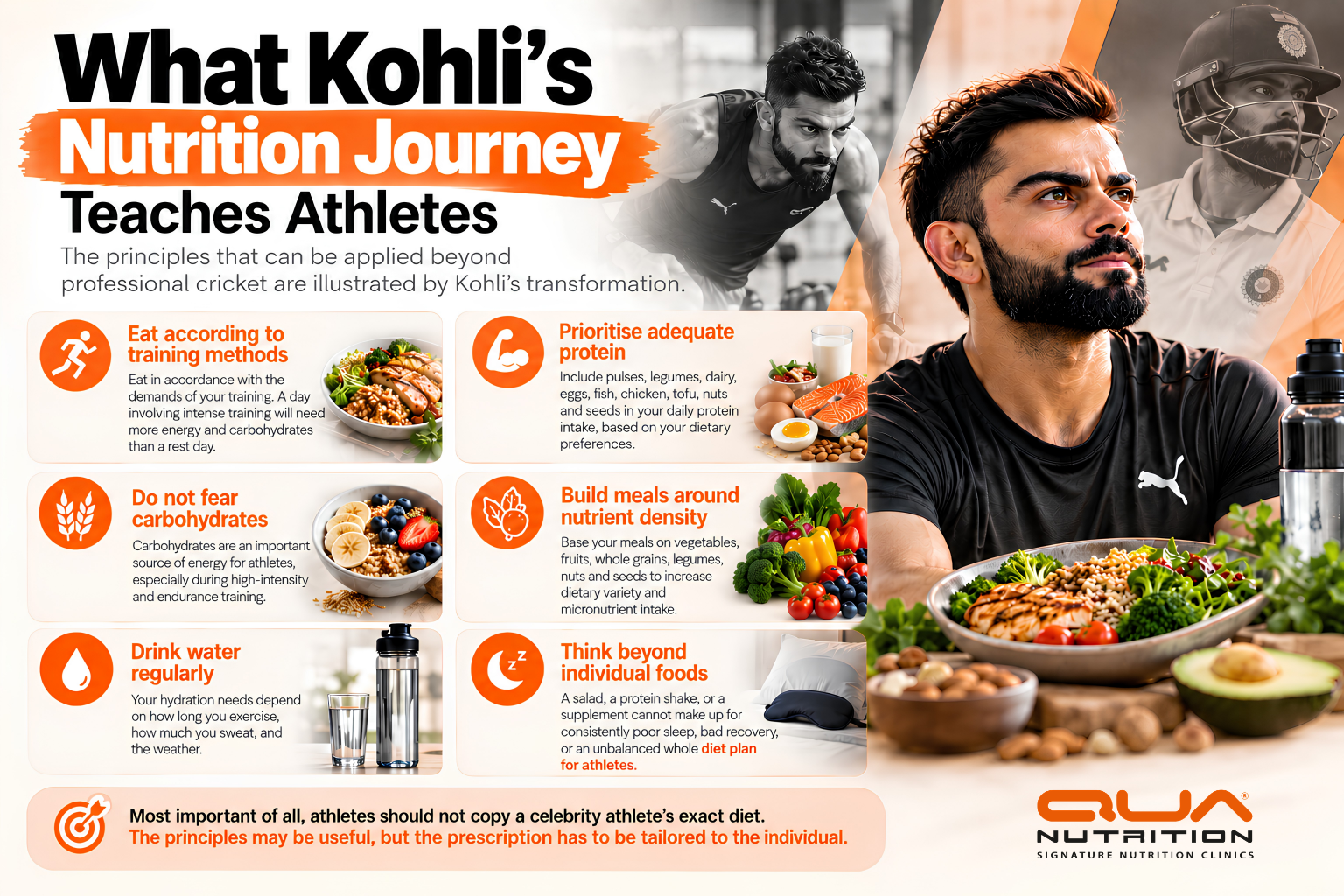
What Virat Kohli’s Nutrition Journey Teaches Athletes
The principles that can be applied beyond professional cricket are illustrated by Kohli’s transformation.
Eat according to training methods: You should eat in accordance with the demands of your training; a day involving intense training will need more energy and carbohydrates than one on which you are resting.
Prioritise adequate protein: It is important to ensure that adequate protein is consumed. Foods such as pulses, legumes, dairy, eggs, fish, chicken, tofu, nuts and seeds can all be included in one’s daily protein intake according to their dietary preferences.
Do not fear carbohydrates: There is no need to fear carbohydrates since they can serve as an important source of energy for athletes, especially when undergoing high-intensity and endurance training.
Build meals around nutrient density: Base your meals on nutrient density since vegetables, fruits, whole grains, legumes, nuts, and seeds can increase dietary variety and micronutrient intake.
Drink water regularly: How much you need depends on how long you exercise, how much you sweat, and the weather.
Think beyond individual foods: One should not focus merely on individual foods since a salad, a protein shake, or a supplement cannot make up for consistently poor sleep, bad recovery, or an unbalanced whole diet plan for athletes.
Most important of all, athletes should not try to copy a celebrity athlete’s exact diet since the nutritional needs of a professional cricketer are quite different from those of a recreational runner or a person who trains at the gym three times a week.
The principles may be of some use, but the prescription has to be tailored to the individual.
From the Mirror to the Meal: The Bigger Nutrition Lesson
People usually remember Kohli’s transformation after 2012 in terms of his appearance, but the more important lesson is the change in his behaviour.
Preparation included food. Training became more structured. Recovery was incorporated into performance. Consistency was considered more important than short-term changes.
The fact that he is said to favour nutrient-rich meals like a superfood salad shows once again that the idea of performance nutrition doesn’t have to rely on complicated recipes or unusual ingredients.
A meal that is well put together and includes vegetables, sufficient protein, the right amount of carbohydrates, and some healthy fats can be not only practical but also nutritious.
At Qua Nutrition, we go even further in applying this principle by designing nutrition strategies specifically for the individual rather than basing them on a celebrity diet or a one-size-fits-all meal plan. If your aim is to improve your athletic performance, to build strength, to change your body composition or simply to eat better in relation to your training, your nutrition must take into account your sport, your training load, your lifestyle, your preferences and your goals.
You don’t have to follow Virat Kohli’s diet if you really want to train seriously; what you need is a nutrition plan tailored to yourself.
If you want to make your personal fitness transformation more structured, get in touch with Qua Nutrition to obtain tailored sports nutrition advice. Our nutrition specialists will be able to help you put together a realistic plan that supports your training, recovery, performance, and long-term objectives.
You might begin by making a decision, and Qua Nutrition can assist you in turning that decision into a sustainable nutrition strategy.
Frequently Asked Questions
1. What changed in Virat Kohli's approach to nutrition after 2012?
Kohli has said that after the 2012 IPL season, he took his fitness, training, and eating habits far more seriously. The key shift was intentionality: food became part of his preparation rather than something left to chance, and consistency began to matter more than short-term fixes.
2. Is there a "Virat Kohli diet" that anyone can follow?
There is no single diet that guarantees results. A professional cricketer’s energy, protein, and recovery needs are very different from those of a recreational runner or someone who trains at the gym three times a week. The principles behind his approach are useful, but the actual plan should be tailored to the individual.
3. Is a superfood salad enough for an athlete's meal?
A salad can be an excellent base, but it works best when built properly. Along with vegetables and leafy greens, include a protein source (legumes, tofu, paneer, eggs, chicken, or fish), healthy fats from nuts and seeds, and carbohydrates such as potatoes, corn, quinoa, or whole grains when training demands are high. A sports-friendly salad should be a complete meal, not just a bowl of lettuce.
4. Should athletes avoid carbohydrates to stay lean?
Not necessarily. Carbohydrates are a key fuel for high-intensity and endurance training and help replenish glycogen after exercise. Cutting them out simply because they are seen as “fattening” can hurt training quality and recovery. The right amount depends on your sport, training intensity, duration, and goals.
5. How much protein does an athlete need?
Protein supports muscle repair and adaptation, so it should be included consistently throughout the day. The ideal amount varies with body weight, training load, and goals, so it is best personalised with a qualified nutrition professional. Vegetarian options such as pulses, dairy, tofu, nuts, and seeds can all contribute.
6. How much water should I drink when training?
There is no universal number. Your needs depend on how long you exercise, how much you sweat, and the weather. Drinking regularly throughout the day, and paying extra attention to fluids around training sessions, is a good habit.
7. Can supplements or protein shakes replace a good diet?
No. A shake or supplement cannot make up for poor sleep, inadequate recovery, or an unbalanced overall diet. Supplements are best seen as a convenient addition to a solid food foundation, not a substitute for it.
8. Who is Ryan Fernando, and what is his role in Kohli's nutrition?
Ryan Fernando is a celebrity nutritionist who has worked with Virat Kohli. He has spoken publicly about the importance of personalised nutrition, meal timing, protein intake, hydration, and consistency over following trending diets.
Conclusion
Virat Kohli’s transformation is often remembered for how it changed his appearance, but the real lesson lies in the change in mindset. Nutrition became part of his preparation, training became more structured, recovery became a priority, and consistency took the place of quick fixes.
For anyone with fitness goals, the takeaway is not to copy a celebrity’s plate. It is to apply the underlying principles: fuel your training, prioritise adequate protein, include carbohydrates without fear, build meals around nutrient-dense foods, stay hydrated, and look at the bigger picture of sleep, recovery, and overall dietary balance.
Even a simple, well-constructed meal, like a salad with vegetables, protein, smart carbohydrates, and healthy fats, can support serious performance when it fits your needs. What works for a professional cricketer may not work for you, and that is exactly why personalisation matters.
If you are ready to turn your intentions into a sustainable routine, Qua Nutrition is here to help. Get in touch with our nutrition specialists for tailored sports nutrition guidance that supports your training, recovery, performance, and long-term goals. Your transformation can begin with one decision, and we will help you make it last.