Muscle building does not just depend on lifting heavy weights. In addition to this, your body requires certain nutrients which help in repairing the damaged muscle tissues during workouts and building muscles. Protein forms a major part of the nutrients as it provides your body with amino acids needed for muscle repair.
However, knowing that protein is important is only the beginning. Questions such as How much protein do I need? Which foods are best? Do I need protein supplements? And when should I eat protein? can make muscle-building nutrition confusing.
This guide will cover how proteins help build muscles, how much protein you need, some of the top protein rich foods that can help build muscles, and how you can integrate them into your diet.
How Protein Helps Build Muscle
Protein plays a key role in supporting the body’s response to resistance training. From repairing muscle tissue to providing the amino acids needed for new muscle growth, adequate protein intake works alongside exercise and recovery to support your muscle-building goals.
Role of Protein in Muscle Repair and Growth
Resistance training offers a stimulus to the body for challenging your muscles. The presence of protein in your body provides you with the amino acids that help in repairing and rebuilding the damaged muscle tissues through exercise. Regular consumption of enough protein along with resistance training helps in increasing muscle mass and strength. Some research has shown the role of protein in improving the benefits of resistance training.
Understanding Muscle Protein Synthesis
Muscle protein synthesis (MPS) is the process whereby your body manufactures new muscle proteins. Resistance exercise triggers MPS, while eating protein offers the building blocks for such an endeavor.
If you want to achieve muscle building, then what you need to do is ensure that you have the right supply of protein all through your life along with the resistance training workouts.
Why Protein Alone Isn’t Enough
Protein is necessary, yet is not the only answer to the problem of muscle building. The resistance exercise acts as a stimulus, whereas the provision of enough energy and nutrients helps with recovery.
The process requires calories, carbs, fats, sleep, water, and recovery. Therefore, muscle development can be considered a complex consisting of progressive exercises, nutrition, and recovery.
How Much Protein Do You Need for Muscle Building?
General Protein Intake Guidelines
Protein requirements differ due to body size, exercise condition, fitness goal, age, and total nutrition consumption. In individuals undergoing resistance exercise training, a protein intake amounting to 1.4-2.0 grams per kilogram of body weight daily is a commonly adopted practical range.
Studies on protein supplementation among resistance exercise have shown that improvements in fat-free mass begin to plateau at about 1.6 g/kg/day, but individual requirements may differ.
For instance, an individual with a weight of 70 kg could ingest about 98-140 grams of protein daily.
Activity Level and Training Intensity
A person who exercises regularly will have a higher need for proteins compared to one who does not exercise at all. Factors like training volume, frequency, age, body mass, and whether the individual is trying to increase or reduce their body mass will affect nutritional requirements.
In cases where the person has certain diseases, a registered dietician or health care provider will be able to recommend intake amounts.
Spread Protein Across Meals
Rather than attempting to consume all of your daily protein intake in one meal, you should spread out your protein-containing foods in meals during the day. This way, you will find it easier to reach your daily protein intake goal and trigger muscle protein synthesis multiple times.
Best High Protein Foods for Muscle Building
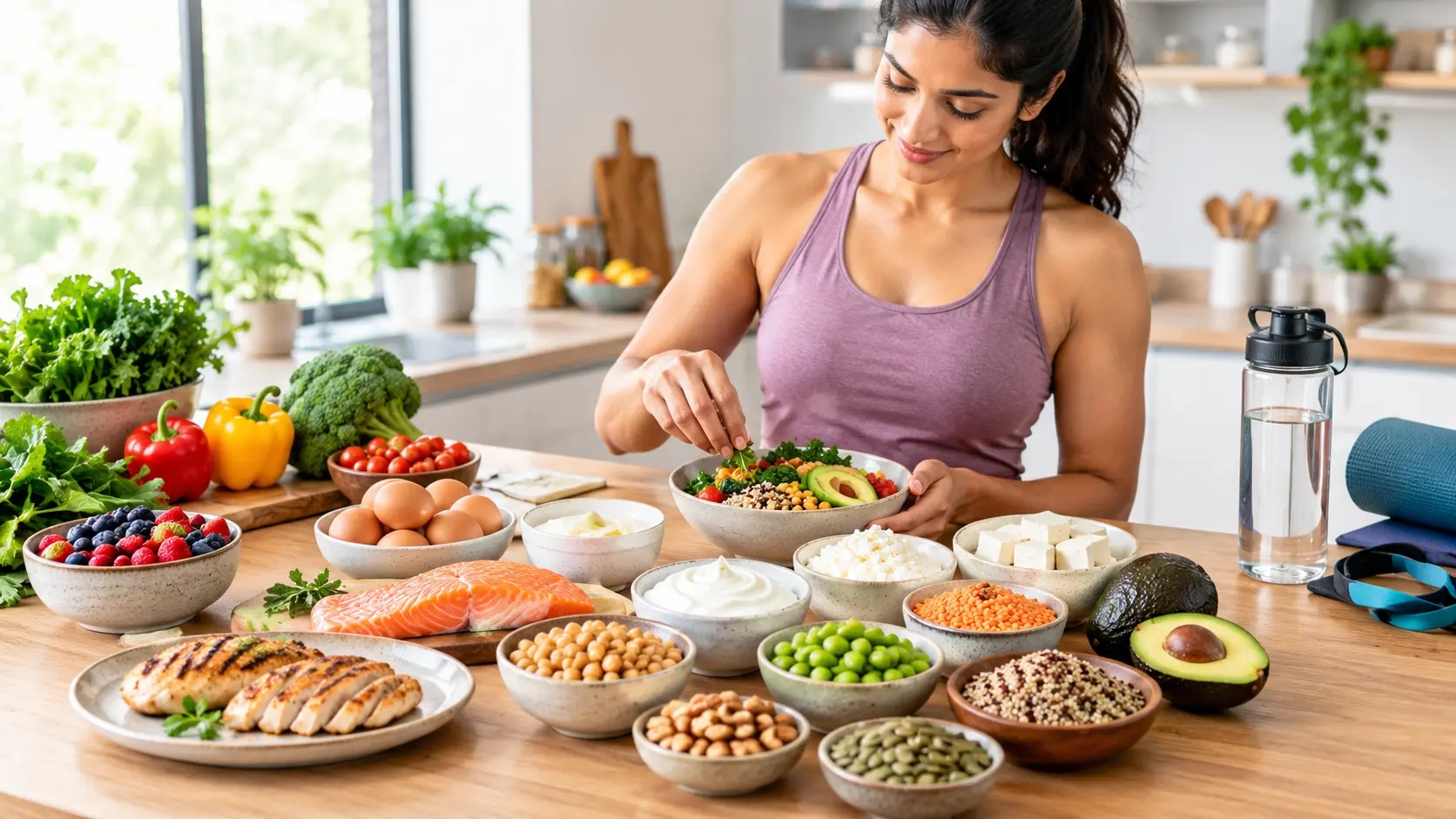
Animal-Based Protein Sources
Eggs: Eggs are good sources of protein that can easily be added to your meals.
Chicken breast and lean meat: Lean meat such as chicken and turkey can provide you with protein without having to eat large quantities.
Fish: Some of the fish sources include salmon and tuna, which are excellent sources of protein. The latter is also a source of healthy fats known as omega-3.
Dairy products: Greek yogurt and cheese are examples of dairy products which are sources of protein. These proteins include casein and whey proteins.
Plant-Based Protein Sources
Lentils and chickpeas: Such legumes contain protein, carbohydrates, and fibre, which makes them good additions to balanced meals.
Tofu and tempeh: These soy products are flexible plant proteins that can be used in curries, stir-fries, salads, wraps.
Quinoa: This food is rich in protein as well as in carbohydrates and other nutrients, which makes it a good addition to your meals.
Nuts and seeds: Peanuts, almonds, pumpkin seeds, chia seeds, etc., will be able to give you some protein and fat. Being calorie-dense, the amounts consumed will depend on your overall goals.
With a diversified vegetarian diet, enough protein intake is possible if there are various protein-rich foods during the day. High protein foods include soy products, lentils, chickpeas, quinoa, and seeds.
Protein Supplements
Whey and Casein protein: While whey protein is an easily available form of protein, casein protein gets digested slowly. Both types of proteins may come in handy for increasing protein intake in a day.
Plant proteins: Pea protein, soy protein, rice protein, and other combinations of plant proteins may be beneficial for vegetarians or vegans.
When are protein supplements useful? Protein supplements are not required for muscle building. These are just an easy method to fulfill protein deficiency in the absence of whole foods.
Best Times to Eat Protein for Muscle Growth
Pre-Workout and Post-Workout Protein
Protein consumed around a workout can contribute to recovery and muscle protein synthesis. However, the idea that you must consume protein immediately after your final repetition is not supported by the strongest evidence. Recent research suggests that protein timing around exercise does not substantially change long-term lean body mass outcomes when overall protein intake is adequate.
A practical approach is to have a protein-containing meal or snack before or after training based on your schedule and overall daily intake.
Spacing Protein Through the Day
Rather than focusing exclusively on the post-workout period, aim to include a meaningful protein source at regular meals throughout the day. This makes meeting your total daily protein target easier.
Protein Before Sleep
A high-protein snack before bedtime may also be another option to consider to boost protein intake throughout the day. Studies have found that the consumption of casein before bedtime can lead to overnight protein synthesis, but protein intake before bedtime is not necessary for muscle gain.
Sample High Protein Meal Plan for Muscle Building
A possible high protein meal plan may consist of:
- Breakfast: Eggs with wholegrain bread and Greek yogurt
- Lunch: Grilled chicken/tofu with rice, lentils and vegetables
- Snack: Greek yogurt with fruits and seeds/ protein shake
- Dinner: Salmon or lean meat/tempeh with potatoes/rice and vegetables
- Evening snack: Cottage cheese/milk or other sources of protein
The exact amounts should depend on the individual needs.
Tips to Maximize Muscle Growth Alongside Diet
Combine Protein Intake With Resistance Training
Protein provides the building blocks, but resistance training provides the stimulus. Follow a structured resistance-training program that progressively challenges your muscles.
Ensure Adequate Calories and Recovery
If muscle gain is your goal, consistently eating too few calories can make progress more difficult. Adequate carbohydrate and fat intake also supports overall energy and nutritional needs.
Prioritize Sleep and Hydration
Recovery does not stop when your workout ends. Consistent sleep, hydration, rest days, and a balanced diet all contribute to your ability to train and recover effectively.
Common Myths About Protein and Muscle Building
Myth: More protein always means more muscle.
Fact: Increasing protein beyond your individual needs does not automatically result in additional muscle growth. Research suggests that benefits from supplementation tend to plateau around approximately 1.6 g/kg/day for many people undertaking resistance training.
Myth: You need a protein shake to build muscle.
Fact: Whole foods can provide all the protein you need. Supplements are primarily a convenient option.
Myth: You must eat protein immediately after your workout.
Fact: Overall daily protein intake appears more important than a narrow post-workout window.
Conclusion
Foods that are high in protein like eggs, chicken, fish, dairy products, lentils, chickpeas, tofu, tempeh, quinoa, nuts, and seeds are some examples that may help you build muscle. Supplements like whey protein, casein, and vegan protein can be beneficial if they help you achieve your requirements easily.
However, building muscle is not just about increasing the amount of protein in your diet. Resistance exercises, enough protein and calories, proper nutrition, sleeping, staying hydrated, and recovery all play an important role in muscle growth.
If you want expert, personalized guidance to help you reach your muscle-building goals, Qua Nutrition’s team of dietitians and nutritionists, led by celebrity sports nutritionist Ryan Fernando, can create a protein-rich nutrition plan tailored to your body, training routine, and lifestyle. Get in touch with Qua Nutrition today to start building a stronger, healthier you.
FAQs
Q: What is the best protein source for muscle gain?
A: There isn’t one. There are many types of proteins available in eggs, dairy, meat, fish, soy products, beans, and protein powder that can provide protein to your diet. Just select what suits you.
Q: Is it possible to grow muscles without protein supplements?
A: Yes. You don’t need supplements for growing muscles. A healthy diet that contains enough protein can provide enough nutrients for you. Supplements can only make the process easier.
Q: How much protein is excessive?
A: Excess protein will depend on your body’s needs. Too much protein is not always good once you get enough. It is essential for people with diseases such as kidney problems to consult a specialist first.
Q: Should I consume protein either before or after training?
A: It doesn’t matter because scientific evidence shows that there is no significant difference between pre and post-workout protein consumption in case of adequate protein intake.
Q: Do I have to consume protein every 3 hours to grow muscles?
A: No, it is not necessary. You don’t have to eat protein at a certain time, and distributing proteins within the day can help you reach your daily needs.