Constipation and bloating rank among the most common digestive complaints seen in adults. The two conditions often appear together, and neither typically signals a serious underlying disorder. In many cases, simple dietary changes can help improve symptoms within a few days, without medication or a clinic visit. This blog covers the main triggers behind constipation and bloating, foods that offer relief, foods best limited during a flare-up, and habits that build steadier digestion over time. The focus throughout is practical: specific foods, realistic portions, and simple changes most readers can start the same day, based on established nutrition guidance.
What Causes Constipation and Bloating?
Digestive problems can happen for many reasons. Everyday habits can often play a role. Knowing what causes constipation and bloating can help you find ways to manage them.
- Low Fibre Intake: Reduces stool bulk, while dehydration leaves the large intestine with too little water to keep stool soft.
- Sedentary Lifestyle: Slows the intestines directly, since physical movement stimulates digestion in ways prolonged inactivity cannot replace.
- Gut and Nervous System Links: Bacterial imbalance, chronic stress, and food intolerances disrupt digestive rhythm through the close connection between gut and mind.
- Medications and Hormones: Pain relievers, antidepressants, and iron supplements, along with hormonal shifts during pregnancy, are documented triggers too.
How Diet Helps Relieve Constipation and Bloating
Fibre works through two distinct mechanisms that complement each other: Insoluble fibre passes through the digestive tract largely unchanged, adding bulk and speeding up transit time. Soluble fibre behaves differently, dissolving in water to form a gel that softens stool and eases its passage. A sensible daily target is around 25 to 30 grams for women and 30 to 38 grams for men, though reaching that number gradually avoids the gas a sudden increase can trigger. Hydration is equally important, since fibre without enough water can worsen constipation instead of easing it. Gut bacteria also influence bloating by fermenting certain foods and releasing gas, which is why even healthy meals can cause temporary discomfort in sensitive individuals.
Best Foods to Eat When Constipated and Bloated
Choosing the right foods can help manage constipation and bloating. Different foods support digestion in different ways, from adding fibre and bulk to supporting healthy gut bacteria. Eating a variety of these foods may be more helpful than relying on just one option. The sections below cover some of the best food choices for constipation and bloating.
Fibre-Rich Fruits and Vegetables
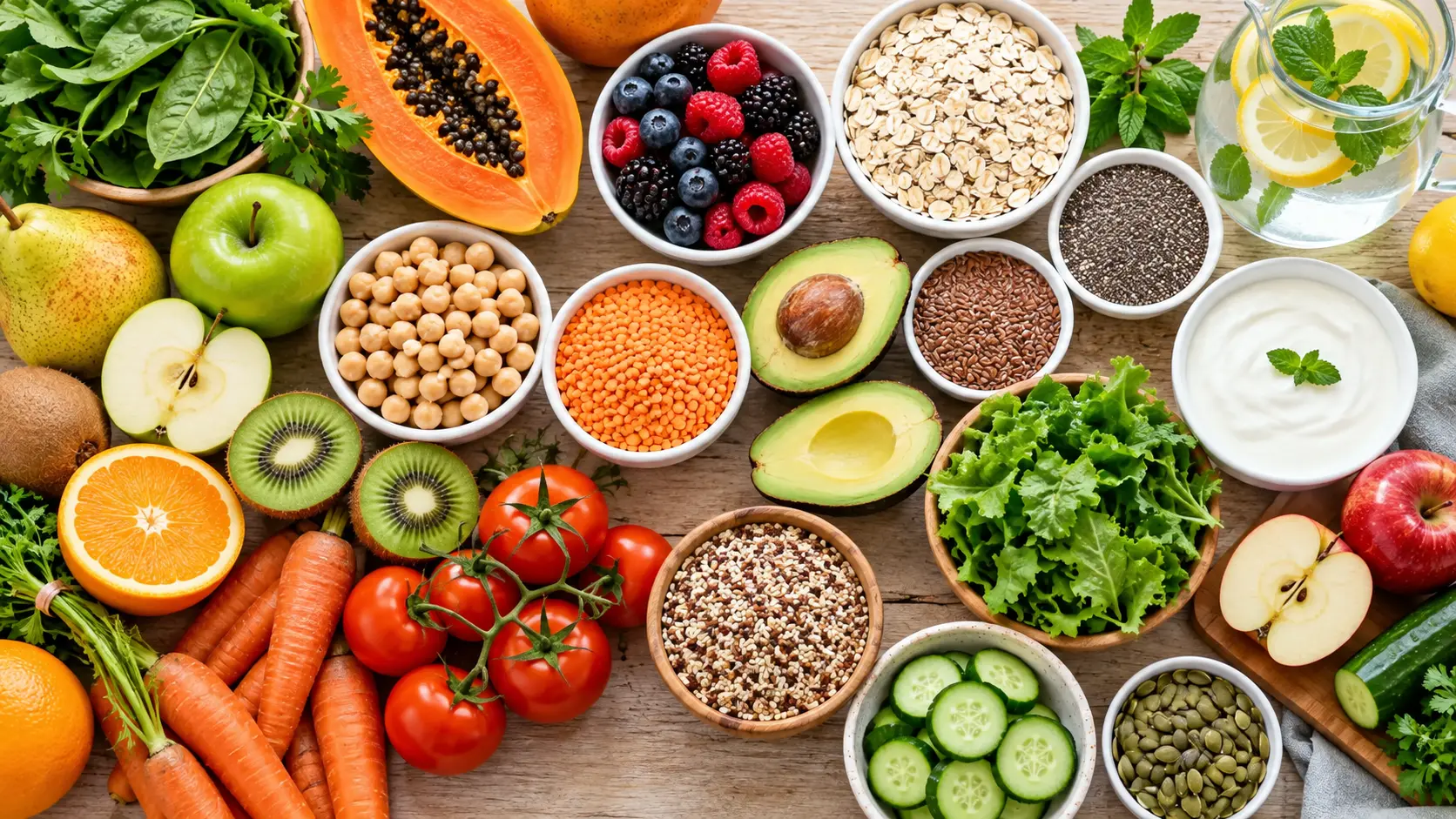
Papaya contains papain, an enzyme that supports protein digestion gently enough to suit an active bloating episode. Pears consist of fibre, sorbitol, and fructose in a combination that supports bowel movement more effectively than most other fruit. Leafy greens and broccoli add fibre alongside water content, though broccoli can produce gas for some people and often sits better cooked than raw during a flare-up. Among the most studied options for constipation are prunes, valued for their fibre and natural sorbitol, a sugar alcohol that draws water into the colon and encourages movement. Berries offer a gentler alternative for anyone who finds prunes too intense, delivering fibre without the same concentrated effect.
Whole Grains and Seeds
Oats supply soluble fibre that softens stool while simultaneously supporting beneficial gut bacteria, a combination that supports both regularity and long-term gut health. Chia seeds and flaxseeds work particularly well once mixed with water, forming a gel-like texture that delivers both soluble and insoluble fibre in a remarkably small serving, typically around two tablespoons daily. Adding either to breakfast or a smoothie is a simple way to build fibre intake without dramatically changing what a person already eats. Whole grains, including brown rice and whole wheat, provide fibre throughout the day rather than in one concentrated dose, which may be easier on digestion.
Gut-Friendly Fermented Foods
Yogurt and kefir introduce beneficial bacteria that support a healthier gut microbiome, and kefir in particular has been studied for its effect on constipation symptoms with regular use. Fermented vegetables, including sauerkraut and kimchi, offer similar probiotic benefits and are worth incorporating gradually to gauge individual tolerance before making them a daily habit. These foods work differently from fibre alone, since their benefit comes from shifting the balance of gut bacteria instead of simply adding bulk to stool. Starting with small portions a few times a week, while paying attention to how the body responds, is a sensible way to build this habit.
Hydrating and Soothing Foods and Drinks
Warm water first thing in the morning can help stimulate digestion before the day even properly begins, and hot beverages tend to speed up intestinal motility more than cold ones. Herbal teas made from ginger, peppermint, or fennel are commonly used to ease bloating and support smoother digestion. Cucumber and watermelon add meaningful hydration alongside a modest amount of fibre, making them gentle choices during periods of active discomfort when heavier foods feel unappealing. None of these need to be treated as a cure on their own, but when combined with adequate water intake during the day, they support the same digestive processes that fibre and movement already set in motion.
Foods That Can Worsen Constipation and Bloating
Certain foods work against digestion instead of supporting it, particularly when eaten in excess or during an active bloating episode. Understanding which ones tend to cause trouble makes it easier to adjust a diet without cutting out entire food groups.
- Processed and Fried Foods: Typically low in fibre and high in fat, and fat takes considerably longer to break down.
- Excess Dairy and Gas-Producing Vegetables: Cabbage, onions, and beans worsen bloating in individuals sensitive to them.
- Carbonated Drinks: Introduce gas directly into the digestive system, adding to discomfort that fibre and hydration cannot offset.
- Artificial Sweeteners and Excess Red Meat: Sugar alcohols in diet products, along with heavy red meat intake, round out the list.
Additional Tips to Ease Constipation and Bloating
Beyond food choices, a couple of habits make a measurable difference to how comfortably digestion runs. These do not require major changes, just consistent attention over time. The following habits support the dietary changes already covered above.
- Eat Slowly: This allows the digestive system to process food more efficiently and reduces the air swallowed during rushed meals.
- Stay Physically Active: Even regular walking helps stimulate bowel movement regardless of how someone feels in the moment.
- Keep a Consistent Routine: A steady meal and bathroom schedule trains the digestive system toward predictable, comfortable function instead of leaving it to chance.
- Favour Steady Changes: These tend to outlast dramatic short-term adjustments that are harder to sustain.
When to See a Doctor
Occasional constipation and bloating can often improve with dietary changes, but certain symptoms call for medical attention instead of continued adjustment at home. Blood in the stool, unexplained weight loss, and severe or persistent abdominal pain are among the clearest warning signs worth looking into quickly. Symptoms that last more than a few weeks despite genuine dietary changes, or a sudden and significant shift in bowel habits, also fall into this category. Severe, ongoing bloating, especially when paired with any of these signs, could point to an underlying condition that needs proper diagnosis instead of another round of dietary adjustment. Consulting a nutritionist for gastrointestinal health, or a doctor where symptoms are more serious, remains the appropriate next step.
Common Myths About Constipation and Bloating
Misconceptions about constipation and bloating often lead people toward the wrong choices, so separating fact from assumption is worth the effort. The table below sets out four common claims against what the evidence actually supports.
| Myth | Fact |
| Fibre supplements work just as well as food | Whole foods provide extra nutrients and water that supplements alone cannot provide. |
| Bloating always means overeating | It is often linked to gas from certain foods or gut sensitivity, not just portion size. |
| All fibre should be avoided when bloated | The type of fibre matters. Soluble fibre is often gentler during a flare-up. |
| Water alone fixes constipation | Hydration helps, but it works best with enough fibre and regular activity. |
Relieve Constipation and Bloating With Professional Support
Quick relief from constipation and bloating usually begins with a handful of dependable foods: prunes, pears, chia seeds, and fermented options such as kefir, paired with steady hydration throughout the day. If you want personalised dietary guidance, Qua Nutrition can help you understand which foods and eating habits may best support your individual digestive needs. We understand that lasting comfort comes from consistency rather than any single solution, built through varied fibre sources, regular movement, and a stable eating routine maintained over weeks. Most people notice a real difference within a short period once these habits take hold, though the pace naturally varies from person to person. If digestive discomfort continues despite these changes, working with Qua Nutrition can help identify what your specific gut actually needs.
FAQs
Q: What is the fastest food to relieve constipation?
A: Prunes are among the most well-studied options for fast relief, owing to their fibre content and natural sorbitol, which has a mild laxative effect.
Q: Can drinking water alone reduce bloating?
A: Water can help with bloating, but it works better when you also get enough fibre and stay active.
Q: Is it okay to take fibre supplements instead of food?
A: Fibre supplements can help, but whole foods provide additional nutrients and water content that supplements do not fully replicate.
Q: Why do I feel bloated even after eating healthy?
A: Some genuinely healthy, fibre-rich foods ferment in the gut and produce gas, which can cause bloating in sensitive individuals even though the food supports long-term digestive health.
Q: How soon can dietary changes relieve symptoms?
A: Many people notice improvement within a few days of increasing fibre and hydration, though consistent, longer-term dietary habits produce the most reliable results.