
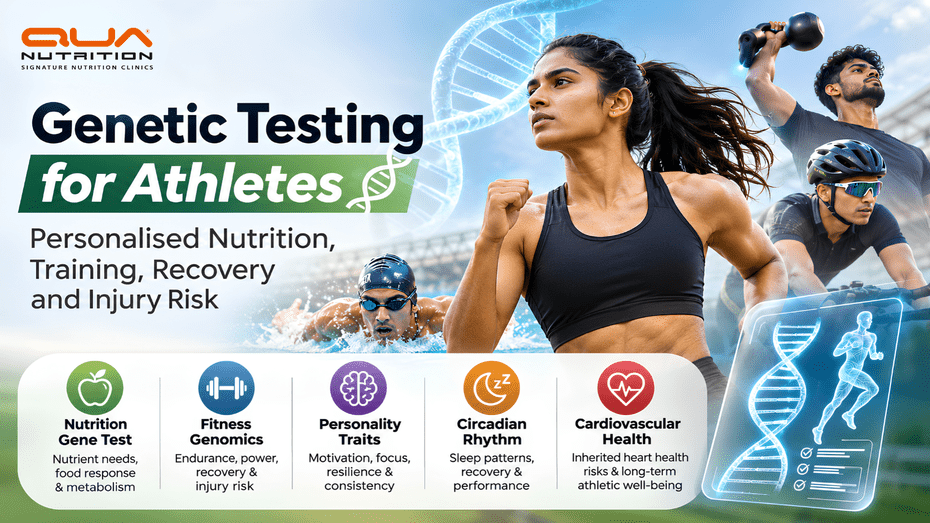
Every athlete will respond differently to nutrition, exercise and recovery. Genetics is one of the factors that may underpin these differences (endurance, muscle recovery, nutritional requirements, injury susceptibility etc).
The Gene Box Genetic Test report looks at a number of genetic traits via 5 key areas: the Nutrition Gene Test, Fitness Genomics, Personality Traits, Circadian Rhythm and Cardiovascular Health. Understanding these traits could potentially help an athlete or a sports nutritionist to make better decisions around nutrition, training and general well-being.
Nutrition Gene Testing for Athletes: Understanding Individual Nutritional Requirements
Nutrition is a key factor in performance, energy and recovery. The Nutrition Gene Test looks at the genetic markers associated with eating behaviour, taste preferences, response to the various macronutrients, weight management, micronutrients and food sensitivities.
Eating Behaviour and Food Preferences
The panel looks at satiety response, emotional eating dependence, snacking behaviour and taste preferences. That information may go some way towards helping an athlete to understand their own eating and then to develop a practical meal plan that will ensure they’re getting the right amount of energy.
Macronutrient Requirements
The report looks at the response to carbohydrates, saturated fat, mono unsaturated fat, polyunsaturated fat, protein and fibre. These findings may be of some value in the context of formulating dietary strategies to meet energy requirements, support muscle maintenance and recovery.
Weight Management and Micronutrients
Genetic markers relating to weight gain propensity, fat metabolism and weight maintenance are looked at alongside the micronutrients (iron, vitamin D, B12, magnesium, calcium, zinc and selenium).
These nutrients are involved in oxygen transport, bone health, muscle function and energy metabolism. An understanding of the relevant genetic predispositions may help to identify areas where further nutritional assessment is required. Genetic results however, will not confirm a deficiency. Blood tests and dietary assessment are required.
Food Sensitivities
The panel contains markers for lactose, gluten, salt and caffeine metabolism. They may be of some use in the context of assessing dietary response and digestive issues, but of course do not in themselves diagnose food intolerance or sensitivity.
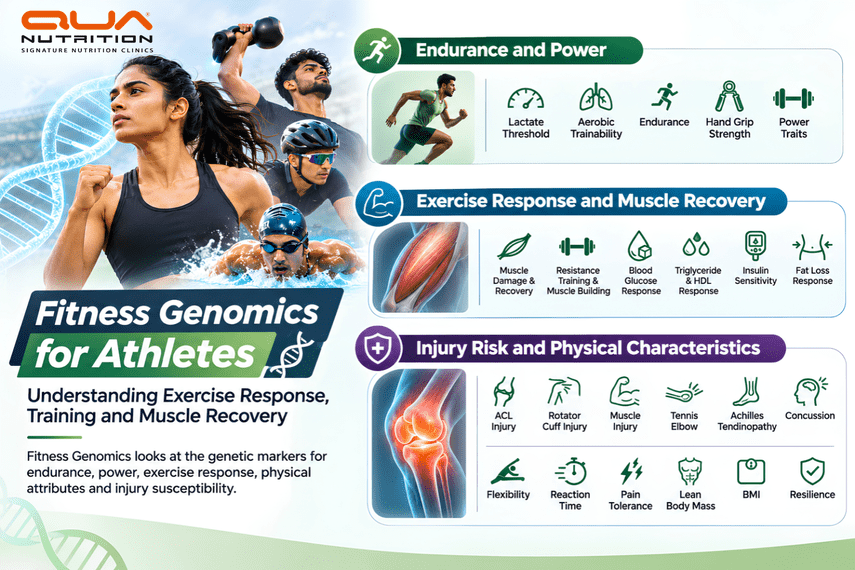
Fitness Genomics for Athletes: Understanding Exercise Response, Training and Muscle Recovery
Fitness Genomics looks at the genetic markers for endurance, power, exercise response, physical attributes and injury susceptibility.
Endurance and Power
The report looks at lactate threshold, the trainability of aerobic capacity, endurance, hand grip strength, and power-related traits. That may go some way to informing us of the athlete’s physical make up and provide some context for the performance data in both endurance and strength-based sports.
Exercise Response and Muscle Recovery
The panel has traits relating to muscle damage and recovery, resistance training and muscle building, blood glucose response, triglyceride response, HDL response, insulin sensitivity and fat loss response to exercise.
These observations may go some way towards explaining why athletes can respond so differently to the same exercise load. They could be used to inform conversations around training load, nutrition timing and recovery in conjunction with the actual performance and recovery data.
Injury Risk and Physical Characteristics
The report examines genetic markers associated with:
- ACL and rotator cuff injuries
- Muscle injury and tennis elbow
- Achilles tendinopathy and concussion
It also looks at flexibility, reaction time, pain tolerance, lean body mass, BMI and resilience.
These findings may point to areas for further investigation and certainly provide a basis for some very informed discussion around conditioning, movement and recovery. That said, genetic markers in no way guarantee that an athlete will go on to sustain an injury. Training load, biomechanics, history of injury and the environment all play a part in injury risk.
Genetic Personality Traits in Athletes: Understanding Motivation, Behaviour and Performance
Athletic performance is more than just physical ability. Motivation, decision making, emotional responses and consistency all play a part in an athlete’s approach to training and competition.
The report looks at cognitive traits (memory, decision making, motor learning, stress) and temperament traits (impulsivity, resilience, novelty seeking, harm avoidance).
Social characteristics (self confidence, optimism, leadership, cooperativeness and motivation) are also included.
These insights may go some way to help us understand the behavioural tendencies and inform the conversation around goal setting, consistency and adherence to nutrition and recovery. They should not be read as a definitive description of personality or potential.
Genetics, Circadian Rhythm and Sleep: Understanding Their Role in Athletic Recovery
Sleep is absolutely vital for physical recovery, cognitive function and recovery between training sessions.
The report looks at morningness/eveningness, sleep latency and sleep duration. It’s a case where understanding these characteristics could help an athlete to assess their own sleeping habits and consider whether their daily schedule is in line with their natural preferences.
It also includes markers associated with insomnia, restless legs syndrome, obstructive sleep apnoea and narcolepsy. These findings do not constitute a diagnosis of any sleep disorder but if you’re experiencing persistent sleep difficulties then you should of course discuss this with a qualified doctor.
Genetic Testing for Cardiovascular Health: Understanding Inherited Risks in Athletes
Cardiovascular health is about oxygen delivery and the body’s ability to respond to activity. The report looks at the genetic markers for a range of cardiovascular conditions including coronary artery disease, stroke, myocardial infarction, atherosclerosis and hypertension.
It also covers the lipid disorders (hypercholesterolaemia, hypertriglyceridaemia) and the rhythm disorders (atrial fibrillation, Brugada’s syndrome, ventricular arrhythmias). Other conditions covered are cardiomyopathy, heart failure and sudden cardiac death.
For the athlete these findings may serve to raise awareness of the potential for inherited cardiovascular risk and the importance of appropriate health assessment. A genetic predisposition does not in itself indicate that a condition is present or that the individual is fit to participate in sport. Where appropriate medical assessment and relevant clinical investigation will be required.
Benefits of Genetic Testing for Athletes: Nutrition, Performance, Recovery and Injury Awareness
When combined with professional guidance, genetic insights may support:
- Personalised nutrition: Better informed discussions around macronutrients, micronutrients and dietary responses.
- Training decisions: More on endurance, power and individual exercise responses.
- Recovery: consideration of muscle recovery characteristics and sleep patterns.
- Injury awareness: identification of genetic markers associated with certain injury susceptibilities.
- Long-term health: Greater awareness of cardiovascular and metabolic health issues.
Genetics should augment rather than supplant the fitness assessment, dietary assessment, medical history, and professional advice.
Understanding Your Genetic Profile with QUA Nutrition
At QUA Nutrition genetic insight can be part of a wider approach to personalised nutrition and health assessment.
The Genetic test report looks at nutritional needs, fitness-related traits, behavioural traits, sleep and cardiovascular health. A qualified nutrition professional can then go on to interpret the report in the context of the athlete’s sport, diet, training load and health history.
How QUA Nutrition Supports Athletes with Personalised Sports Nutrition and Recovery Plans
Understanding your genetic profile is just the first step. The real value is in taking the relevant findings and translating them into practical nutrition and lifestyle strategies.
At QUA Nutrition we’re all about helping athletes to understand their own individual nutritional needs and make the right choices in terms of what they eat to optimise performance, recovery and long-term health.
Personalised Sports Nutrition Plans
Every athlete has different energy requirements depending on the nature of their sport, the intensity of their training, their body composition and their performance goals. QUA Nutrition can help you to develop a personalised nutrition plan to meet your individual requirements for calories, carbohydrates, protein and fat.
Genetic Report Interpretation
Genetic reports can be very complex in terms of nutrient metabolism, exercise response, recovery, and inherited health predispositions. The nutrition professional can help the athlete to interpret the report and identify any areas which may need further dietary or clinical investigation.
Recovery-Focused Nutrition
Adequate protein, carbs, hydration, and micronutrients are all essential for recovery from exercise. QUA Nutrition can help an athlete to work out what their appropriate meal timing and recovery nutrition should be based on their training load and individual dietary needs.
Nutritional Deficiency Assessment
Low iron, low vitamin D, low vitamin B12, and a range of other nutritional deficiencies can have an impact on an athlete’s health and performance. QUA Nutrition can help to identify such potential deficiencies through dietary assessment and appropriate lab work and then go on to recommend appropriate, evidence-based interventions.
Body Composition and Performance Support
Whether the athlete is looking to improve endurance, build muscle, manage body composition, or simply maintain a healthy weight, personalised nutritional guidance can help to get their dietary intake in line with their sporting aims.
Long-Term Health and Lifestyle Guidance
Sleep, recovery, diet quality and cardiovascular health are all important components of an athlete’s overall health. QUA Nutrition can help athletes to understand these areas and put in place sustainable habits that will support their health well beyond the competitive phase.
At QUA Nutrition we’re all about bringing together nutritional assessment, the relevant genetic information, and evidence-based dietary advice to meet the individual needs of every athlete.
Better performance isn’t just down to how hard you train. It’s also about how well you fuel, how well you recover, and how well you look after your body.
Frequently Asked Questions About Genetic Testing for Athletes
1. Can genetic testing be of any use in helping an athlete to personalise their own nutrition plans?
Yes, genetic testing can give us some information on an individual’s response to macronutrients, micronutrient needs, food preferences and certain dietary traits. That information can then be used by a nutritionist to tailor a dietary approach to the individual athlete in line with their own needs and performance objectives.
2. Can genetic testing give us any insight into our potential for endurance and strength?
Genetic testing looks at markers for endurance, aerobic capacity, power and hand grip strength. It can be a useful tool in helping an athlete to understand their genetic predisposition in terms of their physical attributes when viewed in the context of their fitness and their training history.
3. Why is sleep related genetic testing of any relevance to an athlete?
Sleep is obviously a big part of recovery and of overall performance. There’s a growing body of genetic insight into chronotype, sleep duration and sleep latency which can help an athlete to understand their own sleep tendencies and work towards establishing a routine that will support better recovery and rest.
4. Can genetic testing help with long term health and athletic performance?
Yes. By providing information on nutritional requirements, exercise response, sleep and cardiovascular health predisposition, genetic testing could help an athlete to take a more informed approach to their health, their nutrition and their long term performance goals.
5. How can genetic testing be of any use to an athlete?
It may give us some information on nutritional needs, endurance, power, exercise response, recovery, sleep and certain genetic predispositions to health.
6. Can genetic testing predict sports injuries?
It can identify markers that are associated with certain injury susceptibilities but cannot predict whether an injury will actually occur. Training load, biomechanics and history of prior injury are all factors.
7. Can genetic testing identify nutritional deficiencies?
No. It looks at the genetic markers that are associated with nutrient requirements and metabolism. Blood tests and clinical assessment are required to confirm any deficiencies.
8. Can genetic testing help with muscle recovery?
The report has some of the characteristics of muscle damage and recovery. That may be of some use in the context, but recovery itself should also be looked at in terms of fatigue, soreness, performance and sleep.
9. Should athletes alter their training purely on the basis of genetic results?
No. Genetic findings should be considered alongside fitness assessments, training history, medical information and professional guidance.
Conclusion: Using Genetic Insights to Support Athletic Performance and Long-Term Health
An athlete’s performance is going to be dictated by genetics, nutrition, training, recovery, sleep, and general health. Understanding the genetic component can go a long way in informing us about an individual’s likely nutritional requirements, their likely response to exercise, their recovery profile, and their potential health risks.
Genetics doesn’t determine an athlete’s potential or guarantee a performance outcome. It’s just another piece of information that can be used to make more informed decisions and to take a more individualised approach to performance.