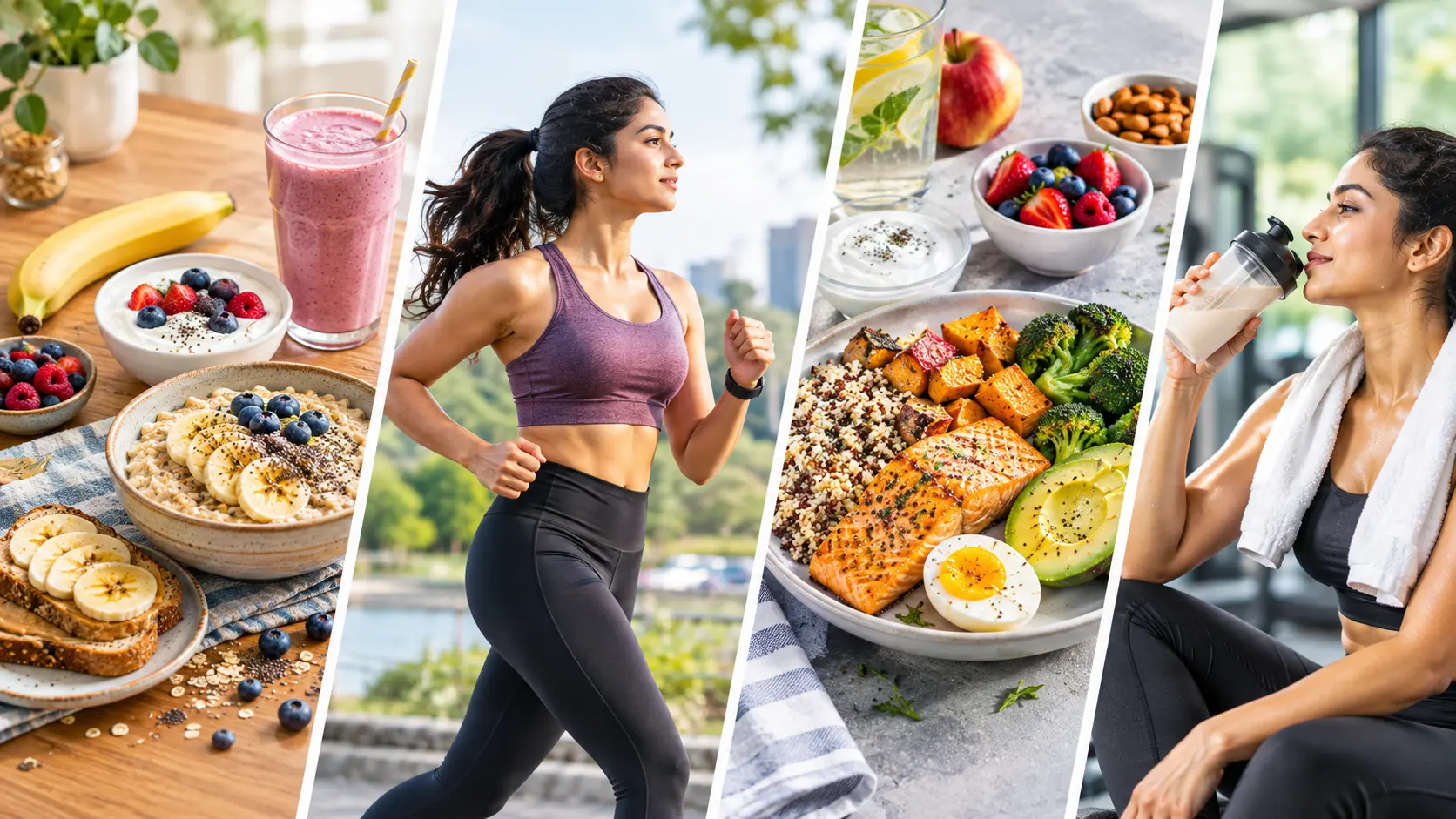
What you eat around your workout can affect how you feel, perform and recover, but you don’t need a complicated meal-timing schedule or a protein shake the second you finish your last set.
The bigger picture is more important.
Sports nutrition depends on your total daily intake of energy, protein, carbohydrates, fluids and micro-nutrients. Pre- and post-workout meals are tools to help you support that foundation especially when training is intense, long or frequent.
So what do you really eat before and after a workout?
That depends on your training, your goals, how much time you have before exercise and what your body tolerates well.
Why Does Workout Nutrition Matter? Understanding Food, Energy, Performance, and Recovery
Exercise increases demand for energy and nutrients of the body. Carbohydrates are an important fuel source for moderate to high intensity exercise and protein provides the amino acids needed for muscle repair and adaptation.
Good nutrition around training can help you to:
- Increase Energy & Exercise Performance
- Carbohydrate availability is sufficient
- Support muscle repair and recovery
- Restore lost nutrients during long exercise
- Prepare for your next training session
Sports nutrition is not about finding one “perfect” pre-exercise or post-exercise meal. The best plan is one that suits your training needs and that you can stick with consistently.
Pre-Workout vs Post-Workout Nutrition: Understanding the Key Differences
Pre-workout meals are fuel for the workout and post-workout meals are support for recovery.
1. Pre-workout nutrition
The key priorities are: Protein + fluids + appropriate carbohydrates
Carbs are especially useful if you are training for exercise that is moderate to high intensity or lasts a long time. Also protein can be added, especially when there is time before resistance training.
2. Post-workout nutrition
Main priorities are : Protein + carbs
Protein helps repair and adapt muscles. Carbs replenish glycogen stores, especially after longer or glycogen-depleting sessions. But the significance of each nutrient will change depending on the workout. A quick and easy workout doesn’t impose the same nutritional demands on the body as a two-hour endurance session.
What to Eat Before a Workout: Best Pre-Workout Foods for Energy and Performance
There’s no single “best” pre-workout food.
What you eat before a workout should be easy to digest, familiar to you and suited to the length of time before your workout. The advice on sports nutrition is to choose foods that have been tested out during training and not to try new foods before an important workout or competition.
2–4 hours pre-training
This is the perfect window for a full meal. Carbohydrates are key, with moderate protein and plenty of fluid. Practical options are:
- Rice+dal+curds
- Rice + chicken or fish + vegetables
- Oats + milk/curd + banana
- Roti with paneer/tofu and fruit
- Idli + sambar + daal
- Upma with vegetables + egg
- Sandwich with chicken or tofu and fruit
Having a meal several hours before training gives you more time to digest and allows you to have a bigger and more balanced meal.
30-60 minutes pre workout
If you have less time, make the meal or snack smaller and simpler. Try:
- Bananas
- Toast with a small amount of nut butter
- Dates Curd
- Fruits.
- A simple milk based drink
- Small bowl of milk and oats
During this time, foods that are easy to digest and high in carbs may feel better than a big meal. Eating a lot of fat, fiber or unusual food shortly before exercising may cause stomach upsets in some people.
Early Morning Workouts: Should You Eat Before Training?
You don’t really need a full breakfast before every early-morning workout. Short easy sessions, some people like to work out after an overnight fast. For more intense or longer sessions a small carbohydrate rich snack can be useful.
Banana + water OR 2-3 dates + curd OR Toast + little nut butter
The goal is not to make yourself eat food. It is to find the least amount that keeps your training comfortable.
What to Eat After a Workout: Building the Right Post-Workout Meal
It’s time to focus on recovery after the training. A good meal after a workout includes:
- Proteins
- Carbohydrates
- Liquids
- Foods rich in micronutrients
A. Protein to aid muscle recovery
Protein provides the amino acids necessary for muscle repair and adaptation. More important than worrying about one post-workout feeding is how you time your total daily protein intake and break that down throughout the day. Many active people find it practical to eat a protein-rich meal or snack every few hours. The INFS guidance also emphasises the importance of total daily protein intake, rather than specific pre- or post-workout timing.
Good sources of protein include:
- Eggs
- Milk
- Greek Yoghurt or Curd
- Paneer.
- Tofu
- Soy
- Dal and other legumes
- Chicken
- Fish
- Whey or plant protein when convenient
B. Carbohydrates After Exercise
Carbohydrate is especially important after prolonged or intense exercise since training can deplete muscle glycogen stores.
A carbohydrate-containing meal can, for instance, kick-start the refuelling process after a long run, a cycling session, a hard team-sport session or other glycogen-demanding workout.
This is especially important if you have another hard workout or competition coming up with not much time to recover. Sports nutrition guidance points out that the need for rapid carbohydrate replacement is increased when recovery time between sessions is limited.
You tend to have a regular training schedule, and a full day to recover before your next hard session, so you have more time to replenish glycogen with a regular balanced meal.
Easy Post-Workout Meal Ideas for Faster Recovery and Better Nutrition
You don’t need an expensive “fitness meal”. Indian food can be very good.
Vegetarian
- Rice + lentils + vegetables + yoghurt
- Roti, paneer and veggies
- Idli + sambhar + curd
- Curd rice + egg or a pulse based side dish
- Tofu and rice/noodles and vegetables
Non-veg
- Rice + chicken + vegetables
- rice + fish + dal + veg
- Eggs + Toast + Fruits
- Chicken sandwich and fruit
- Fish + potatoes/rice + vegs
Quick options
When there is no time for a proper meal:
- Banana, oats, milk
- Curd, fruit and oats
- Banana + Protein Shake
- Fruit + whey or plant-protein shake
- Paneer/tofu sandwich.
- Milk + dates + fruit
The ideal post-workout meal is the one you’re actually able to make and eat on a regular basis.
Do You Need Supplements for Workout Nutrition? Food First vs Supplementation
The foundation of sports nutrition remains a food-first approach. “The Sports Nutrition Fundamentals resource stresses that performance enhancing supplements should only be pursued after the basics of energy, macronutrients, micronutrients, meal timing and hydration are in place.”
In some cases, protein powders, sports drinks, and other supplements can be helpful, especially if convenience, recovery time, or training demands make it difficult to eat regular food. But a supplement should address a real nutritional problem, not just make your diet look more “athletic.”
Common Pre- and Post-Workout Nutrition Mistakes That Could Affect Your Progress
1. Eating a big meal right before training
More food does not automatically equal more energy. Eating a heavy meal too soon before exercise may make you feel sluggish and uncomfortable.
2. Just looking at protein
Protein is important but carbs are also an important fuel for many kinds of training.
3. Skipping a meal after a long or hard workout
Skipping recovery nutrition following a tough session makes it more difficult to refuel and prepare for your next workout.
4. Use the 30-minute anabolic window as a cutoff
No need to run from the squat rack to the shaker bottle.
What matters more than getting it all in a strict 30 minute window is how much protein you eat each day and how evenly you spread it out.
5. Trying new foods pre-important workout
Now is not the time to find out your “healthy” snack has declared war on your stomach. Test your nutrition strategy first during regular training.
How Should Your Pre- and Post-Workout Meals Change Based on Your Fitness Goal?
Your emphasis is different, not the fundamentals.
Muscle gain: Enough of both total energy and protein. Fuel performance with carbohydrates around training.
Fat Loss: Ensure pre and post workout meals are in line with your overall energy target, while making sure you get enough protein and enough carbohydrate to train well.
Endurance: More focus on carbohydrate pre and during longer sessions, then carbohydrate, protein and fluids for recovery.
General fitness: Usually a balanced everyday diet is sufficient. Pre and post workout meals can be easily incorporated into your normal meals.
What to Eat If You Have a Sensitive Stomach Before or After Exercise
Most workout nutrition plans don’t put enough emphasis on digestive comfort. A food that is nutritious on paper can still be a poor choice right before exercise if it makes you bloat, cramp or reflux.
Practice everyday in your workouts before you train. Note your reactions to the size of portions, fibre, fat, dairy, concentrated carbohydrate drinks and new foods.
If a meal keeps causing symptoms, change the portion, timing or food rather than forcing yourself to stay on a generic plan. This is another reason why there is no single “best” pre-workout meal for everyone. The best option is one that provides useful fuel and is comfortable enough to train on.
How QUA Nutrition Can Help You Build a Personalised Workout Nutrition Plan
A generic meal chart is not the best workout nutrition, it’s more of an individual thing. At Qua Nutrition we can tailor nutrition advice to your type of training, goals, daily schedule, food preferences and practical needs. It’s not just about eating a banana before a workout or drinking a protein shake after. Individualisation considers the whole picture: what you usually eat, when you train, how much energy and protein you need, when you eat meals, how you hydrate and your recovery routine.
If you’re someone who wants to build muscle, the plan can be geared toward adequate energy, protein distribution and meals to support resistance training. For an endurance athlete, more attention may be paid to carbohydrate availability, hydration and recovery. If you’re working on fat loss and training consistently, you can structure your meals around the overall energy goal without compromising your training.
Qua Nutrition can also help you translate sports nutrition principles into practical Indian meals and snacks, including pre-workout options, post-workout meals, early-morning training strategies and convenient choices for busy schedules.
FAQs
Q: Do oats lower bad cholesterol?
A: Yes. Eating about 3 to 4 grams of beta-glucans a day, found in oats (a cup of cooked oatmeal), may help lower LDL cholesterol. For best results, combine oats with a healthy diet pattern, not as a stand alone solution.
Q: What fruits are good for high cholesterol?
A: Apples, berries, amla, guava, papaya and pomegranate among others contain soluble fiber and antioxidants in abundance. The key is consistency: Try to get 2-3 servings of fruit a day, and choose whole fruits over juices when you can.
Q: Can I eat rice with high cholesterol?
A: Yes, but try to eat brown rice or other whole grains more often than white rice. White rice raises blood sugar fast and makes triglycerides worse. Add legumes to rice for a complete protein and helpful fiber as well.
Q: Can nuts lower LDL cholesterol?
A: Definitely. The unsaturated fats found in nuts, seeds and oils can help lower LDL cholesterol when they replace saturated fats. A small handful a day (30g) is ideal, larger amounts just add calories with no extra benefit.
Q: So I have to stop eating eggs entirely?
A: No. Eggs have cholesterol but are nutrient dense with high quality protein and good stuff . Most studies have shown that eating an egg with a fiber containing food, such as whole wheat bread, does not significantly raise blood cholesterol in most people. Most people can safely eat 1 to 2 eggs three to four times a week.