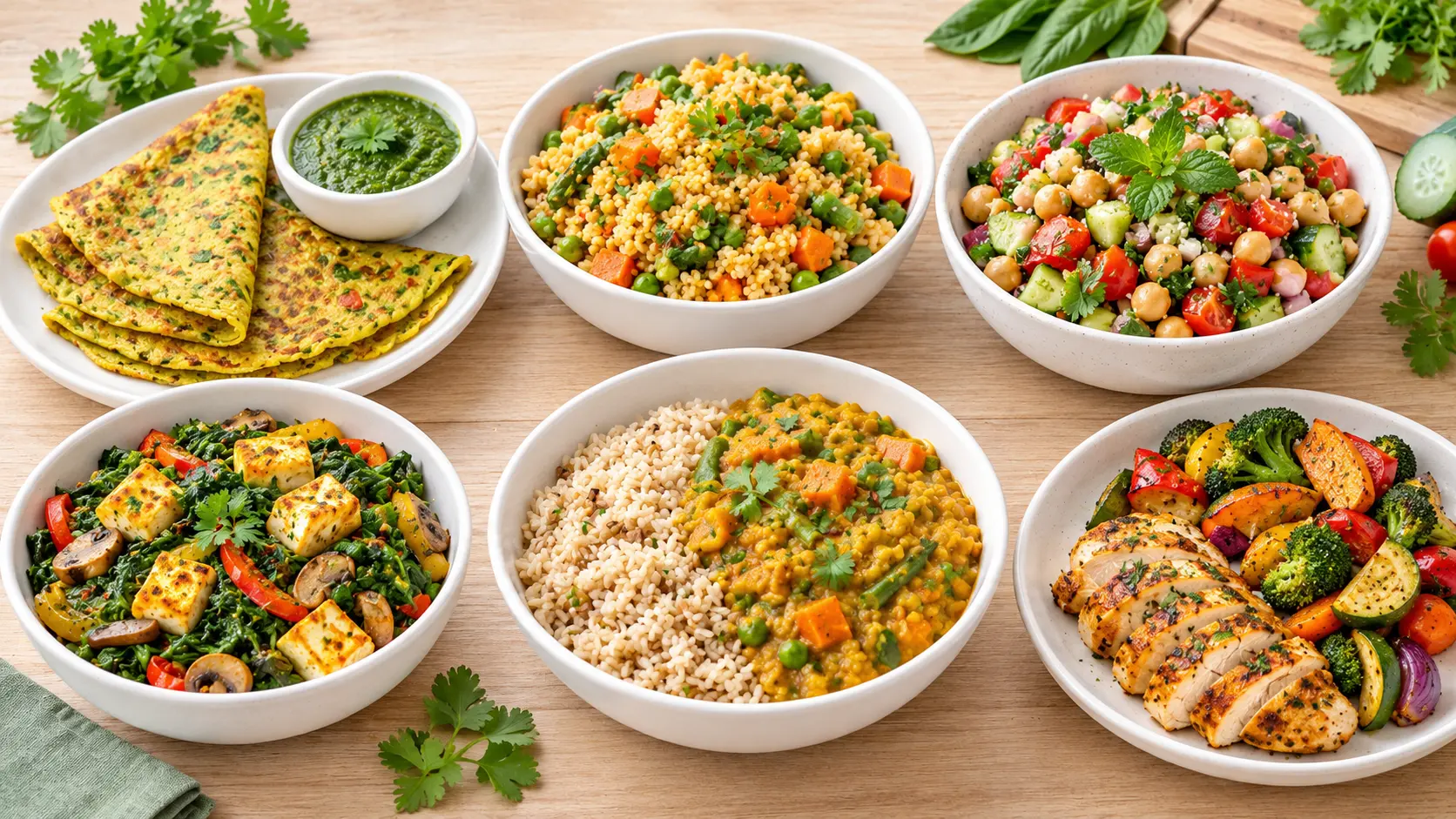
Choosing the right dinner can help you manage your calorie intake without going to bed hungry. From grilled fish and moong dal chilla to vegetable khichdi and egg bhurji, these six healthy Indian dinner ideas combine protein, fibre, and balanced portions to support weight loss. Each recipe includes simple preparation tips to make healthy eating easier on busy weeknights.
What Makes a Dinner Weight Loss Friendly?
In a diet for weight loss, the best dinner combines lean protein, plenty of fibre, and a small amount of healthy fat in a portion that keeps you full. This keeps you satisfied and avoids late-night food cravings.
- Balance protein, fibre, and healthy fats. Dal, eggs, fish, chicken, paneer or tofu supply protein. Vegetables and whole grains add fibre, and a teaspoon or two of oil, nuts or seeds cover the fat.
- Balance your portions. A simple guide is to fill half your plate with vegetables, a quarter with protein, and a quarter with whole grains such as roti or millets. This keeps the meal filling without making it heavy.
- Choose a suitable dinner time. Eating a few hours before bed may help you feel more comfortable and reduce late-night snacking. Choose a meal time that suits your routine and appetite.
6 Healthy Indian Dinner Ideas for Weight Loss
These six dinners use everyday Indian ingredients and simple cooking methods. Each gives you protein and fibre and fits into a regular weeknight, so you can rotate them through the week.
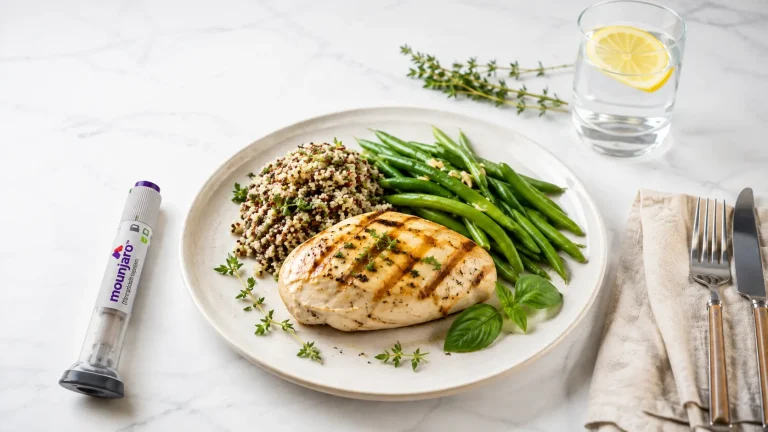
1. Grilled Chicken or Fish with Sautéed Vegetables
Chicken and fish provide protein to keep you feeling full for longer. Pairing them with vegetables adds fibre and volume without too many calories, making the meal filling but light.
Simple preparation tips: Marinate in curd, ginger, garlic and spices, then grill or bake. Sauté beans, capsicum and broccoli in one teaspoon of oil.
2. Moong Dal Chilla with Mint Chutney and Salad
Moong dal is a good source of plant protein and fibre, and both help you feel full. The chilla needs very little oil to cook, so the calories stay low.
Simple preparation tips: Soak the dal for three to four hours, then grind with green chilli and ginger. Add grated vegetables and cook on a lightly greased tawa until golden on both sides.
3. Paneer or Tofu Stir Fry with Mixed Vegetables
Paneer and tofu are rich in protein and low in carbohydrates, so they keep you full and satisfied without a heavy meal. Tofu contains less fat than paneer, so it is the lighter choice. The vegetables add fibre.
Simple preparation tips: Stir fry 100 grams of cubed paneer or tofu with capsicum, mushrooms and beans in one teaspoon of oil. Use soy sauce sparingly.
4. Lentil and Vegetable Soup with a Side Salad
Lentils and vegetables are cooked in plenty of water, so the soup is high in volume and fibre but low in calories. A warm bowl fills you up, so you need less rice or roti with it.
Simple preparation tips: Pressure cook dal with chopped tomato, carrot and bottle gourd until soft. Heat half a teaspoon of oil, fry cumin and garlic until golden, and pour this over the soup. Serve warm with a side salad.
5. Millet or Quinoa Vegetable Khichdi with Raita
Millets and quinoa provide carbohydrates, fibre and other nutrients, making them useful alternatives to polished white rice. Their effects on digestion and blood sugar depend on the variety, preparation and portion size. The curd in the raita adds protein.
Simple preparation tips: Rinse quinoa well and soak millets for a few hours. Cook with moong dal and vegetables, and serve with plain curd raita.
6. Vegetable Omelette or Egg Bhurji with Multigrain Roti
Eggs are a good source of protein, which helps you feel full. They cook in minutes, so they suit busy evenings. Vegetables add fibre, and one multigrain roti gives you energy without making the meal feel heavy.
Simple preparation tips: Mix two eggs with chopped vegetables and spices. Cook with a little oil in a non-stick pan and serve with one or two multigrain rotis. If you have raised cholesterol, ask your doctor how many eggs are right for you.
Dinner Mistakes That Slow Weight Loss
Some dinner habits can quietly slow your weight loss: eating very late, serving oversized portions with refined carbohydrates, overlooking the calories in oil and gravies, and skipping the meal altogether.
- Eating too late at night: Some studies suggest that regular late-night eating is associated with weight gain, and a heavy meal close to bedtime can disturb sleep.
- Oversized portions and refined carbohydrates: Large servings of white rice, naan or pasta add calories quickly and contain little fibre. Replace part of the portion with vegetables.
- Hidden calories in sauces and gravies: One tablespoon of oil contains roughly 120 calories, and cream, butter and cashew paste add more. Measure oil with a spoon.
- Skipping dinner altogether: Missing the meal often leads to strong hunger later and snacking on biscuits or namkeen.
Tips for Building a Healthy Dinner Routine
A dependable dinner routine starts with planning your meals ahead, eating slowly, and keeping portions balanced. These habits remove last-minute decisions and help you notice when you are full. Small changes are easier to keep than strict rules.
- Plan and prepare ahead: Decide on your dinners for the week and prepare ingredients in advance. Soak the dal, chop the vegetables and marinate the chicken or paneer. On a tired weeknight, dinner then needs only cooking, and you are less likely to order in.
- Eat slowly: Put your phone down and chew properly. Your body takes a while to sense fullness, so rushing often means you eat more than you need. Stop when you feel comfortably full, not stuffed.
- Listen to your hunger: Your appetite may vary from day to day, and that is normal. Avoid eating too little at dinner to make up for a heavy lunch.
- Repeat meals that work: Choose two or three dinners from this list that you enjoy and cook them often. Familiar recipes are quicker to shop for and prepare, which makes it easier to stay consistent.
Sustainable Weight Management Beyond Dinner
Sustainable weight management means building habits you can maintain over time. Dinner matters, but your other meals, daily activity, sleep, and stress levels also affect your progress. Small, steady changes are easier to maintain than strict diets.
- Choose consistency over crash dieting. Very low-calorie diets are hard to follow, and many people regain the weight. A gradual pace of about 0.5 to 1 kg a week is widely recommended.
- Combine nutrition with activity, sleep and stress control. Adults are generally advised to aim for at least 150 minutes of moderate activity a week, such as brisk walking. Good sleep and simple stress habits also keep your eating steadier.
How a Dietitian for Weight Loss Can Help
A dietitian can create a diet for weight loss that suits your health needs, daily routine, and food preferences. This matters most when weight loss has stalled or when you manage a condition such as PCOS, thyroid problems, or diabetes.
At QUA Nutrition, we begin with a one-to-one session to understand your concerns, health history, and routine. Where needed, we suggest relevant blood tests or, where appropriate, genetic assessments, then review your plan at regular follow-ups. We have supported over 60,000 people worldwide, and online consultations let you start from anywhere.
Conclusion
Healthy dinners don’t need to be complicated. Grilled chicken or fish, moong dal chilla, a paneer or tofu stir-fry, lentil soup, millet khichdi, and egg bhurji with multigrain roti each give you protein, fibre, and a simple portion in one meal. Pair them with careful use of oil, regular activity, and enough sleep. Start with one or two of these healthy dinner ideas for weight loss this week, and speak to a dietitian if you want a plan built around you.
FAQs
1. What is the best dinner for weight loss?
A good dinner for weight loss has protein, plenty of vegetables, fibre, and a moderate portion of carbohydrates. Grilled fish with vegetables, moong dal chilla and a paneer stir-fry all fit this pattern, so you feel satisfied without overeating.
2. What time should I eat dinner to lose weight?
There is no single dinner time that guarantees weight loss. Choose a time that suits your routine, allows you to eat comfortably before bed, and helps you avoid unnecessary late-night snacking.
3. Can I eat carbs at dinner and still lose weight?
Yes, you can eat carbohydrates at dinner and still lose weight. Choose options such as whole-wheat roti, millets, or brown rice, and balance your portions with protein and vegetables.
4. Is skipping dinner a good way to lose weight?
Skipping dinner is not necessary for weight loss and may leave you feeling hungry later. A balanced dinner with appropriate portions can help you meet your nutritional needs and maintain eating habits you can follow over time.
5. Do I need a dietitian for weight loss?
You may benefit from a dietitian if you need a personalised eating plan, have a health condition, or struggle to maintain progress. A qualified dietitian can help you adjust portions, food choices, and meal timings to suit your health needs and daily routine.