
In the frenetic world of business, be it the challenges of tight deadlines, back-to-back meetings, or late-night emails, many of us have heard the same refrain: “I don’t have time to eat right.” Eating the right foods in this context does not equal eating less. In fact, if we make the right low-calorie food choices, we can feel fuller, longer, and better supported throughout the day.
This blog will explore how low-calorie foods can actually keep you fuller, the science behind it, and simple foods that fit our busy lifestyles. We’ll also touch on how a service like QUA Nutrition can provide guidance to help you build sustainable eating habits in a busy professional lifestyle.
Why “Low-Calorie” Doesn’t Have To Mean “Hungry”
We typically associate a “low-calorie diet” with “hunger all the time” or “small, boring meals.” However, that is a misconception. Research supports that there are specific foods that have high satiety (i.e., feeling full) per calorie. This indicates that you can feel satisfied without consuming a large number of calories.
The Science Behind Fullness
Here are some important mechanisms for why some foods may help you feel satisfied for longer:
- Energy density: Low-energy-density foods (fewer calories in a gram of food) allow you to eat more volume of food for the same calories. For example, fruits and vegetables are high in water and fiber, which gives bulk without the calories.
- Protein: Protein is a strong satiety driver. Eating meals with more protein reduces hunger signals for a longer duration.
- Fibre and whole food structure: Fibre slows digestion and increases chewing and gut signalling of fullness (as mediated through hormones like peptide YY), and that is why it helps you stay full for longer.
- Volume, water, and chewing: The bigger the plate, the more calories you consume for the same volume, at least in your brain. For example, air-popped popcorn is great for weight control; it can be consumed at low calories while increasing satiety.
- Food texture and more structure: The physical form does matter—solid, fibre-rich and chewy foods have greater satiety levels versus soft, processed foods.
In short, you want foods that have the highest satiety per calorie.
How a Busy Professional Can Do It
If your schedule requires you to work long hours, sometimes skip meals, or snack out of convenience, opting for high-satiety, low-calorie foods means:
- You can eat a large portion without exceeding your calorie budget.
- You may feel less tempted to stop at the vending machine mid-afternoon.
- You may feel less fatigue because you were not fueling your body enough.
- You may not overeat later in the day because you weren’t feeling deprived.
Consequently, being “on a low-calorie plan” doesn’t have to inhibit you from feeling deprived and hungry if you make good choices.
Top Low-Calorie Foods That Keep You Full
Here’s a look at some of the most nutritious foods, based on research, that will give you fullness but without excessive calories. Consider them nutritional devices—add them to your daily nutrition toolkit.
- Oats & whole grain porridge
- A half cup (40g) of dry oats is just ~154 calories but contains 5 g protein + 4 g fibre.
- Research indicates oatmeal increases fullness and reduces hunger compared to eating a breakfast of convenient, ready-to-eat cereals.
- Mechanism of action: mix of soluble fiber (beta-glucan) + volume + slow absorption = long-lasting fullness.
- Tip: Steel-cut oats with progressive seasonal fruit, fresh-cut in with a dash of yogurt, or a proxy oats‐upma recipe where upma is made along with vegetables.
- Greek yogurt / low-fat dairy
- One cup of non-fat Greek yogurt: ~150 calories, ~25 g protein.
- In a study, women who consumed high-protein Greek yogurt before dinner consumed ~100 calories less at dinner than when eating a higher-fat snack.
- How it works: protein + creamy texture + slower rate of gastric emptying = greater satiety.
- Tip: You can also use plain yogurt (dahi) with chopped cucumber, chopped fresh mint, and a sprinkle of chaat masala, either as a snack or a part of lunch, for a satiating experience.
- Vegetables and salads (high-volume, low energy density)
- Vegetables – e.g., broccoli, zucchini, spinach, and bell peppers – rank highly in terms of satiation because they are low in calories per weight in volume while being high in fiber and water!
- Energy density: If you eat a greater volume of food for fewer calories, it helps you to feel full.
- How it works: The large volume stretches your stomach and creates fullness signals, and the lower calorie load will make it easier to stay within your kcal limits.
- Tip: Consider having a large bowl of “raw vegetable salad” before your main meal (e.g., cucumber, carrot, tomato, sprouts) because it will help you to eat less at your main meal!
- Boiled potatoes (moderate calorie, high satiety)
- The original Satiety Index study reported boiled potatoes as having the highest satiety index (~323% relative to white bread), meaning they kept people full for longer.
- Why it works: They have a higher volume, moderate calories, and initiate fullness signals well.
- Tip: Consider a boiled baby-potato chaat (minimal oil) or baked potato with spice mix instead of slathering with heavy butter and cheese.
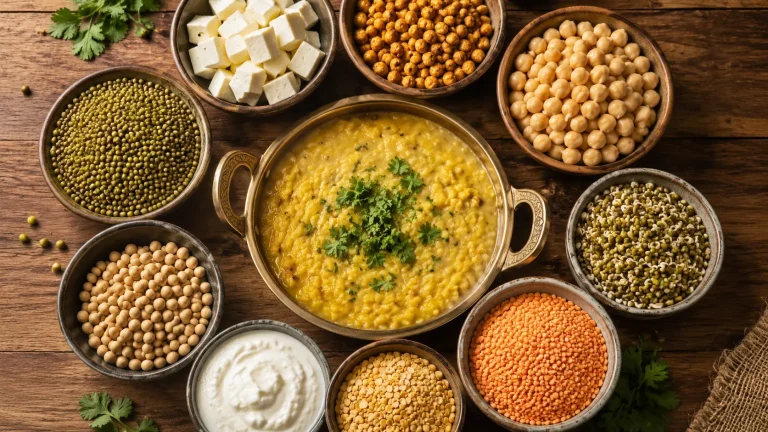
- Pulses (lentils, chickpeas, beans)
- Pulses are high in protein and fibre, digest slowly, and help you feel full longer.
- Why it works: Plant-protein + fibre keep you full; legumes also keep blood sugar peaks modest, which helps control appetite.
- Tip: Try dal + plenty of veggies instead of white rice, or chickpea soup as a snack.
- Air-popped popcorn or whole-grain snacks
- A serving of air-popped popcorn is one cup, and one cup has ~30 calories and has fibre + volume.
- Why: big volume, crunchy texture (increases chewing time), low calorie load = viable snacking options that don’t ruin the caloric goal during the day.
- Tip: Popcorn with just salt and pepper-or mild masala-or your choice of spices can be your ‘go-to’ mid-afternoon snack instead of something packaged as chips.
How to Build a “Feeling-Full on Fewer Calories” Plate
It is one thing to select foods. It is another to put foods together so that satiety is built in. Here is an applicable guide for the high-performing professional and busy lifestyle.
Prioritize protein + fiber
- Every main meal should include a good source of protein (Eg- Greek yogurt, dal, pulses, lean fish, or chicken) and fiber (vegetables, whole grains, and legumes).
- You will get better “value” for your calories when the meal is designed for satiety.
Maximize volume with low-energy-density foods
- Start the meal with a salad or a big portion of vegetables. This gives your stomach some volume and gives you fullness cues.
- Choose whole vegetables and fruits rather than calorie-dense foods when possible.
Make smart choices with snacking
- Choose snacks that are high-volume or higher-protein/fibre rather than high-calorie and low-satiety snacks (i.e., sugary/hyper-processed foods).
- Some high-volume snacks: popcorn, salad, or simply including extra vegetables or fruit with meals or snacks. You can also focus on incorporating higher-protein options with fibre into your snacks like: Greek yogurt & berries or roasted chickpeas.
Consider texture and eating speed
- Choose whole foods you have to chew rather than slurp (that way, you are allowing more time for your brain to register fullness!)
- Practice slowing down, putting your fork down between bites, and not engaging in other actions during your meal so you can tune in to fullness cues.
Plan for busy days:
- When you have back-to-back meetings from early morning until evening, consider packing foods that will keep you satisfied for a longer period, such as eggs and toast for breakfast, oats with diced apples and cinnamon along with yogurt, salad with pulses and avocado or nut butter on whole grain bread for lunch, and popcorn or yogurt as a snack before dinner at home.
- Try not to skip meals to avoid extreme hunger coming later in the evening, potentially leading to overeating during dinner.
Why Many “Low-Calorie” Diets Fail at Fullness
Here’s why all you do is cut calories, and without knowledge about what foods to eat, you get hungry, crave food, and finally fail.
- You reduced calories and went with foods that had fewer calories but lower satiety (for instance, refined cereals or sugary biscuits). Those foods have fewer calories, but you will be hungry and craving food shortly thereafter.
- You reduced portion sizes but didn’t change the nature of the food eaten. You are eating less volume of food, which means that your stomach and brain are still expecting more to be consumed.
- You ignored fullness cues and daily rhythms that can undermine mechanisms of satiety (stress, sleep, lack of movement, etc.).
- You eat quickly in front of a laptop and don’t chew your food very much—all of those factors undermine the signals that your body uses to recognize fullness.
In short, it’s not just how many calories, but what number of calories, and how you eat.
How QUA Nutrition Can Help You Stay Full & Energised
For working professionals who are busy and want results, our dietitian and nutritionist at QUA Nutrition provides an approach to fullness, performance, and health. Here is a breakdown of how.
Personal Food Strategy: QUA does not give you generic “low-calorie diet” regimes. Instead, the meals are made with you in mind based on your routine, preferences, and nutrient requirements (this is where we include high-satiety foods and their role).
Smart Meal Planning without the extra load: The recommendations combine easy-to-prepare high-satiation foods (i.e., oatmeal + Greek yogurt, salad + pulses or beans) to save you from boring “diet” food.
Behaviour + Education Support: QUA develops your understanding of satiation (the science of satiety), which teaches you to look for satiating options with simple (and affordable) solutions when traveling or busy.
Snack Strategy for the Office: QUA builds in some snack ideas that are just as convenient to prepare (i.e., air-popped popcorn, Greek yogurt, temperature-stable cooked potatoes, etc.) to decrease the likelihood of snacks from the vending machine.
Performance/Recovery Focus: QUA has your food strategy aligned, whether you are working late, commuting, or training after the office, and this helps ensure you are full, stable, and performing at your best versus crashing.
If “no time for health” is your limiter, QUA Nutrition propels you to “smart,” efficient, and satisfying nutrition.
Eat Wisely, Avoid the Hunger Trap
Eating fewer calories doesn’t have to mean feeling less satisfied. By selecting foods that create fullness, volume, and nutrition – oats, yogurt, lentils, vegetables, and other smart snacks to can manage your hunger, keep yourself healthy, and perform at your best, even with a busy work schedule.
It’s important to note: this is NOT about eating “less” as a punishment – it’s about eating “smarter” in how you’re meeting your energy needs. And when your nutrition aligns with your lifestyle, feeling full becomes your friend, not your foe.
If you’d like some help tweaking this approach to fit your schedule, lifestyle, and goals (particularly for corporate wellness, professional demands, or sport/fitness), feel free to reach out to the team at QUA Nutrition; we can customize a plan that keeps you full, focused, and thriving!
FAQs
Q: Will “low-calorie” Mean I Will Always Be Hungry?
A: No. If you choose foods with a higher satiety per calorie (high volume, high fiber, high protein, lower energy density), you can be satisfied without extra calories. Research studies have shown this works!
Q: Is Fiber More Important Than Protein For Fullness?
A: Both are important. Fiber adds volume and slows digestion; protein releases stronger satiety hormones and helps you stay satisfied for longer. The best is some combination of both.
Q: If I Want To Eat Rice/Roti/Potato, Can This Still Be A Low-Cal But Full Plan?
A: Yes! Carbohydrates like boiled potato scored very high on the satiety index. It’s about how you prepare it and what you eat it with (vegetables, lean protein) and portion size.
Q: What About Snacks? Won’t I Want To Reach For High-Calorie Snacks To Stay Full Between Meals?
A: Not necessarily. You can have snacks that provide volume (example-air popped popcorn) or protein + fibre (example-Greek yogurt + berries, pulses) and still stay on target with calories.
Q: How Does This Relate To Corporate Wellness And Busy Work Schedules?
A: For the professional who says, “I don’t have time for health,” high satiety foods equate to less time coming up with meals, no hunger dips and snacks, and maintaining energy to do your work. Companies like QUA Nutrition develop services specifically for this category, so you are not just eating “less,” you are eating smart.”