
When it comes to making healthy food choices, a lot of us look at calorie counts, carbohydrates, proteins, and fats. But there is one more aspect that will play a huge role in how our bodies respond to foods – the Glycemic Index (GI). If you’ve ever wondered why some foods provide rapid energy while others sustain satiety, the answer is almost always a function of their glycemic index.
The article below outlines what the glycemic index is, how it works, the types of foods that are classified by the GI, and how knowing this can change your health for the better. We will also touch on how QUA Nutrition’s personalized plans can help you navigate your diet using GI as a tool.
What is the Glycemic Index (GI)?
The Glycemic Index is a scientific way to rank the speed with which a carbohydrate-containing food will elevate one’s blood sugar (glucose) levels. The Glycemic Index scale is linear, going from 0-100, with 100 being pure glucose (sugar) and other foods ranking in comparison to that.
- High Glycemic Foods (70 and above) – Rapidly spike blood sugar levels
- Medium Glycemic Foods (56–69) – Moderately elevate blood sugar levels
- Low Glycemic Foods (55 and below) – Slow, steady elevation of blood sugar levels
In summary, foods with a low Glycemic Index are by far better for you in terms of long-term energy and blood sugar control, while high Glycemic foods are fast and effective but can leave you feeling fatigued afterwards.
Why is the Glycemic Index Important?
The glycemic index is not only a number – it has real consequences for your health:
- Blood Sugar Control:
Low GI foods are important for those with diabetes to control their blood glucose levels.
- Body Weight Control:
Low GI foods help you feel full longer, helping to control overeating and snacking.
- Energy & Performance:
Individuals (especially athletes) use GI to determine what to eat before, during, and after their workouts. High GI foods can help you get through the last seconds of a game, while low GI foods can sustain energy throughout the day.
- Heart Health:
A diet abundant in low-GI foods has been associated with lower cholesterol levels and lower risk factors for heart disease.
- Take Control of Your Hormones:
Because low GI foods stabilize your blood sugar and minimize insulin spikes, it is believed that low GI foods help people with PCOS and metabolic syndrome.
Factors Affecting the Glycemic Index of Foods
Not all carbohydrates are created equal; in fact, the glycaemic index (GI) of a particular food depends on a number of factors, including:
- The type of carbohydrate: Simple sugars have a higher GI compared to a “complex” carbohydrate.
- The fiber content: Foods high in fiber (such as oats and legumes) have a lower GI.
- The method of cooking: Cooking a carbohydrate can break down the carbohydrate (starch) and increase the GI (for example, al dente pasta will have a lower GI than soft-cooked pasta).
- The ripeness of the food: Ripe fruits (like a banana) will have a higher GI than unripe fruits.
- The level of processing: Typically, refined foods (such as white bread, cornflakes) will have a higher GI than whole grains.
Classification of Foods by Glycemic Index
To better understand how different foods affect blood sugar levels, knowing the GI of each food will help you to manage diseases like diabetes and thyroid
Low GI Foods (≤ 55)
These foods give a slow release of sugar into the bloodstream, making them perfect for lasting energy.
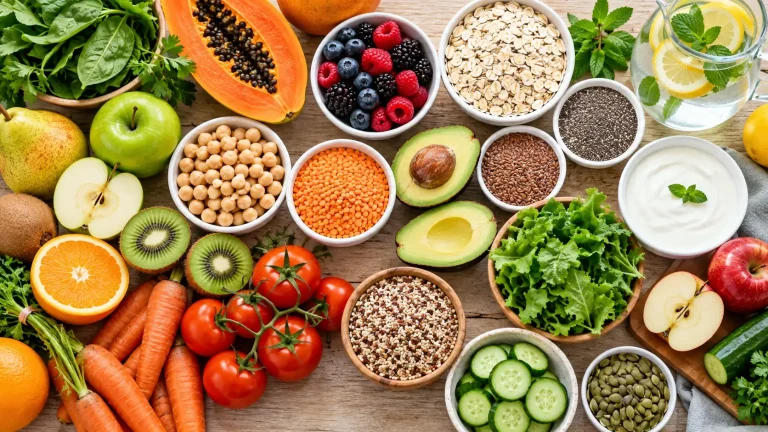
- Whole grains: Oats, quinoa, barley
- Legumes: Chickpeas, kidney beans, lentils
- Fruits: Apples, oranges, pears, berries
- Vegetables: Carrots, broccoli, spinach, sweet potatoes
- Dairy: Milk, yogurt (unsweetened)
- Nuts & Seeds: Almonds, walnuts, chia seeds
Medium GI Foods (56–69)
These foods moderately affect blood sugar and can be consumed in balance.
- Brown rice
- Couscous
- Pineapple
- Sweet corn
- Whole wheat products
- Some tropical fruits (mango, papaya)
High GI Foods (≥ 70)
These foods can cause a rapid increase in blood sugar and should be consumed infrequently or around workouts.
- White bread
- Potatoes (mashed or baked)
- Rice cakes
- Cornflakes
- Watermelon
- Sugary beverages & candy
Glycemic Index vs. Glycemic Load
Although GI is helpful, it does not tell the whole story. That is where Glycemic Load (GL) comes in.
- GI = Quality of carbohydrate (how fast it raises sugar)
- GL = Quantity + Quality (how much carbohydrate plus how fast it raises sugar)
An example:
- Watermelon has a high GI, however, because watermelon has very little carbohydrate per serving, its glycemic load is low.
This means GI should always be considered with portion size.
Benefits of Eating Low Glycemic Index Foods
Eating low glycemic index foods can benefit in many ways; here are some
- Diabetes Management
Helps keep blood sugar levels stable, reducing the likelihood that insulin resistance will arise.
- Sustained Energy
Prevents the “sugar crash” that comes after you have eaten a high-GI food.
- Improved Satiety & Weight Loss
Keeps the hunger hormones regulated and reduces the risk of overeating.
- Reduced Risk of Chronic Diseases
Linked to lower cholesterol, heart disease, and cancer.
- Improved Sport Performance
Helps athletes plan food to eat before and after exercise effectively.
Sample Food Chart with Glycemic Index
| Food Item | GI Value | Category |
|---|---|---|
| White bread | 75 | High |
| Brown rice | 65 | Medium |
| Apple | 36 | Low |
| Lentils | 32 | Low |
| Potato (boiled) | 78 | High |
| Milk | 42 | Low |
| Watermelon | 76 | High (but low GL) |
| Oats | 55 | Low/Medium |
| Chickpeas | 28 | Low |
Practical Tips for Using GI in Daily Life
- Pair high GI foods with protein or fat to lessen their impact on blood sugar (e.g. bread with peanut butter).
- Choose whole grains instead of refined grains.
- Include fiber-rich vegetables in every meal.
- Eat whole fruits instead of fruit juices.
- For athletes: use high GI foods for quick recovery and low GI foods to sustain energy and endurance.
How QUA Nutrition Helps You with Glycemic Index
At QUA Nutrition, we recognize that nutrition is never “one-size-fits-all.” While glycemic index is an important tool, it’s also important to note that what is “good” or “bad” has a different effect on each person, and it is dependent on genetics, metabolism, lifestyle, and health condition.
This is how we help:
- Personalized Glycemic Control Plans: We create diets that account for your blood sugar responses, fitness goals, and medical requirements, which make a difference.
- Athlete Nutrition: Our sports nutritionists utilize GI as a tool to promote training, recovery, and performance.
- Medical Nutrition: To manage diabetes, PCOS, or weight, we will create GI-balanced diets that actually qualify as diets.
- Scientific Approach: Every diet we create is based on evidence, lab data, and close monitoring.
- Long-Term: We won’t hand you a list of foods. We will teach you how to make GI-conscious food choices forever.
With QUA Nutrition, you will never feel lost and confused about whether a food is “good” or “bad” – we will help you find what is right for YOU
Eat with Intention: Use GI to Fuel Your Health Goals
The Glycemic Index is more than just a number. It’s an effective indication of how certain foods will affect your body. Combining low- to medium-GI foods provides you with sustained energy, better blood sugar management, and reduced risk of chronic diseases.
It is just as important to remember that the GI is only one aspect of nutrition. Portion size, cooking method, food combinations, and individual body responses are also important.
This is where QUA Nutrition comes in. To develop a science-based, tailored nutrition plan that fits your lifestyle, health condition, and goals.
FAQs
- Is the glycemic index important only for diabetics?
Not at all. Although it is vital for managing diabetes, glycemic index helps athletes, individuals who are overweight, those with PCOS, and even anyone wanting energy and feels stable.
- Is it ok to eat high GI foods?
Yes, in moderation. High GI foods can be beneficial pre- or post-workouts because they provide quick energy.
- How does glycemic load differ from glycemic index?
GI measures how fast a food item raises blood sugar levels, whereas glycemic load takes into account the type and amount of carbs consumed.
- Do proteins and fat have a glycemic index?
No. Only food items that contain carbohydrates have a glycemic index. Protein and fat do not cause blood sugar spikes.
- How does QUA Nutrition help me manage GI while eating?
We create individual diet plans based on your personal health goals, lab reports, and lifestyle so you can add the best GI foods for your body.