Traditional vegetarian meals often contain a large proportion of carbohydrates. Rice, roti, potatoes, pasta, legumes, and fruit are staples in many vegetarian meals. Without meat or fish, people may eat larger portions of these foods to feel full. For anyone trying to lose weight, cutting back on carbohydrates can seem difficult with this eating pattern.
It is entirely achievable, though. Many vegetarian foods are naturally low in carbohydrates and provide protein, fibre, and healthy fats. This guide explains what low-carb eating involves, identifies the foods worth building meals around, highlights those that need portion control, and outlines how to structure a plan that supports long-term weight management.
Can a Vegetarian Diet Be Low Carb?
A vegetarian diet can be adjusted to include fewer carbohydrates. A low-carb diet usually means eating fewer than 130 grams of carbohydrates a day, while stricter diets limit intake to less than half that amount. However, cutting back on carbohydrates moderately is usually easier to maintain over time than following a very low-carb diet.
This approach can support weight management in two main ways. Protein and fibre increase satiety, which tends to reduce between-meal snacking. In addition, limiting refined carbohydrates helps prevent sharp rises in blood glucose followed by hunger.
This approach may help people who want to lose weight, manage blood sugar levels, or reduce PCOS symptoms. Caution is necessary for people with kidney disease, for women who are pregnant or breastfeeding, and for anyone taking medication for diabetes. In these cases, consult a healthcare professional before making any dietary changes.
Best Low Carb Foods for Vegetarians
Planning a low-carb vegetarian diet is much easier when you know which foods to stock up on. Vegetarian options can seem limited at first, but vegetables, protein-rich dairy and soy foods, healthy fats, and a few smart swaps cover almost every meal. Here is a simple guide to the best low-carb foods to build your plate around.
Low Carb Vegetables
Non-starchy vegetables should make up the largest part of the plate. They provide fibre and micronutrients with minimal carbohydrate.
- Spinach, kale and other leafy greens
- Cauliflower, broccoli and cabbage
- Zucchini, cucumber and bell peppers
- Mushrooms, which add a savoury depth that makes meals more satisfying
Protein-Rich Low Carb Foods
Protein is the nutrient that requires the most deliberate planning on a vegetarian diet. The following sources are both practical and widely available.
- Paneer and cottage cheese
- Tofu and tempeh
- Eggs, for those following an ovo-vegetarian diet
- Greek yogurt and plain curd
Healthy Fats
Fats improve the taste of meals and help control hunger. However, they are high in calories, so portion sizes matter.
- Nuts, such as almonds and walnuts
- Seeds, including chia, flax, and pumpkin
- Avocado and olive oil
Lower Carb Flours, Grains and Swaps
Familiar dishes need not be eliminated. Substituting a few ingredients can reduce the carbohydrate load.
- Almond flour, besan and coconut flour in place of refined wheat flour
- Cauliflower rice and zucchini noodles instead of rice and pasta
- Measured portions of millets and legumes, which still contain carbohydrates but also contribute fibre and protein
Vegetarian Foods That Are Higher in Carbs
Certain everyday foods contribute a large share of daily carbohydrate intake, often without being noticed.
- Rice, white bread and other refined flour products
- Potatoes and other starchy vegetables
- Sugary fruits, packaged juices and sweetened snacks
You do not have to cut these foods out completely. Smaller portions, combined with protein and vegetables, are usually enough. A plate with half a bowl of rice, a generous serving of vegetables and a portion of dal is far better balanced than a full plate of rice alone.
Sample Low Carb Vegetarian Meal Ideas
Knowing what to eat is one thing, but putting it together at mealtime is where most people get stuck. These sample ideas show how the foods above come together in simple, familiar dishes you can make at home. Use them as a starting point and adjust the portions to suit your appetite and your dietitian’s advice.
Breakfast
- Vegetable omelette or besan chilla with mint chutney
- Greek yogurt topped with chia seeds and a few walnuts
- Paneer or tofu scramble with sautéed spinach
Lunch and Dinner
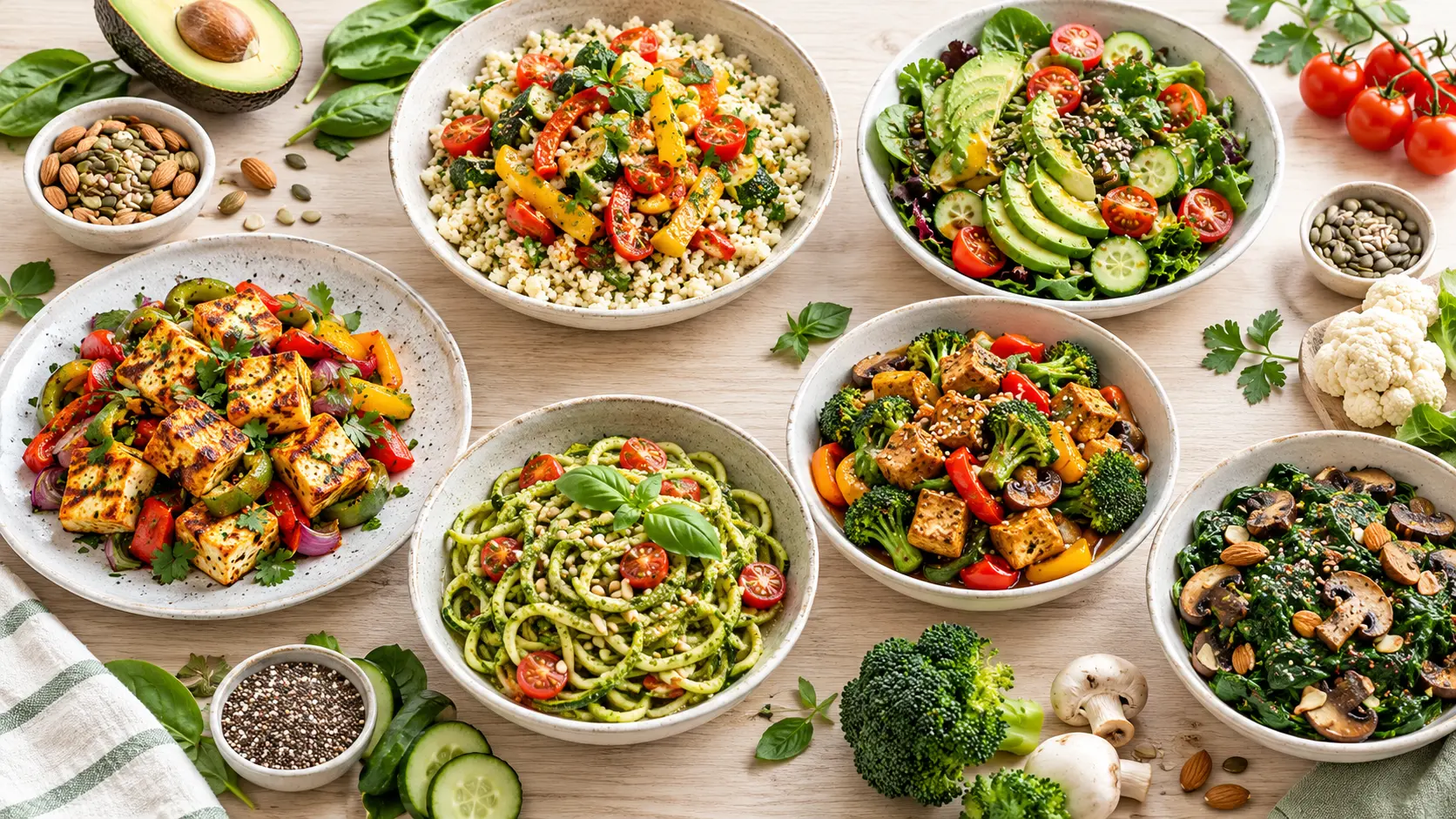
- Grilled paneer or tofu with stir-fried vegetables
- Cauliflower rice bowl with mushrooms and bell peppers
- Zucchini noodles tossed in olive oil with sautéed vegetables
- A small serving of dal with a large salad and one multigrain roti
Snacks
- Roasted pumpkin seeds or a small handful of almonds
- Cucumber sticks with hung curd dip
- A boiled egg or a small portion of paneer
Tips to Follow a Low Carb Vegetarian Diet
Cutting back on carbohydrates as a vegetarian can be difficult because common staples like rice, dal, bread, and potatoes are rich in them. With a little planning, it is possible. Here are a few tips to help you eat fewer carbs without missing out on what your body needs.
- Include Your Nutrients: Pay extra attention to protein, fibre, iron, vitamin B12 and calcium. Leafy greens, seeds, dairy and fortified foods all help, and your doctor may suggest a B12 supplement.
- Read the Labels: Sauces, flavoured yogurts, protein bars and packaged snacks often have more carbs than you’d expect. Look at the total carbohydrate and added sugar numbers.
- Drink Water: In the first week or two, you might feel tired or get headaches while your body adjusts. Drinking enough water and eating regular meals usually helps.
- Choose a Sustainable Approach: Cutting back on carbohydrates too much can be difficult to maintain and may leave you short of essential nutrients. The best weight loss diet is one you can follow consistently for months, not just a few days.
How a Dietitian Can Help You Plan a Weight Loss Diet
General dietary advice may not suit everyone, as people respond differently to foods. A qualified dietitian designs a plan around your medical history, daily routine, and food preferences instead of relying on a standard template. Professional input is especially valuable on a vegetarian diet, where deficiencies in protein, iron, or vitamin B12 can develop gradually without careful planning. A dietitian can also modify the plan as your goals, progress, and health status change. At Qua Nutrition, the focus is on practical, personalised guidance that fits into everyday life and supports sustainable weight management rather than short-term results.
Common Myths About Low Carb Vegetarian Diets
Low-carb diets come with a lot of advice, and not all of it is correct, especially for vegetarians. Many people give up early because of common misconceptions. Here are some of the most common myths, along with what is actually the case.
| Myth | Fact |
| Vegetarians cannot meet their protein needs on a low-carb diet. | Paneer, tofu, tempeh, eggs, yogurt, nuts, and seeds can provide adequate protein when meals are planned well. |
| You should avoid all carbohydrates to lose weight. | Carbohydrates are the body’s primary energy source. The quality and quantity of carbohydrates matter more than avoiding them completely. |
| A low-carb diet means you can eat as much ghee, cheese, and nuts as you like. | Fats are calorie-dense, so portion control is still important. |
| A low-carb diet works the same way for everyone. | Age, activity level, medical conditions, and medication can affect which diet is appropriate. |
Build a Low-Carb Vegetarian Diet That Works for You
A low-carb vegetarian diet works best when it is simple and balanced. Build your meals around non-starchy vegetables, paneer, tofu, eggs, and curd. Keep portions of rice, roti, and other starchy foods small, and make sure you get enough iron, vitamin B12, and calcium. Choose a plan you can follow for months, not just a few days.
The most effective strategy supports steady weight management without rigid rules that are hard to keep. At Qua Nutrition, our team can help you build a low-carb vegetarian plan that fits your health, taste, and daily routine, so you can eat well and stay consistent. Ready to start? Book a consultation with Qua Nutrition today and get a low-carb vegetarian plan made for you.
FAQs
1. Can vegetarians follow a low-carb diet?
Yes, they can. Vegetables, dairy, tofu, eggs, nuts, and seeds provide many of the nutrients you need. It does take a bit more planning than a non-vegetarian version, mainly to get enough protein.
2. What are the best low-carb protein sources for vegetarians?
Paneer, tofu, tempeh, and eggs are the most dependable. Greek yogurt, plain curd, and cottage cheese also work well, and they’re easy to add to meals you already eat.
3. Is a low-carb vegetarian diet good for weight loss?
Yes, it can help. Protein and fibre keep you full for longer, while eating fewer refined carbs may help you consume fewer calories. Your overall food intake, activity level, and ability to stick to the diet also matter.
4. How many carbs should I eat per day on a low-carb vegetarian diet?
Many low-carb plans keep intake under 130 grams a day. The right amount depends on your health, activity level, and goals. A dietitian can help you work it out.
5. Is a low-carb diet safe for people with diabetes or PCOS?
It helps some people, but it isn’t right for everyone. If you take medication, especially for diabetes, your dose may need adjusting as your diet changes. Speak to your doctor or a dietitian before you begin.