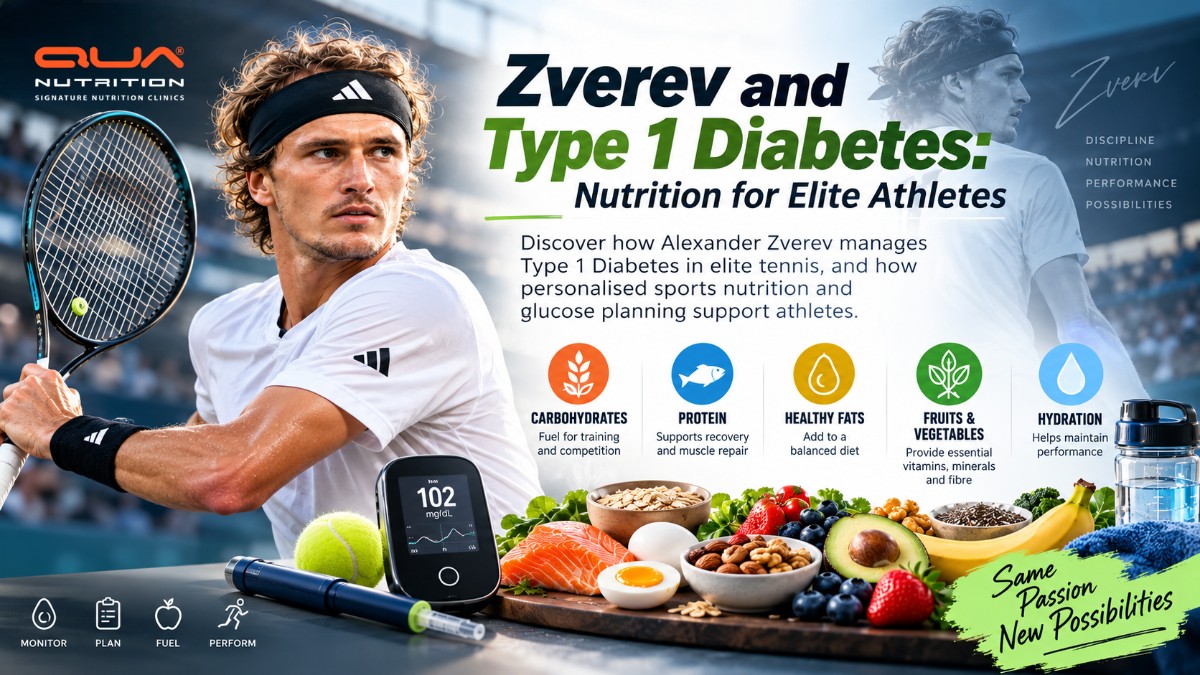
When Alexander Zverev gets on to a tennis court he is dealing with more than just serves, rallies and match points.
Zverev was diagnosed with Type 1 Diabetes when he was only four years old and has therefore had to spend a large part of his life finding a way to combine his elite sporting career with the continual need for blood glucose monitoring and insulin treatment. The course he has followed sends out an important message to athletes and those who hope to become athletes who have Type 1 Diabetes: being diagnosed with the condition does not mean that they have to give up their aspirations in sport.
His career also brings to light a point which is frequently ignored when people discuss diabetes and sport. It is not enough merely to eat healthily; for an athlete with Type 1 Diabetes, food, exercise, glucose monitoring and medical management all have to co-operate.
Zverev has always been open about checking his glucose levels and giving himself insulin while competing, and his situation offers a good chance of showing how careful sports nutrition can support both training and performance even though diabetes management is still the responsibility of the athlete’s medical team.
Zverev’s Journey: When Type 1 Diabetes Meets Elite Sport
People with Type 1 Diabetes have to receive insulin for the rest of their lives since their bodies do not produce enough insulin. For a professional athlete, dealing with the condition involves an additional aspect of preparation on top of the highly demanding sporting timetable.
Tennis can consist of long matches, frequent sprints, sudden movements, great concentration and a considerable use of energy. The demands of the sport can have an effect on blood glucose levels both during and after exercise.
Zverev has shown that it is possible to manage Type 1 Diabetes while taking part in elite competition; during tournaments he has been observed checking his glucose levels and injecting insulin, thus proving to millions of viewers that managing diabetes need not cease when an athlete enters a championship court.
Clearing Up Common Misunderstandings
His story is especially important since misunderstandings regarding diabetes can at times lead to unnecessary restrictions.
Type 1 diabetes is not the result of eating excessive sugar or of leading an unhealthy lifestyle; it is an autoimmune disease which needs proper medical management.
How Exercise Affects Blood Glucose
Exercise can certainly be included in the management of Type 1 Diabetes, but it does need to be carefully planned.
Aerobic activity can lead to greater use of glucose and may thus raise the chance of hypoglycaemia either during or after exercise. In some people, high intensity or resistance exercise can cause different glucose responses, including a temporary rise in blood glucose.
That is the reason why there isn’t a single “diabetes workout diet.” The strategy must be tailored to the individual athlete, the specific activity, the athlete’s glucose levels, their insulin regimen, and their medical advice.
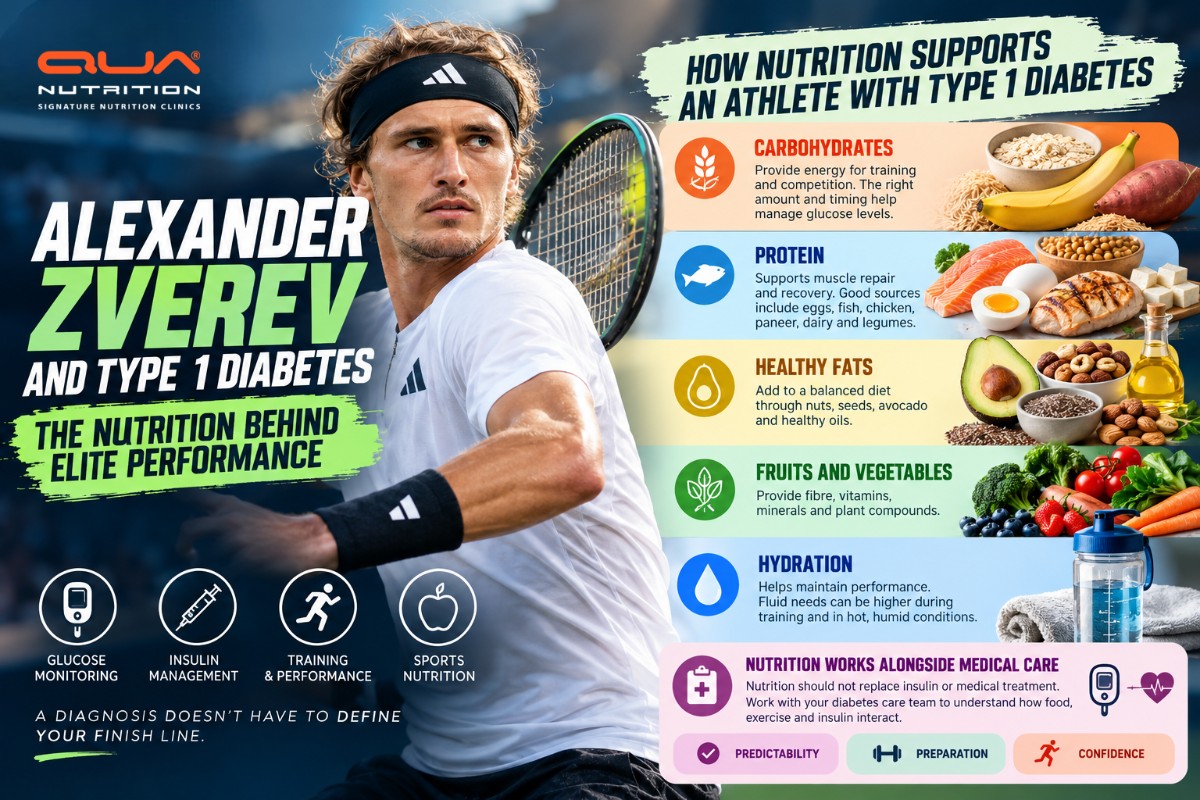
How Nutrition Supports an Athlete With Type 1 Diabetes
Nutrition is the fuel that athletes need if they are to train, compete and recover; and for an athlete who has Type 1 Diabetes, it also forms part of a broader glucose management strategy.
Carbohydrates : It is especially important to consider carbohydrates since they form a major source of energy when people are exercising at a moderate or high intensity. Instead of cutting them out, athletes with T1D should understand how the amount of carbohydrates they take affects their exercise and insulin.
The quantity and timing of carbohydrate intake will depend on the kind, length and intensity of the exercise.
For instance, the fuelling strategy needed by a tennis player who is about to take part in a long training session will be different from that required by someone carrying out a short strength workout.
Protein : It is just as important to take in protein if you are recovering. Eggs, fish, chicken, paneer, dairy products, legumes and other appropriate protein sources can all help to meet your daily protein needs.
Healthy fats : Healthy fats may also be included in an athlete’s total diet through foods like nuts, seeds, avocado and appropriate oils.
Vegetables and fruits : Vegetables and fruits give you fibre, vitamins, minerals, and different plant compounds.
Hydration : Hydration also needs to be given special consideration since the amount of sweat lost during training and competition can have an effect on performance, and fluid needs can increase greatly in hot and humid conditions.
Nutrition Works Alongside Medical Care:
Nutrition should not be used as a substitute for insulin or medical treatment and the athlete with T1D should work with their diabetes care team to see how insulin, food and exercise interact.
What we want to do is avoid causing fear about food.
The aim is to achieve predictability, preparation, and confidence.
Managing Blood Glucose Around Training and Competition
A major difficulty faced by an athlete having Type 1 Diabetes is that exercise never causes the same glucose reaction each time.
The extent of the response can be affected by how intense the exercise is, how long it lasts, the meals eaten previously, insulin levels, stress, sleep, hydration and other individual factors.
It is in this area that continuous glucose monitoring can prove to be a useful tool for certain athletes since CGMs offer information regarding glucose trends both before, during and after exercise, enabling the athlete and the healthcare team to gain a better understanding of the individual’s patterns.
Recognising Hypoglycaemia and Hyperglycaemia
Fatigue, dizziness, reduced concentration and impaired coordination are all symptoms of hypoglycaemia. In the course of sporting activity these symptoms can become especially significant since the athlete has to make quick decisions and maintain physical control.
Hyperglycaemia can likewise take place, especially when associated with some intense activities, and may be accompanied by a greater thirst, more frequent urination or blurred vision.
It is not something that should just be endured.
If an athlete is experiencing worrying symptoms or has abnormally high glucose levels they should carry out their personal diabetes-management plan and obtain suitable medical advice. It is important that athletes always avoid deliberately reducing or omitting their prescribed insulin just to prevent exercise-related hypoglycaemia without first seeking advice from their diabetes healthcare team. Insulin is a lifesaving treatment for people who have Type 1 Diabetes.
Preparing for Safer Sport:
Preparing can make taking part in sports safer and more manageable.
Athletes should understand their own glucose responses, plan their food around their training, carry the right kind of fast-acting carbohydrate, have access to insulin and inform the people nearby of the steps to take in an emergency. The strategy should be tailored to the individual athlete by the athlete’s healthcare professionals.
From Diabetes Management to Sporting Ambition: The Role of Qua Nutrition
The case of Zverev shows that one can have a strong ambition in sports without having to be on opposite sides of the court from Type 1 Diabetes.
But one must prepare alongside inspiration. We at Qua Nutrition think that sports nutrition should be based on the athlete and not on general diet charts or the routines of celebrities.
For an athlete who has Type 1 Diabetes, arranging their diet can be one element of a more comprehensive, multidisciplinary strategy, and a tailored plan may take into account training volume, the type of sport involved, the competition timetable, dietary preferences, carbohydrate consumption, protein needs, hydration, recovery and the timing of meals in practice.
What we want to do is not to recommend any changes to insulin dosage, since that kind of decision should remain the responsibility of the athlete’s diabetes healthcare team.
How Personalised Nutrition Can Help:
Nutrition support can assist an athlete in learning how to plan their meals and snacks in relation to their training needs and in ensuring that they take in sufficient energy and nutrients.
For instance, a nutrition strategy can assist an athlete in planning carbohydrate-containing meals before intense sessions, in having recovery meals after training and in choosing convenient sources of protein at various times of the day.
Eggs, fish, chicken, paneer, curd, legumes, fruits, vegetables, nuts and seeds are all things that can be included depending on individual needs.
For a person who is starting a new exercise programme, it is also useful to keep a record of the food they eat, the training they do, their glucose responses and their recovery experiences when having these discussed with their healthcare team.
What is aimed for is not perfection. With each training session it is learning, adjusting, and gaining more confidence.
Frequently Asked Questions
1. Can an athlete with Type 1 Diabetes compete at an elite level?
Yes. Alexander Zverev has competed at the highest level of tennis since his diagnosis at age four. With careful planning, glucose monitoring, insulin management and support from a healthcare team, athletes with Type 1 Diabetes can train and compete successfully.
2. Does eating too much sugar cause Type 1 Diabetes?
No. Type 1 Diabetes is an autoimmune condition. Diet or lifestyle does not cause it. People with the condition need lifelong insulin and proper medical management.
3. Should athletes with Type 1 Diabetes avoid carbohydrates?
Not necessarily. Carbohydrates are a major energy source during moderate and high-intensity exercise. Athletes should learn how carbohydrate quantity and timing affect their glucose, training and insulin. Their diabetes care team can help them build a suitable plan.
4. Why does exercise affect blood glucose differently each time?
Many factors shape the response, including exercise intensity, duration, previous meals, insulin levels, stress, sleep and hydration. Aerobic activity may lower glucose, while high-intensity or resistance exercise can sometimes raise it temporarily. Continuous glucose monitoring can help athletes spot their own patterns.
5. Can Qua Nutrition adjust my insulin dose?
No. Insulin decisions belong to the athlete’s diabetes healthcare team. Qua Nutrition supports athletes with meal planning, fuelling, hydration, recovery and practical food choices around training. This support works alongside medical care, never in place of it.
Conclusion: Your Diagnosis Does Not Have to Define Your Finish Line
Alexander Zverev’s case provides an important point of view for anyone suffering from Type 1 Diabetes who dreams of competing, exercising or indeed wanting to get fitter.
Even though a chronic condition may result in extra responsibilities, it by no means wipes out one’s ambition. The route might need more preparation this could involve glucose monitoring, insulin management, careful fueling and frequent contact with a healthcare team.
That is to say, preparation need not be a limitation. It may end up being part of the athlete’s strength.
At Qua Nutrition we aim to assist athletes in making nutrition an integral part of their preparation for the future. If you are just starting your fitness journey, training for your first race, competing at a more advanced level or aspiring to become an elite athlete, personalized sports nutrition can help you to understand how to fuel your training, aid recovery and develop sustainable habits.
For athletes who have Type 1 Diabetes, this journey should take place together with proper medical care, not in place of it.
It is not necessary for you to copy Zverev if you want to win your own championship; all you need to do is get a good understanding of your body, prepare intelligently, and assemble the right team around yourself.
Let Qua Nutrition and Ryan Fernando’s team be Part of Your Championship Journey
The foundation of your career as an athlete is laid well before the trophy presentation.
It is developed through the meals you prepare, the training sessions you do, the recovery you place a priority on, and the habits that you carry out when no one is looking.
Qua Nutrition can assist you in turning those habits into a custom sports nutrition strategy tailored to your goals. No matter whether your aim is to achieve a personal best, to compete for the first time, to reach a national level or to win the most important prize of your career, begin to prepare now.
Stimulate your training, assist with your recovery, understand your body, and pursue your ambitions.
Your path to winning the championship begins well before you raise the trophy. Qua Nutrition can help you get ready for it.