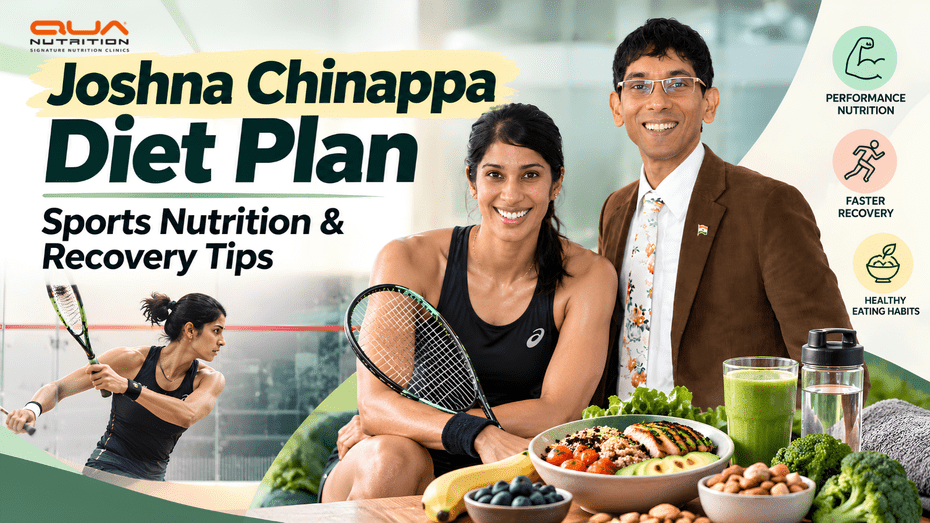
Many athletes will be considering retirement by the age of 39, but Indian squash player Joshna Chinappa is still challenging this idea. Her career is not just a sequence of rankings, medals, and participation in international tournaments; it is also a tale of reconstructing her body, drawing lessons from failures, and realizing the role that nutrition, training, and recovery can play in achieving long-term sporting success.
Joshna has achieved a number of important results on the international stage, but her career has also been characterized by considerable difficulties. In 2011, she had an ACL injury which meant that she lost the whole of that season and was therefore required to go through a tough rehabilitation programme. The experiences she has had have contributed to her adopting a more disciplined method when it comes to training, nutrition and recovery.
Athletes can learn a valuable lesson from her experience: nutrition is more than just eating healthy foods; it is a matter of supplying the correct nutrients, in the right amounts and at the right time in order to support training, recovery, performance and long-term health.

Joshna Chinappa and Ryan Fernando: A Nutrition Partnership Since 2004
Joshna first met Ryan Fernando when she was training at the Chennai Squash Academy. She remembers how he explained nutrition in simple, practical terms.
One of the early lessons that stayed with her was the importance of eating fruits and vegetables regularly. Those conversations helped her understand that food was more than something to eat after a long day of training. It was part of looking after her body.
Over the years, their professional relationship developed alongside Joshna’s sporting career. Ryan and the QUA Nutrition team supported her nutrition journey as she navigated the demands of training, competition and recovery.
For Joshna, working with a nutritionist helped make food choices more purposeful. For Ryan, her journey reflects the value of consistent nutrition support over time.
An athlete’s needs can change throughout their career. Training intensity, competition schedules, injuries, and recovery requirements all influence how they should approach nutrition.
Sports nutrition is not a short-term diet. It is an ongoing process of building habits, reviewing progress, and making changes when necessary.
Joshna’s experience provides a practical example of how nutrition can remain part of an athlete’s routine through different stages of a sporting career.
From Early Lessons to Elite Performance: Joshna Chinappa’s Nutrition Journey
The Turning Point: ACL Injury and Rehabilitation
The injury to Joshna’s ACL was a significant turning point, showing the impact that strength, nutrition, rehabilitation, and regular training can have on an athlete’s long-term career.
While she was recovering, she gradually realized how important it was to build up her strength and to properly prepare her body for the physical requirements of a professional sport.
From Junior Challenges to Professional Discipline
Joshna has openly talked about being overweight when she was a junior and about eating a large quantity of sugar. She has also explained that she had not previously trained her body in the manner expected of a professional athlete.
It is for this reason that nutrition and structured physical training should not be regarded as minor elements in an athlete’s development.
The fact that she has changed shows that sporting performance depends on more than just technical ability; strength, body composition, nutrition, recovery and conditioning all have to work together.
What Does Joshna Chinappa Eat? Exploring Her Approach to Nutrition
She has said that her eating habits are fairly simple; during training she eats a good deal of protein, moderate quantities of carbohydrates, some fruit, some vegetables and sufficient fluids.
She has stated that, when taking part in tournaments, her general method is still the same but that she raises her carbohydrate intake to meet the increased demands of competing.
Protein for Muscle Recovery
Protein in adequate amounts helps to support muscle repair, adaptation and maintenance, especially in the case of athletes who carry out frequent strength and high-intensity training sessions.
Carbohydrates for Match-Day Fuel
Carbohydrates form an important source of energy in intense squash activity, so it is especially important to take in adequate amounts of them during demanding training and competitions.
Fruits and Vegetables for Everyday Nutrition
Fruits and vegetables contain carbohydrates, fibre, vitamins, minerals and phytonutrients, all of which contribute to the athlete’s overall nutritional quality.
Joshna has also mentioned eggs, toast, oats and fruits as items to include when having breakfast. Although orange juice has been talked about in the context of pre-exercise nutrition, it is not automatically suitable or necessary for all athletes.
The main takeaway is that individualisation is important; the best diet for an athlete will depend on his training load, his body composition, his tolerance of food, his competition schedule and his nutritional requirements.
Eating at the Right Time: Why Meal Timing Matters for Athletes
For athletes, it is important what they eat, but the times when they eat can be important as well.
She has talked on several occasions about the need to eat soon after training and has earlier waited several hours before doing so; constantly postponing nutrition after training may make the recovery process more difficult, especially when athletes have another demanding session later in the day.
Pre-Training Nutrition
Eating an appropriate meal or snack beforehand can make energy easily available and at the same time help athletes to avoid starting their intensive sessions while under-fuelled.
Post-Training Recovery
Taking food after training helps to replace the energy stores and aids in muscle recovery, especially if another session of training is coming soon.
A meal or snack aimed at recovery will usually contain carbohydrates and protein, together with the right amount of fluids and electrolytes according to the athlete’s sweat losses and the training conditions.
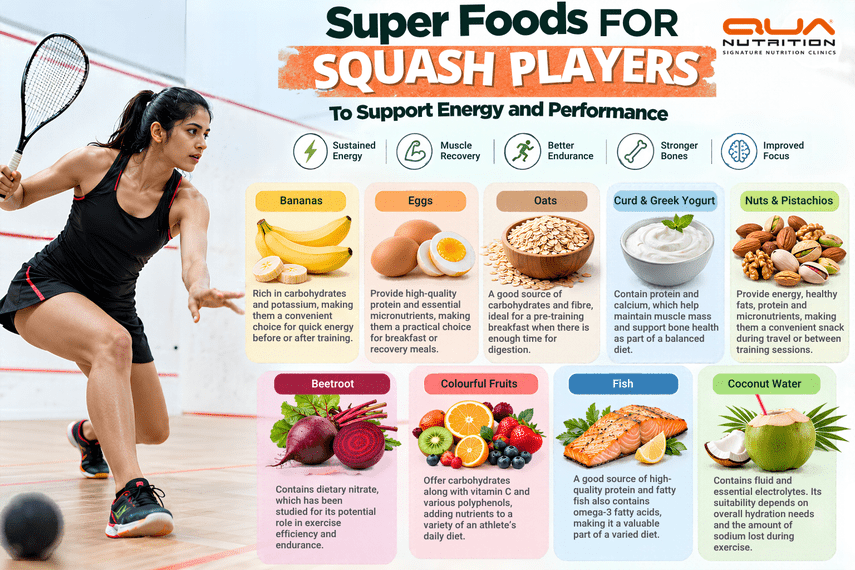
Superfoods for Squash Players to Support Energy and Performance
Squash is a sport that puts a high demand on the body, requiring repeated bursts of speed, quick changes of direction, muscular power, and continuous concentration.
No single food is capable of improving an athlete’s performance, but nutrient-dense foods can serve as useful elements of a properly planned sports nutrition program.
Bananas: Since bananas contain carbohydrates and potassium, they are a convenient choice for athletes to eat either before or after training when they need easily accessible energy.
Eggs: Because they contain high-quality protein and a number of micronutrients, eggs are a practical choice to include in an athlete’s breakfast or in meals aimed at recovery.
Oats: Oats contain carbohydrates and fibre and can therefore be a convenient breakfast before training if there is enough time available for digestion.
Curd and Greek Yogurt: Dairy products contain protein and calcium and thus help to maintain muscle mass and promote bone health as part of a well-balanced diet for athletes.
Nuts and Pistachios: Since they contain energy, healthy fats, protein, and micronutrients, nuts are a convenient choice as snacks when traveling or between training sessions.
Pistachios have also been referred to in the context of Joshna’s travel snacks. But their value must be seen as contributing to a well-balanced diet rather than as a particular performance booster.
Beetroot: Beetroot contains dietary nitrate, and this has been investigated for its possible impact on exercise efficiency and endurance, even though the results can differ from person to person.
Colourful Fruits: Coloured fruits offer carbohydrates together with vitamin C and a number of polyphenols, giving variety to an athlete’s daily diet in terms of nutrition.
Fish: Fish is a good source of high-quality protein, and fatty fish also contains omega-3 fatty acids; it can thus form a useful part of a varied diet for athletes.
Coconut Water: Coconut water contains fluid and certain electrolytes, but as to whether it is appropriate will depend on the athlete’s general hydration needs and, more importantly, on the sodium lost during exercise.
Eating While Travelling: The Challenges of Professional Squash Players
International competition involves more than training and playing matches. Athletes often spend long periods away from home, adjust to different time zones and manage their meals in unfamiliar places.
Joshna describes spending much of her career travelling between countries, living out of a suitcase and spending time alone in hotel rooms after matches.
These experiences can make it difficult to maintain a regular routine. Food options vary between destinations, meal timings can change, and familiar choices may not always be available.
Ryan recalls Joshna contacting him while travelling in places such as Egypt to ask what she could eat when suitable options seemed limited.
Having a familiar nutrition routine helped her make these decisions more manageable.
Practical nutrition tips for travelling athletes
Athletes who travel frequently can make food choices easier with a little planning.
- Check food options in advance. Look at what is available near the hotel or competition venue.
- Carry suitable snacks. Choose travel-friendly foods that fit individual dietary needs.
- Plan meals around matches. Avoid leaving long gaps without food when the competition schedule allows.
- Stay hydrated. Account for travel conditions, climate, and the demands of training.
- Keep familiar options available. Foods that the athlete tolerates well can be useful when local choices are limited.
Travel also brings emotional challenges. Athletes may spend weeks away from family and friends while dealing with the pressure of competition.
A good performance support system should take these realities into account. Nutrition advice needs to work in the athlete’s actual environment, not just on paper.
Nutrition for Recovery, Body Composition, and Long-Term Sporting Health
The case of Joshna also shows that sports nutrition is not solely concerned with performance on the day of the competition.
Hydration and Electrolytes
The amount of fluid and electrolytes needed will depend on sweat rate, the length of the training session, the environmental conditions, and the individual’s physiology, which is why it is valuable to have personalized hydration strategies.
In long or intense sessions, there is a particular need for sodium and the other electrolytes because of the considerable amount of sweat lost.
Correcting Micronutrient Gaps
Being able to identify and fix true nutrient deficiencies can help to promote health, aid in recovery, and improve performance, at the same time avoiding unnecessary supplements that are taken merely on the basis of symptoms or assumptions.
The talks that Joshna has had regarding nutrition have mentioned deficiencies in calcium and sodium, thus highlighting the need to evaluate nutritional status rather than just adhering to general sports diets.
Nutrition as Athletes Get Older
When athletes get older, their nutritional needs should change in line with their training requirements; it becomes more important than ever to preserve muscle, to support bone health, to manage recovery and to maintain an appropriate body composition.
She has talked about the need to look after her body as she is getting older and has been working with a professional strength and conditioning team in order to stay competitive.
What her career shows is that in order to achieve longevity, one must adapt rather than repeat.
The QUA Nutrition Approach to Sporting Longevity and Performance
Personalised Sports Nutrition
Qua Nutrition, which was founded by Ryan Fernando, the celebrity nutritionist and sports nutrition expert, adopts a personalized method of nutrition by taking into account an athlete’s sport, training schedule, nutritional requirements, recovery needs, and performance goals.
For an elite athlete, it is not enough just to copy the diet of another player since their energy requirements, carbohydrate needs, protein intake, hydration, micronutrients, and meal timing all have to be tailored to the individual.
The Role of Ryan Fernando
Ryan Fernando and the Qua Nutrition team have been involved in Joshna Chinappa’s nutritional journey, helping to achieve the wider aim of linking nutrition with performance, recovery and longevity.
The importance of sports nutrition goes a long way beyond the preparation of a diet plan; it also includes taking into account training loads, competition schedules, travel, recovery, body composition, food preferences and nutritional deficiencies.
For athletes, Qua Nutrition can help build strategies around:
- Training and competition nutrition
- Carbohydrate periodisation
- Protein and recovery nutrition
- Hydration and electrolyte planning
- Micronutrient assessment
- Body composition management
- Travel and tournament nutrition
- Pre- and post-training meals
- Long-term athletic health
What Joshna Chinappa’s Journey Teaches Us About Nutrition and Discipline
Consistency Over Extreme Diets
What Joshna’s experience shows is that sustainable athletic performance is the result of sticking to proper nutrition, training, and recovery rather than relying on restrictive diets.
The person has mentioned that junk food should be limited, but with the exception of things like dark chocolate, occasional treats may be allowed. This is an example of an important principle, namely that a diet aimed at improving performance can be disciplined without becoming unnecessarily restrictive.
Performance Requires More Than Training
Elite performance is due to a number of factors, such as nutrition, physical preparation, recovery, mental readiness, injury management, and having a solid professional support system.
Joshna’s career is a strong example of the way in which these factors can work together over a number of years.
How QUA Nutrition Can Help Athletes Optimise Performance and Recovery
From Performance to Longevity, Qua Nutrition can assist athletes in creating personalized strategies that are aimed at supporting their immediate performance while also taking into account recovery, health, and long-term sporting longevity.
With Ryan Fernando and the Qua Nutrition team providing guidance, nutrition can be made an integral part of an athlete’s performance plan rather than being regarded as a matter to be addressed only when a problem arises.
Frequently Asked Questions About Joshna Chinappa’s Nutrition Journey
1. What is contained in Joshna Chinappa’s training diet?
She has said that her training diet consists of a higher amount of protein, a moderate amount of carbohydrates, some fruits, a good deal of vegetables, and adequate hydration; during tournaments, she increases her intake of carbohydrates.
2. What is the importance of carbohydrates for squash players?
Squash consists of carrying out frequent bouts of high intensity and maintaining long rallies. Since carbohydrates offer an important source of energy, they can help to restore the glycogen stores during demanding training and in competition.
3. Is it a good idea for squash players to eat bananas and oats?
Both of them can be useful sources of carbohydrates. Bananas give a convenient source of energy, and oats can provide carbohydrates together with fibre. The time at which they are eaten and the amount consumed should be suitable for the individual athlete.
4. Should athletes entirely avoid sugar and junk food?
It doesn’t have to be so. Joshna has mentioned the idea of restricting junk food and at times enjoying dark chocolate. More important than entirely getting rid of every indulgence are overall dietary quality, the amount eaten, how often it is eaten, and an individual’s performance goals.
5. How can Qua Nutrition assist squash players?
On the basis of an athlete’s training load, competition schedule, recovery requirements, body composition, hydration needs, and nutritional status, Qua Nutrition is able to create personalized nutrition strategies, using the expertise of Ryan Fernando and the Qua Nutrition team.
Conclusion: Building Sporting Longevity Through Nutrition and Consistency
The example of Joshna Chinappa demonstrates that age need not set the limits of athletic ambition.
Her career shows how important adaptation, discipline, and consistency are, having struggled with fitness when she was a junior and then recovered from a serious ACL injury while still continuing to compete at the highest level.
Her experiences relating to nutrition also show a simple yet powerful rule, namely that athletes need to eat not just to satisfy hunger but in order to support their training, recovery, performance and longevity.
There doesn’t exist a single superfood, a perfect diet, or a magic meal that can turn someone into an elite athlete; rather, such performance is the result of countless consistent choices relating to food, hydration, training, recovery, and lifestyle.
It is in this area that personalized sports nutrition can make a real difference.
At Qua Nutrition, which was founded by Ryan Fernando, the aim is not merely concerned with what an athlete eats today but with developing a sustainable nutrition plan that can help support the athlete’s goals for tomorrow.
A long sporting career is built over time, through daily habits, informed decisions, and the ability to adapt when things do not go as planned.