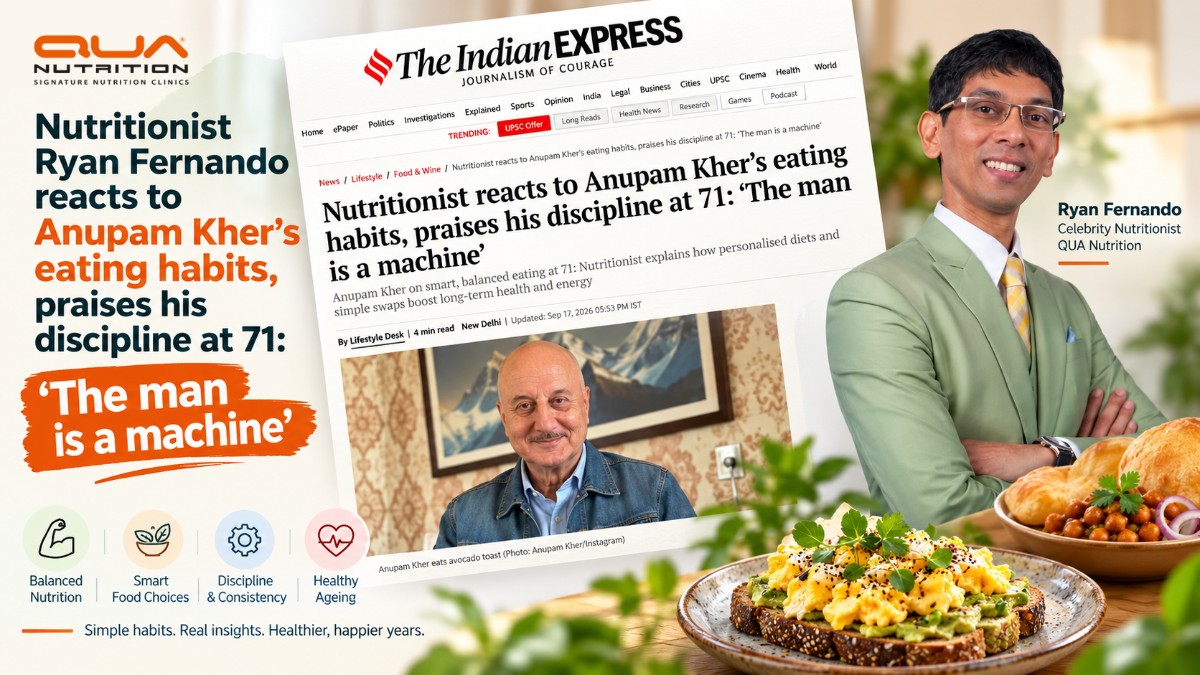
It is almost never necessary to adopt an extreme diet or give up all the foods you enjoy to stay fit as you get older, and the way Actor Anupam Kher eats at the age of 71 provides an interesting instance of how simple dietary choices, consistency, and individualised nutrition can help to support an active lifestyle in later life.
Kher has talked about liking food, giving as examples meals such as scrambled eggs with avocado toast. When he is in the mood to indulge himself, he has also mentioned enjoying chana bhatura.
In a report published by The Indian Express on September 17, 2026, Ryan Fernando discussed Kher’s eating habits and the role of personalised nutrition in supporting an active lifestyle. “Read the original article“.
The key lesson for Ryan Fernando, a celebrity nutritionist who has earlier worked with Anupam Kher, is not that one food is healthy while another is unhealthy; rather, it is that small and sustainable choices can affect a person’s entire dietary pattern.
Beyond the Plate: What Anupam Kher’s Eating Habits Reveal About Staying Healthy at 71
Anupam Kher has referred to himself as a person who enjoys eating, which makes his viewpoint rather interesting since healthy aging does not always mean eliminating the kinds of food that are enjoyable.
The breakfast that he is said to eat, which consists of scrambled eggs and avocado toast, includes protein, carbohydrates and healthy fats.
Eggs are a good source of protein, whereas avocado mainly supplies unsaturated fats and fibre. If the kind of bread used is taken into account, toast can also offer carbohydrates and extra fibre.
The nutritional value of a meal depends on a number of factors beyond just listing out the individual ingredients, such as the amount served, the way it is prepared, the person’s total dietary intake and their own health objectives.
It is here that personalized nutrition becomes important, especially since nutritional needs vary with age.
Why Protein Becomes More Important as We Age: The Role of Nutrition in Preserving Muscle
A major nutritional concern at the age of aging is keeping up muscle mass and physical function. As people get older, they experience a gradual alteration in their muscle mass and in their body composition; it thus becomes all the more important to have sufficient protein intake together with some appropriate physical activity.
Eggs, dairy products, pulses, legumes, fish, poultry and other foods high in protein can be included depending on an individual’s dietary preferences and health needs.
Anupam Kher’s reported habit of eating eggs for breakfast is thus an instance of a common food contributing to a meal that contains protein.
It doesn’t follow that adding protein to a single meal will ensure that adequate amounts are consumed throughout the day; the general pattern of one’s diet is important.
Smart Swaps, Not Strict Restrictions: How to Eat Better Without Giving Up the Foods You Love
A key point emphasized by Ryan Fernando is the concept of making intelligent swaps instead of automatically banning foods.
That is a significant distinction.
A diet that is sustainable needn’t involve dividing foods into strict “good” and “bad” categories; rather, it is possible to focus on improving the nutritional value of meals and at the same time allow room for the kinds of food a person likes.
For example, a meal can be adjusted through:
- Choosing whole grain options where appropriate
- Adding vegetables to meals
- Including adequate protein
- Using healthier cooking methods
- Being mindful of portion sizes
- Reducing the frequency of highly processed foods
This method makes it easier to stick to a nutrition plan over the long term.
One will not automatically compensate for an otherwise well-balanced diet simply by occasionally having a traditional treat like chana bhatura.
Eating for More Than Calories: Why Portion Control and Nutrient Density Matter After 60
The energy needs of people can change as a result of changes in their body make-up, the amount of physical activity, and their metabolic rate.
That means that nutrient density becomes more important.
The objective is not to reduce food intake as much as possible; rather, it is to get enough protein, fibre, vitamins, minerals and other necessary nutrients without making heavy use of foods which supply a large number of calories but at the same time contain only a small amount of nutrients.
A diet that is based on vegetables, fruit, whole grains, pulses, nuts, seeds, dairy or suitable alternatives and high-quality protein sources can be used to produce a nutrient-dense pattern of eating.
Meanwhile, attention should be paid to individual medical conditions; for example, a person who has diabetes, kidney disease, cardiovascular disease, or digestive problems might need a completely different dietary approach.
There is no one diet for senior citizens, and Hydration, digestion, and Recovery Matter Too
Beyond Nutrition: How Hydration, Digestion, Movement and Recovery Support Healthy Ageing
All these factors hydration, digestive health, physical activity, and sleep have an effect on general well-being. The greater the emphasis on dietary patterns that include minimally processed foods, vegetables, fruit, whole grains and enough fibre, the more important it becomes to maintain adequate fluid intake.
Physical activity carried out on a regular basis also complements proper nutrition in supporting mobility, strength and independence. For older adults, the aim ought to be more than just keeping a certain figure on the weighing scale since preserving strength, energy, mobility and quality of life becomes all the more important.
Smart Food Swaps to Support Healthy Ageing
Small food choices can make everyday meals more nutritious without requiring a complete change in eating habits.
| Instead of | Consider more often |
| Refined-grain bread | Whole-grain bread, if suitable |
| Breakfast with little protein | Eggs, yoghurt, paneer or another suitable protein source |
| Snacks with few nutrients | Fruit, nuts or roasted pulses |
| Meals with few vegetables | Add a variety of cooked or raw vegetables as tolerated |
| Sugary drinks throughout the day | Water or other suitable unsweetened drinks |
These are general examples rather than a prescribed diet. People with diabetes, kidney disease, food intolerances or other medical conditions may need different choices and portion sizes.
The Qua Nutrition Take: Why Healthy Ageing Is Built on Consistency, Not Perfection
Anupam Kher’s supposed eating habits remind us that healthy ageing needn’t mean sticking to a restrictive diet.
The most important lesson is to be consistent.
A well-balanced diet can include protein-rich foods like eggs, fibre-rich plant foods, healthy fats, and suitable carbohydrate sources, while still leaving room for occasional treats.
As both Ryan Fernando and Qua Nutrition point out, personalised nutrition is not a matter of banning all the enjoyable foods. It consists of gaining an understanding of a person’s body, their way of life, their nutritional needs and their health objectives, and then making sensible choices that are actually capable of being maintained.
When he is 71 years old, the aim should not merely be to eat less; it should be to eat better, to remain active, to keep the muscle, to support metabolic health and to maintain the energy needed to enjoy life.
Healthy aging is not about striving for perfection when eating. It’s about establishing habits that can remain with you for years.
Healthy Ageing Nutrition: Frequently Asked Questions
1. What is the best diet for people over 60?
A balanced diet that includes suitable protein sources, vegetables, fruits, whole grains, healthy fats and adequate fluids is a useful starting point. The ideal combination and portion sizes depend on individual health needs.
2. Should older adults eat more protein?
Many older adults need to pay particular attention to protein intake to help maintain muscle mass. The appropriate amount depends on body weight, activity, health status and other individual factors.
3. Can you enjoy favourite foods while following a healthy diet?
Yes. Most people can include favourite foods as part of an overall balanced eating pattern. Portion sizes and frequency can be adjusted to suit individual goals and medical requirements.
4. Does healthy ageing require supplements?
Not everyone needs supplements. They may be appropriate when a nutrient deficiency, increased requirement, or other clinical indication has been identified. A healthcare professional can help determine whether supplementation is necessary.
5. How can personalised nutrition support healthy ageing?
Personalised nutrition considers dietary habits, medical history, lifestyle and health goals to develop practical recommendations. It can help people make appropriate food choices while avoiding unnecessary restrictions.
Conclusion: Healthy Ageing Starts with Consistent Nutrition
Anupam Kher’s reported eating habits offer an opportunity to reflect on an important principle of healthy ageing: maintaining good health is not about following extreme diets or eliminating every food you enjoy. It is about building sustainable habits that support your nutritional needs, physical strength, and overall well-being.
As Ryan Fernando’s approach to nutrition highlights, making smarter food choices, including adequate protein, maintaining balanced meals and practising portion control can help create a more sustainable approach to healthy eating. Combined with regular physical activity, adequate hydration and sufficient rest, these habits can support an active lifestyle as we grow older.
At QUA Nutrition, we believe that nutrition should be personalised to your body, lifestyle, health requirements and goals. Rather than copying a celebrity’s diet, focus on understanding what works best for you and making gradual improvements you can maintain over time.
Healthy ageing is not about eating less or striving for perfection. It is about nourishing your body, staying active, and making consistent choices that help you enjoy life at every age.
Ready to build healthier eating habits? Explore personalised nutrition support from QUA Nutrition and take the next step towards a balanced, sustainable approach to long-term well-being.