
Usually, foods that reduce menopausal hot flashes are plant – based foods that are rich in phytoestrogens, healthy fats, antioxidants and hydration, while trigger foods include caffeine, alcohol, sugar, processed items and spicy foods.
When you pair these foods with lifestyle changes like weight management, regular exercise, and stress management, as well as good sleep, it can majorly ease the frequency of hot flashes and their intensity for many women.
What Are Hot Flashes?
Hot flashes are sudden feelings of intense heat that often start in the chest area and face, with flushing, sweating, and sometimes palpitations or anxiety. They are caused mainly by fluctuating estrogen levels during perimenopause and menopause, which affect the brain’s temperature-regulation center and blood vessel dilation (vasomotor symptoms).
They can last from seconds to several minutes and may occur multiple times a day or night, often disrupting sleep and daily activities.
How Diet Helps Manage Hot Flashes
Diet plays a major role in hot flashes, as it has effects on hormones, blood sugar, inflammation, and blood vessel reactivity.
Consuming phytoestrogen-rich foods can help a little by mimicking estrogen and can ease vasomotor symptoms.
Going on a fiber-rich and anti-inflammatory diet is shown to reduce hot flashes and night sweats, while consuming sugar-rich and processed foods can worsen the hot flashes.
Foods That Reduce Hot Flashes
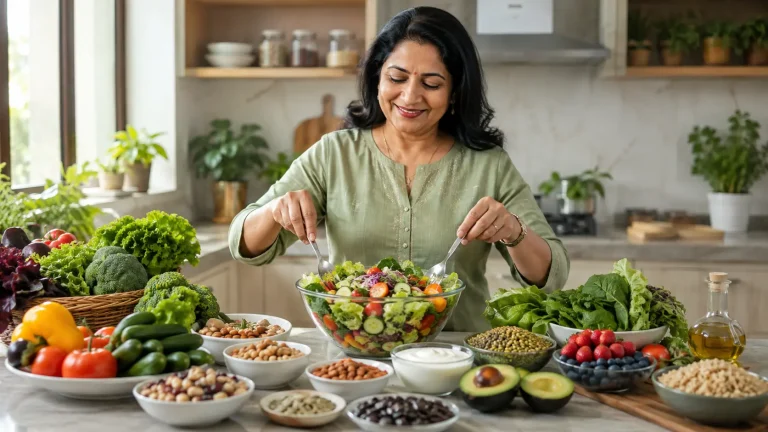
The frequency and intensity of hot flashes can be reduced by following a diet that includes whole foods and minimizing processed foods. The key categories of food to be consumed are
Phytoestrogen-Rich Foods
These are the foods that mimic estrogen and are known to reduce the frequency and intensity of hot flashes when consumed regularly.
One can get phytoestrogen from –
- Soy: tofu, tempeh, edamame, soy milk, soy yogurt.
- Flaxseeds: ground flax in smoothies, porridge, and salads. These food items provide lignans, a type of phytoestrogen, along with fiber and omega-3s.
- Other sources of phytoestrogen are chickpeas, lentils, sesame seeds, and some whole grains, which also provide smaller amounts of phytoestrogens.
Omega-3 Anti-Inflammatory Foods
Omega-3 fatty acids are known to help reduce inflammation and also support hormonal balance, which can help in easing hot flashes and night sweats in some women.
Some of the foods that are rich in Omega-3 fatty acids are
- Fatty fish like salmon, mackerel, sardines, and herring.
- Walnuts, chia seeds, flaxseeds, hemp seeds, and canola oil.
Hydrating Foods to Reduce Heat
Proper hydration helps to regulate body temperature and helps to manage sweating and also heat intolerance.
Consumables that help to hydrate the body are
- Water-rich fruits like watermelon, oranges, berries, and grapes.
- Water-rich vegetables like cucumber, lettuce, celery, tomatoes, and zucchini.
- Plain water, infused water, and iced herbal teas like peppermint, chamomile, and diluted coconut water for electrolytes.
Magnesium-Rich Foods
Magnesium-rich foods are known to support nervous system function and help in the relaxation of blood vessels and sleep, as well as stress management. All these can heavily influence hot flashes.
Magnesium-rich foods are
- Leafy greens like spinach, Swiss chard, and kale.
- Nuts and seeds like almonds, pumpkin seeds, sunflower seeds, and cashews.
- Whole grains and legumes like oats, quinoa, brown rice, beans, and lentils.
Vitamin E-Rich Foods
Vitamin E has been associated in some studies with reduced frequency and severity of hot flashes.
One can get vitamins via foods from –
- Nuts like almonds, hazelnuts, and peanuts.
- Seeds and oils like sunflower seeds, sunflower oil, wheat germ oil, and avocado.
Gut-Friendly Probiotic Foods
A healthy gut can influence estrogen metabolism, inflammation, and overall hormonal balance.
Probiotic and prebiotic foods are –
- Fermented foods like yogurt with live cultures, kefir, sauerkraut, kimchi, miso, and tempeh.
- Prebiotic fibers like those in onions, garlic, leeks, bananas, oats, and legumes.
Antioxidant-Rich Fruits & Vegetables
Antioxidants fight oxidative stress and support blood vessels, the brain, and hormone health.
Antioxidant-rich foods are
- Fruits like berries, apples with skin, and citrus fruits like oranges, grapefruit, lemons, and pomegranates.
- Vegetables like broccoli, Brussels sprouts, carrots, beetroot, bell peppers, and leafy greens.
Cool Herbs & Natural Remedies
With some herbs and natural remedies, one can cool their body and calm their nervous system. You can try herbal teas like peppermint, chamomile, and hibiscus.
Foods to Avoid During Hot Flashes
There are certain foods and drinks that can trigger or intensify hot flashes in many women. These common triggers include
- Caffeine: coffee, strong tea, energy drinks, cola; especially later in the day.
- Alcohol: wine, spirits, and beer, which can dilate blood vessels and disturb sleep.
- Spicy foods: chili-heavy curries, hot sauces, and pepper-loaded dishes.
- Ultra-processed foods and sugar: packaged snacks, fast food, pastries, and sugary drinks increase inflammation and blood sugar swings, which can worsen symptoms.
One can try to keep a symptom diary for 2-3 weeks and have simple foods to identify personal triggers.
Lifestyle Changes to Manage Hot Flashes
Non-food habits can also have a strong influence on the intensity of the symptoms and quality of life in menopause.
A few of the helpful approaches:
- Dress in layers, use breathable fabrics, keep your bedroom cool, and use a fan or cooling pillow.
- Practice stress-reduction techniques such as deep breathing, yoga, mindfulness, or short walks to reduce cortisol, which can amplify hot flashes.
Best Eating Patterns for Menopause Relief
Following a more Mediterranean-style cuisine is usually linked with fewer hot flashes and better overall health. Following these few steps can help relieve menopausal effects on the body.
- Having more vegetables, fruits, whole grains, legumes, nuts, seeds, and olive oil as the main fat.
- Moderate intake of fish and fermented dairy; reduce intake of red meat, processed meat, refined grains, and sweets.
Hydration & Electrolytes
Keeping oneself hydrated at all times of the day can help manage the body’s temperature. Inclusion of natural electrolytes like coconut water, bananas, and yogurt can also help in maintaining a cool body temperature.
Exercise & Weight Management
Intense and more frequent hot flashes are often associated with excess weight, and losing it has reduced the symptoms for many. Indulging in moderate aerobic activities like walking, cycling, or swimming, along with strength training, can help in reduction of hot flashes. With even a 5% weight reduction, one can see improvement in sleep, energy, and overall health.
Sleep Hygiene Tips
With hot flashes and night sweats, sleep can get disrupted very easily, which can affect one’s mood, cravings, and symptom perception. A few of the tips to improve sleep habits are
- Keep the bedroom cool and dark, use light cotton bedding, and avoid large, heavy meals, alcohol, and caffeine close to bedtime.
- Maintain a consistent sleep–wake schedule and try relaxing pre-bed routines such as stretching, breathing exercises, or a warm shower.
Meal Planning To Control The Hot Flashes
Breakfasts can include oats that are prepared with soy milk that consists of nuts and seeds, a vegetable omelet with spinach, tomatoes, and onions, and/or unsweetened yogurt topped with seeds and nuts.
Lunch can include Quinoa salad with veggies and herbs, stir-fried tofu with veggies and brown rice, or grilled salmon.
Dinners can include baked fish, grilled paneer or soya chunks with greens, lentils and vegetable stew, and/or tofu curry with mixed veggies.
Snacks can include a handful of nuts and seeds with an apple or pear, veggies like carrots and cucumbers with hummus, or fresh fruit salad paired with diluted coconut water.
Qua Nutrition specializes in creating personalized menopause-friendly nutrition plans that factor in your age, lifestyle, medical history, genetics, and goals, rather than relying on one-size-fits-all advice. With experienced nutritionists for menopause, advanced planning software, and ongoing follow-ups, we help you discover your capacity and design a sustainable way of eating that reduces symptoms and supports long-term health.
Ready to cool your hot flashes and feel like yourself again? Book a customized menopause nutrition consultation with Qua Nutrition today and let your food become your most powerful tool for relief.
FAQs
Q: What foods are best for reducing menopausal hot flashes naturally?
A: Beneficial foods include soy, ground flaxseeds, whole grains, leafy greens, nuts, seeds, and antioxidant-rich fruits and vegetables. Fatty fish and other omega-3 sources, plus probiotic foods, can also support hormone balance and symptom relief.
Q: Which foods should I avoid if I get frequent hot flashes?
A: Limit or avoid caffeine, alcohol, very spicy foods, sugary drinks, sweets, and ultra-processed foods like chips, fast food, and packaged baked goods, as these can trigger or worsen hot flashes in many women.
Q: Can drinking more water reduce hot flashes?
A: Staying well hydrated supports temperature regulation, circulation, and sweating, helping your body cope better with episodes and recover more comfortably.
Q: Which fruits help cool the body during menopause?
A: Fruits such as watermelon, oranges, berries, grapes, apples, and citrus segments can feel cooling and support vascular and hormone health.
Q: Can probiotics and gut health affect hot flashes or hormone regulation?
A: Yes, regular intake of probiotic foods and prebiotic fiber can support more balanced hormone function.
Q: At what age does a woman typically enter menopause?
A: Menopause typically occurs between ages 45 and 55, with an average around age 51. Perimenopause, when hot flashes and cycle changes often begin, can start several years before the final period.