
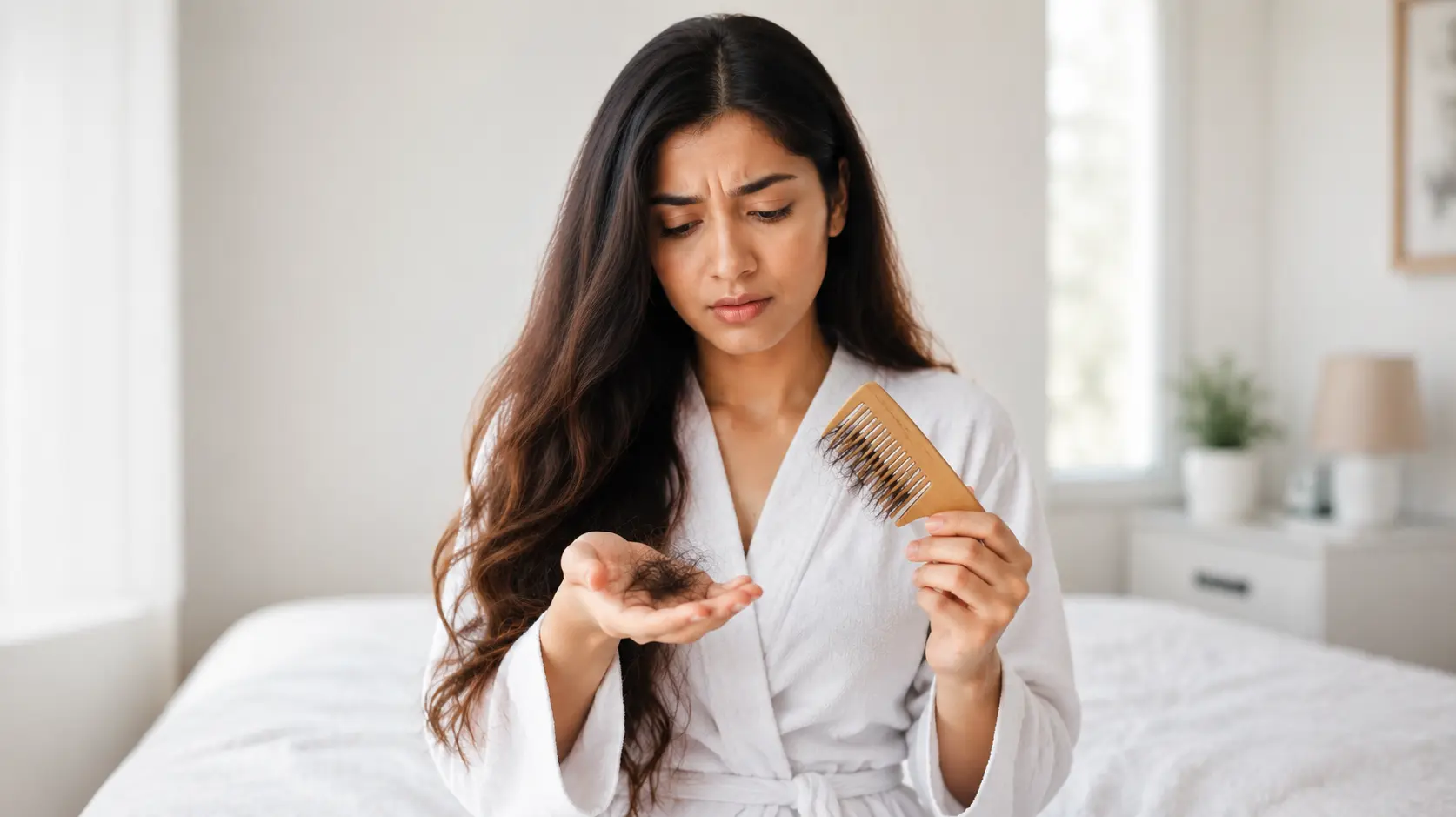
Hair fall is one of the most common health and beauty issues faced by women in the current scenario, where millions of them from various age brackets suffer from this condition. While losing 50-100 strands daily is part of the natural hair cycle, excessive shedding can be alarming and often signals an underlying issue. In many cases, for women, hair is a part of their identity and confidence. Hair fall, when it persists, could have an adverse effect on one’s emotional well-being as well. However, what makes hair fall quite challenging is the fact that it can have various causes like genetics, hormones and nutrition. Each of these categories requires a different approach to diagnosis and treatment. Identifying the root cause is therefore the most important step toward healthier hair. At Qua Nutrition, we always focus on finding these causes and designing the proper nutritional program for each individual client.
Understanding Normal Vs Excessive Hair Fall
Hair falling is a physiological phenomenon; however, understanding the difference between physiological falling and excessive hair falling is significant. The hair cycle guarantees that new hairs will substitute the old ones, thus ensuring density and thickness of the hair. Nevertheless, in case shedding exceeds the physiological norms, it may be a sign of any problems within the body or external factors that affect the condition of hair follicles.
- Hair Growth Cycle – Hair grows in three stages such as Anagen (growth phase), Catagen (transitional phase) and Telogen (rest phase). Hair shedding is a natural occurrence in the latter stages of the hair growth cycle.
- Normal Hair Fall – Losing 50-100 strands per day is considered as normal.
- Excessive Hair Fall Signs – Unexpected thinning, widening parting, appearance of bald spots or clumps of hair in the shower are the symptoms of some deeper problems that require medical attention.
Recognising these signs early allows timely intervention and prevents further damage.
Is Hair Fall Genetic?
Genetics have a very important part to play in relation to hair health. Women who have a family history of thinning hair may also face similar problems.
- Hair Thinning In Women (Androgenetic Alopecia) – This is the most common genetic problem related to hair thinning.>
- Family History – If your close relatives have experienced hair thinning then you are also susceptible to it.
- Patterns – Unlike men, women generally have diffuse hair thinning and not a receding hairline.
Genetic hair fall tends to be gradual and progressive. Although it cannot be completely avoided, it is possible to reduce the progress through early detection and treatment.
At Qua Nutrition, our experts offer a genetic test for hair loss that helps you understand the actual cause of your hair fall.
Is Hair Fall Hormonal?
Hair fall could be a result of hormonal imbalances. This takes place at certain points in life or as a result of certain illnesses.
Common Hormonal Causes
- PCOS/PCOD – Imbalance of androgens causes hair fall and thinning.
- Thyroid Disorders – Both underactive and overactive thyroid cause hair fall.
- Postpartum Hair Loss – This is quite normal and is usually temporary, caused due to hormonal imbalances after childbirth.
- Menopause – Caused by low estrogen hormone levels leading to hair thinning.
How Hormonal Hair Fall Differs from Genetic Hair Fall
Hair fall due to hormonal imbalances happens suddenly as compared to genetic hair fall which occurs gradually. Understanding the difference will help to choose appropriate methods of treatment. Hormonal issues are reversible in many cases whereas genetic hair fall is less likely to be cured completely but can be controlled.
Is Hair Fall Nutritional?
Nutrition plays an important role in hair health and any deficiency results in hair loss. Hair follicles need a constant supply of nutrients to produce strong hair.
Key Nutrient Deficiencies Linked to Hair Fall
- Iron Deficiency – Quite common in women because of their menstrual cycles and inadequate diet.
- Protein Deficiency – Protein forms a major constituent of hair.
- Vitamin D And Biotin – Vital for healthy follicles.
- Zinc And Omega-3 – Supports scalp health and reduces inflammation.
How Crash Diets and Poor Eating Habits Worsen Hair Fall
Crash diets, fad diets and malnutrition deny the follicles their required nutrients and cause excessive hair fall. Good nutrition is important for hair growth and overall health. Improved nutritional habits can help strengthen follicles and minimize hair loss to a great extent.
Other Common Causes Of Hair Fall In Women
Apart from genetics, hormones and nutrition, there are certain other factors that contribute to hair fall. These causes often interact with primary triggers, worsening the condition.
- Stress – Cause telogen effluvium
- Hairstyling Damage –Hairstyling using heat and chemicals and tight hairstyles cause hair loss.
- Medical conditions – Autoimmune diseases, anemia and certain medications can also contribute to hair fall.
Certain lifestyle and external factors make the problems worse and increase hair fall. It is important to address them with medical or nutritional care for lasting improvement.
How To Identify The Root Cause Of Your Hair Fall?
Identifying the cause is necessary for efficient management of the problem. An organized approach allows not to miss any potential cause.
- Consult Specialists –Dermatologists or trichologists can examine the state of your scalp.
- Diagnostic Tests – Blood tests, hormonal studies, and examination of the scalp help in identifying the cause.
- Role Of Nutritionists – A nutritionist is crucial in discovering the dietary gaps, correcting deficiencies and providing the body with balanced nutrition which will favor hair growth. At Qua Nutrition, expert dietitians conduct a detailed analysis of these gaps and draw up the proper nutrition plan.
Thus, using a multidisciplinary approach, we consider all potential causes and solve the problem properly. Identifying the root cause prevents ineffective methods of treatment and ensures targeted solutions.
Managing And Preventing Hair Fall
Once the cause is identified, treatment is easier. This includes preventative care along with specific treatments to achieve lasting effects.
- Dietary Changes – Should have foods that are high in iron, protein, nuts, seeds, and omega-3s.
- Medical Treatments – This may consist of Minoxidil, hormonal treatment or other supplements as prescribed by a doctor.
- Lifestyle Habits – Stress management, proper hair care and refraining from any harsh practices help maintain good hair health in the long run.
Preventive measures are equally important as treatment, since they allow you to keep your hair healthy. It is important to follow consistency in terms of diet, lifestyle, and medical care.
Qua Nutrition’s Approach To Hair Fall
Our speciality at Qua Nutrition is individualised nutrition counselling. For those women who are suffering from hair fall, our professionals prepare diet charts according to deficiencies, balance hormones and improve health. No matter whether you are a sportsperson, corporate professional or a new mother, we assure that with our individualised methods, your hair will get the required nutrition. We are here to help women achieve confidence and energy through our unique nutritional counselling process.
Hair fall in women could be genetic, hormonal or nutritional. Understanding what causes hair fall is key to treating it successfully. Through a more personalised approach, such as dietary management with the help of Qua Nutrition, women can control their hair loss. Good hair starts from within and nutrition is one of the key players in this process. Patience and perseverance are key to long-term success.
FAQs
Q: Can nutrition-related hair fall be reversed?
A: Yes, correcting deficiencies and improving diet often reverses hair fall.
Q: How do I know if my hair fall is hormonal or genetic?
A: Hormonal hair fall occurs suddenly and during certain life periods, whereas genetic hair fall develops gradually and progressively.
Q: Which foods help reduce hair fall?
A: Foods rich in iron, protein, nuts, seeds and omega-3 fatty acids promote hair growth.
Q: Is hair fall after pregnancy normal?
A: Yes, it is a completely normal condition that tends to go away within several months.
Q: When should I see a doctor about hair fall?
A: In case of acute hair loss and accompanying symptoms, consult a specialist promptly.