Perimenopause is a normal phase of life that begins the transition to menopause. Fluctuating levels of oestrogen and progesterone during this stage may affect menstrual cycles, sleep, mood, appetite, energy levels and body composition.
For many Indian women, this stage can also bring questions such as, why am I gaining weight when I am eating the same way? What else could be causing my fatigue? Do I have to stop eating rice? Do I have to avoid dairy? Are soy foods safe? What should I eat to help my bones and muscles?
There is no one “perimenopause diet” that will answer all of these questions.
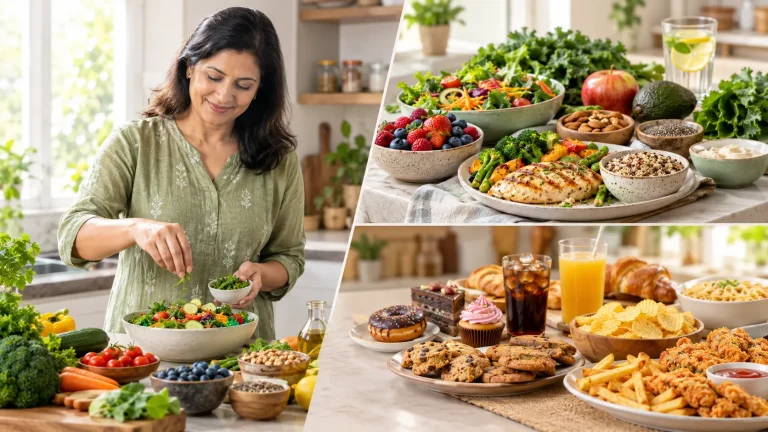
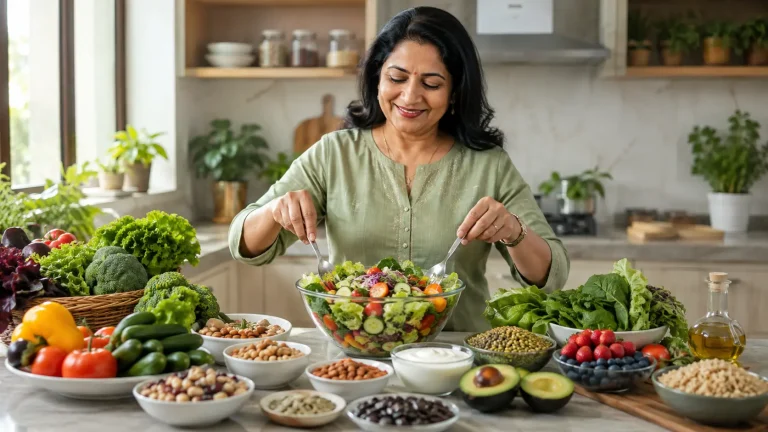
Instead, perimenopause nutrition should focus on adequate protein, fibre, calcium, vitamin D, healthy fats, omega-3 fatty acids, and a variety of vegetables and fruits, while limiting excessive added sugars, saturated fats, alcohol, and highly refined foods.
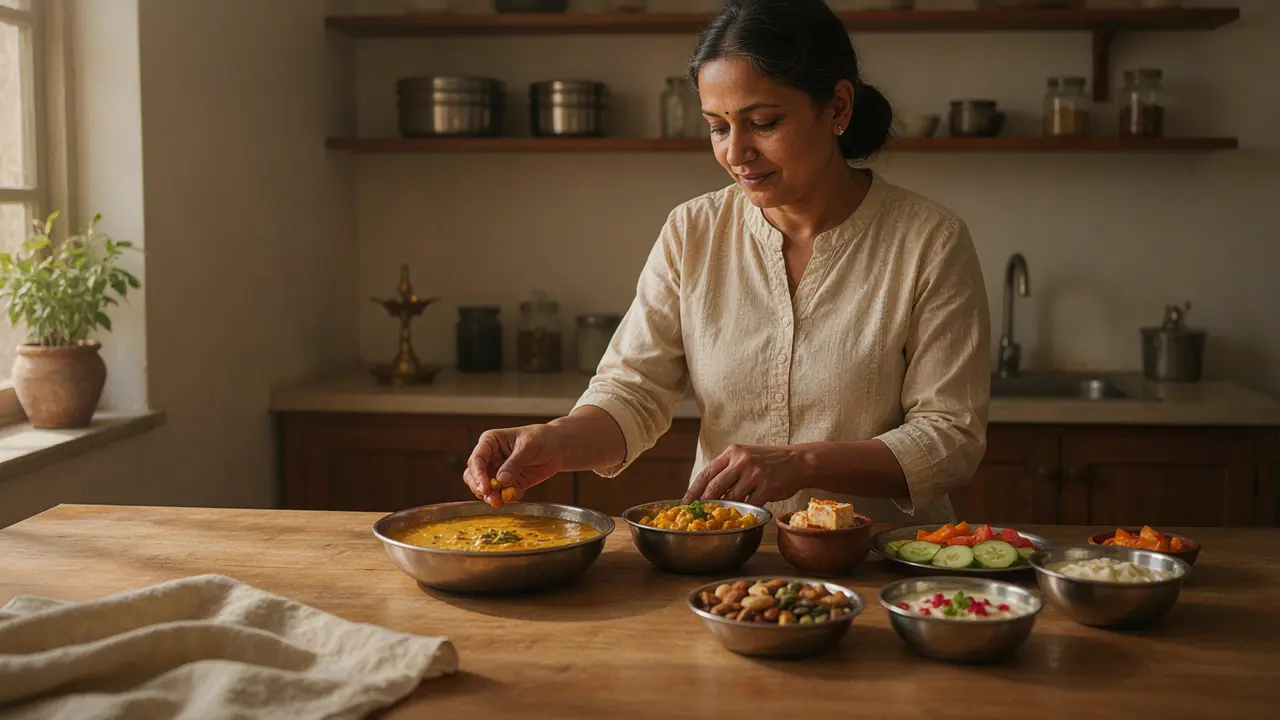
And most importantly, healthy Indian food doesn’t mean giving up on rice, roti, dosa or your favourite home cooked meals.
The aim is to bring traditional foods to be more balanced, nutrient dense and appropriate to your changing nutritional needs.
Why Is Nutrition Important During Perimenopause?
Hormonal changes during perimenopause happen alongside natural changes in muscle mass, bone health and body composition.
Eventually oestrogen levels decline and bone loss increases. Muscle mass tends to decline with age as well, and changes in activity, sleep and appetite can make it harder to manage weight.
Nutrition is therefore especially important.
A balanced diet helps:
- Helps maintain muscle
- Promote bone health
- Promote heart health
- Consume more dietary fibre
- Help support healthy blood sugar regulation
- Promote healthy weight management and satiety
- Give the necessary vitamins and minerals
- Enhance general energy and well-being
Rather than looking for foods that “balance hormones,” think of food as a tool to support your body through hormonal change.
1. Make sure to include protein at every meal
Adequate protein is one of the most important nutrition priorities during perimenopause. With age it is natural to lose muscle mass and protein supplies the amino acids needed by the body to maintain and repair muscle. Protein can also help you feel fuller after eating.
It is often difficult to get enough protein in Indian diets especially when the meals are based on rice, roti, dosa or other grain-based foods.
In India protein rich options are:
- Dal
- Sambar
- Rajma.
- Chole
- Green gram and other dals
- Soya beans
- Tofu
- Tempeh (fermented soybean)
- Paneer
- Curd or Greek Yoghurt
- Eggs
- Fish
- Poultry
- Nuts & Seeds
A good way is to ask yourself: “Where’s my protein in this meal?”
For example, breakfast may include vegetable dosa with sambar and eggs. Rice with dal, vegetable poriyal and curd could be lunch. A snack can be roasted chana and buttermilk. Roti with tofu, chicken or fish and vegetables can be dinner.
Some nutritional advice suggests 25–30 g protein per meal during perimenopause. Individual needs will vary based on body size, activity level, dietary pattern and health status.
2. Don’t Quit Rice. Make it even.
Rice is often unfairly blamed for weight gain. You do not need to stop eating rice when you are in perimenopause automatically.
The more important questions are:
- How many are you bringing?
- What do you eat it with?
- Is there enough protein and vegetables in the meal?
- Are you overdoing it on refined carbohydrates during the day?
Rather than having a large amount of rice with a bit of curry, make it a more balanced meal.
Rice can be eaten with dal or sambar, vegetables, curd and a protein source like fish, eggs, chicken or tofu.
Brown rice, hand-pounded rice, red rice, millets and other whole grains can be rotated.
But if you like white rice, you don’t have to completely give it up. Portion size, meal composition and overall dietary quality matters.
3. Traditional millets & whole grains reintroduced
There’s an incredible variety of millets and whole grains in the Indian diet.
Some examples are:
- Finger millet
- Bajra
- Jowar
- Foxtail Millet
- Little millets
- Kodo millet
- Barnyard millet
- Oats
- Whole wheat
- Brown rice
These foods can provide fibre, magnesium and other nutrients.
You can use ragi for dosa or porridge, jowar for roti, millet for upma or oats for a savoury breakfast.
Whole grains can also be incorporated into familiar meals, not just as a separate “diet food.”
We are not trying to replace every grain by millet. Variety is better than forcing one food into every meal.
4. Make vegetables the center of the plate
Vegetables are a source of fibre, potassium, vitamins, minerals and antioxidant compounds.
They also add volume and fullness to meals that may help support healthy weight management.
There are many options for Indian food:
- Keerai
- Murungai keerai
- Spinach
- Methi
- Cabbage
- Cauliflower
- Beans
- Carrot
- Beetroot
- Lauki (Ridged gourd)
- Bottle Gourd
- Eggplant
- Pumpkin
- Okra.
- Tomato
- Capsicum
- Broccoli
Try to include vegetables in two of your main meals each day
A vegetable-rich poriyal, kootu, avial, thoran, sabzi or mixed vegetable curry is an easy way to increase the intake of vegetables without changing the cuisine you already love.
5. Eat fruits instead of drinking them
Fruits contain fibre, vitamins, minerals and antioxidant compounds.
Good choices for everyday are:
- Guava
- Papaya fruit
- Apples
- Orange
- Lemon
- Mosambi
- Pomegranate
- Berries
- Banana
- Pear
- Water Melon
- Muskmelon
Whole fruit is generally better than fruit juice because it contains fibre and is more filling. You don’t have to be scared of the sugar that comes naturally in the whole fruit.
The primary concern is added sugar, particularly from sweets, sugary drinks and desserts.
6. Calcium To Keep Your Bones Healthy
Bone health requires special attention into perimenopause. Bone loss goes down as oestrogen levels go down , so it is important to get enough calcium and vitamin D .
In the Indian diet there are many calcium-rich foods:
- Milk
- Curd
- Paneer
- Ragi (Finger millet)
- White sesame seeds
- Almonds
- Calcium-set Tofu
- Soya milk, fortified
- Leafy green vegetables
- Chickpeas
- Sardines and other small fish eaten with bones
Traditional foods like ragi porridge, sesame chutney, curd and greens based dishes can provide calcium when included in a well-rounded diet.
7. Do Not Forget Vitamin D
Vitamin D helps your body absorb calcium and keep bones healthy.
Food sources include
- Fatty fish
- Egg yolks
- Milk fortified
- Plant-based fortified drinks
- Certain mushrooms
Vitamin D status varies widely from person to person. If you think you might be deficient, a health care professional can help you decide if testing or supplementation is right for you.
8. Incorporate Sources of Omega-3s
Omega-3 fatty acids are essential fats that help maintain heart health and general wellbeing.
Good sources for non-vegetarians include:
- Sardines
- Mackerel (Indian)
- Salmon
- Tunas
- Other Fatty fishes
Vegetarians can get useful plant sources from:
- Flax seeds
- Chia seed
- Walnuts
- Beans
Add ground flaxseed to your curd, oats or smoothies or use chia seeds for breakfast dishes.
9. Include Soy and Other Phytoestrogen-Rich Foods
Phytoestrogens are naturally occurring compounds from plants that can bind to oestrogen receptors.
The following phytoestrogen-containing foods are present in India diets:
- Soybeans
- Tofu
- Tempeh
- Soy chunks
- Edamame
- Ground Flax Seed
- Chick peas
- Lentils
- Peanuts
- Whole grains
Soy is especially good because it provides both protein and phytoestrogens. But, foods high in phytoestrogens should not be promoted as a guaranteed remedy for hot flashes or hormonal symptoms.
Instead, incorporate them into a varied, nutrient-rich diet.
10. Don’t Be Afraid of Healthy Fats
Healthy fats are a vital part of a well-rounded diet
.
What Indian meals can be:
- Peanuts
- Almonds
- Walnuts.
- Cashew nuts
- Sesame Seed
- Flax seed
- Chia seed oil
- Avocado
- Mustard Oil
- peanut oil
- Sesame oil
The emphasis should be on moderation and variety, not on eliminating fats.
Limit the frequent consumption of foods high in saturated fats such as processed meats, fatty meats, excess butter, large amounts of high fat dairy and deep-fried foods.
Perimenopause Foods to Avoid
The list of things you can’t eat during perimenopause is not long.
Instead, eat less of foods that are high in calories but low in nutrition.
Limit :
- Sugar-sweetened beverages
- Pre-packaged sweets
- Mithai in big or regular quantities
- Pastries and cakes
- Biscuits
- Snack that are deep fried
- Chips
- Fast Food Fried
- Meat products
- Too much saturated fat
- Refined (high) carbohydrates
- Heavy Alcohol Use
This doesn’t mean you can’t have samosa, murukku, laddu, biriyani or sweets ever. “There is space for celebrating foods in a healthy diet.
The idea is to base your everyday diet on nutrient-dense foods, not all the time highly processed foods.
What about tea and coffee?
Chai and coffee are part of the daily lives of Indian women.
There’s no blanket rule that you need to cut caffeine out altogether.
However, caffeine may worsen sleep disturbances or trigger hot flashes in some people.
If you find a couple of cups of tea or coffee are affecting your sleep or symptoms it may be worth trying to reduce your intake gradually.
Keep an eye on the sugar you add to your chai and coffee.
More useful than reducing added sugar: turning your morning chai into a taboo object.
Can Nutrition Help In Perimenopause?
During the menopausal transition changes in body composition and weight may occur.
Rather than extreme restrictive diets, focus on sustainable habits:
- Get enough protein
- Ensure plenty of vegetables
- Select high-fiber carbohydrates
- Include healthy fats in the right amounts
- Eat less sugary drinks and processed foods
- Keep yourself moving
- Add in resistance training
- Sleep is important
Weight loss should not be the goal at any expense. Keeping your muscles, supporting your bone health, and improving your metabolic health are all equally important.
Where does Qua Nutrition fit into the picture of perimenopause?
At Qua Nutrition, we don’t boil perimenopause nutrition down to a generic list of foods to eat and avoid.
Women have different nutritional needs, food preferences, cultural habits, activity levels and health goals.
Women can benefit from a customised nutrition approach:
Build balanced meals: At Qua Nutrition, we work with you to adapt your regular meals to enhance their protein, fibre and nutrient content – not tell you to avoid the foods you love.
Improve protein intake: We can identify where protein is lacking in your current diet and suggest practical options such as dal, legumes, dairy, eggs, fish, chicken, tofu or other suitable options.
Support bone and muscle health: A diet rich in adequate protein, calcium, vitamin D, and other nutrients important for maintaining strength and bone health can be built.
Encourage healthy weight management: Instead of hyper-restrictive caloric intake, attention can be paid to sustainable portion sizes, protein, fibre, meal structure, movement and quality of food.
Tailor nutrition to your lifestyle: A plan should fit your schedule, cooking style, family meals, regional cuisine and food likes. A South Indian vegetarian diet, North Indian home cooking, mixed diet or predominantly plant-based diet can all be structured to support good nutrition during perimenopause.
Address individual concern: Nutritional strategies can be tailored to issues like changes in appetite, cravings, fatigue, sleep problems, weight changes or difficulties in meeting nutrient requirements.
Develop permanent long term habits: The goal is to do more than just survive perimenopause. The focus is on creating eating and lifestyle habits that will continue to support muscle, bone, heart and metabolic health well into and beyond menopause.
Therefore, Qua Nutrition can help women move from symptom-focused eating to long-term, sustainable nutrition.
Sample Day: Indian Perimenopause-Friendly
Breakfast Time:
Vegetable dosai with sambar and eggs
OR
Vegetable oats upma +curd
Mid-mornings:
Guava , papaya or apple + some nuts .
Lunchtime
Rice or millet or brown rice + dal/sambar + two vegetable dishes + curd + fish or tofu
Evening snack
Roasted chickpeas
Dinner
2 rotis + veg sabzi + dal/tofu/chicken
OR
Millet dosa + sambar + vegetable side
If you get really hungry later in the evening, don’t automatically reach for sweets. Choose something nourishing like curd, fruit, nuts or milk.
The precise portions and food choices should be individualised based on energy needs, dietary preferences, activity levels and health needs.
Conclusion
Perimenopause doesn’t mean you have to give up foods you grew up eating.
You don’t have to eliminate rice, roti, dosa or traditional Indian meals to eat well at this stage.
Or upgrade the way you build your meals.
Protein in the morning. Add more vegetables to your lunch and dinner. Opt for whole grains more often. Eat foods high in calcium often. Add nuts and seeds. Eat foods high in omega-3s. Opt for whole fruit over juice. Try to make sweets and fried foods an occasional treat, not an everyday staple.
And most important, look at the big picture, not for one magic food.
Qua Nutrition aims to make perimenopause nutrition personal, culturally relevant, practical and sustainable, helping women to nourish their bodies through hormonal changes while laying a strong foundation for healthy ageing. Perimenopause is a transitional phase. Your food can grow with you.
FAQs
Q: Is rice bad for perimenopause?
A: No. Rice can definitely be included in a balanced perimenopause diet. Watch portion size, and pair with adequate protein, vegetables, fibre, and healthy fats.
Q: Should I stop eating roti or not?
A: No. Whole-wheat roti provides carbohydrates and fibre. Pair it with a protein source like dal, paneer, curd, tofu, eggs or chicken and plenty of vegetables.
Q: Are millets superior to rice?
A: Millets can be a source of useful nutrients and fibre but they are not automatically “better” for everyone. They can both fit into a well-rounded diet. Variety and the overall composition of the meal are more important than picking just one grain.
Q: How much protein should I eat during perimenopause?
A: Protein needs are personal. A practical target commonly used for perimenopause is about 25–30 g per meal, but your needs may vary depending on your body size, your activity level, your dietary pattern and your health status.
Q: Are soy foods safe for perimenopausal women?
A: Soy foods such as tofu, tempeh and edamame can be included in a well-rounded diet for most people. They are a source of protein and phytoestrogens. If you have a medical problem, discuss your diet with your health care provider.
Q: What to eat for weight gain with perimenopause?
A: Consume protein-rich foods, vegetables, fruits, whole grains, legumes and healthy fats. Cut back on sugary drinks, highly processed foods and deep-fried foods. And regular physical activity and strength training are also important.
Q: Can food help hot flushes?
A: No food can guarantee to get rid of hot flashes. Some people find alcohol, caffeine or spicy foods trigger symptoms, so it can be useful to identify your personal triggers.
Q: Should I Take Supplements During Perimenopause?
A: You do not need to take supplements. In some cases calcium, vitamin D, magnesium, B12 or omega-3 supplements may be appropriate but supplementation should be tailored to individual dietary intake, health status and professional advice.
Q: When do I need to see a nutritionist?
A: If you are experiencing significant changes in weight, energy, appetite or eating habits, difficulty consuming adequate protein or nutrients, are on a restrictive diet or want a personalised plan that fits into your lifestyle, consider seeking individualised guidance.