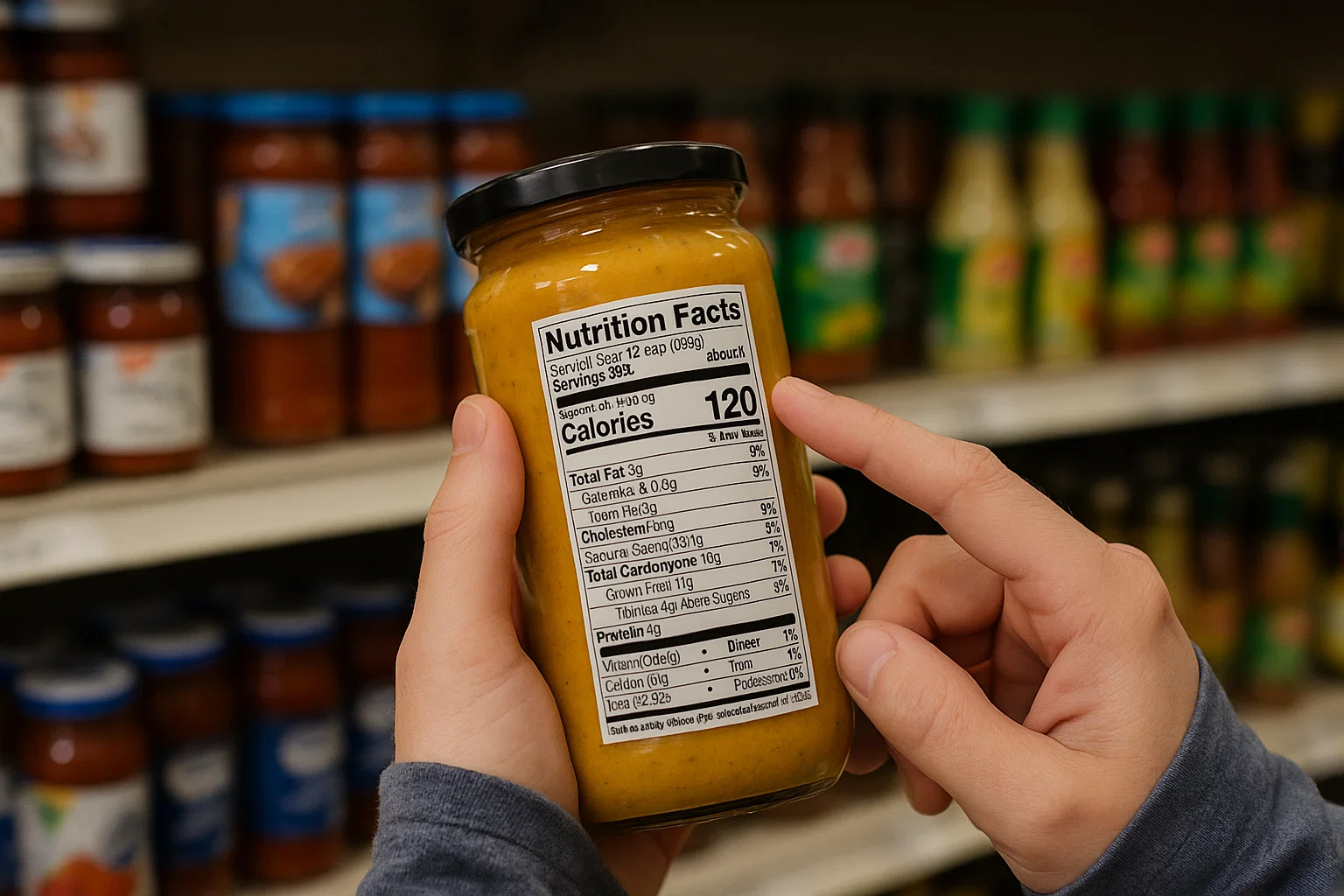
Have you ever been in the supermarket, grabbed a snack, checked the nutrition label, and thought to yourself, “Huh?” If you’ve ever had this experience, you are not the only one. Nutrition labels are meant to help us out with our food decisions, but let’s be blunt; if you don’t know what to look for, it looks like a foreign language.
Learning how to read a nutrition label is one of the greatest tools for your health, whether your goal is weight management, sports performance, managing a medical condition, or just staying healthy and eating clean. Learning how to translate the numbers and percentages means you will know precisely what you have in your food and whether that particular food is part of your lifestyle.
In this blog, we will take you through the nutrition label step-by-step with science and lay out practical uses at the end. Near the end, we will show you how QUA Nutrition can personalize nutrition labels and show how easy it should be.
Why Nutrition Labels Matter
Food decisions accumulate. An average person makes roughly 200+ decisions related to food each day. Nutrition labels serve as a map to assist in the following ways:
- To compare products and make a healthier decision
- To identify all hidden sugars, unhealthy fats, or too much sodium
- To estimate the calories and macronutrients in relation to fitness/health goals
- To help recognize allergens or ingredients you may want to avoid
According to research in the American Journal of Preventive Medicine, those who read nutrition labels on a regular basis tend to eat fewer calories and tend to make healthier choices. Perfection is not the goal—it’s awareness.
The Basics of a Nutrition Label
Before we go too deep into the fundamentals, let’s review the components of a nutrition facts label.
- Serving Size
- Calories
- Macronutrients (carbohydrates, protein, fats)
- Micronutrients (vitamins, minerals)
- % Daily Value (%DV)
- Ingredients List
Now, let’s break them down one by one.
1. Serving Size – The First Step to Accuracy
Frequently, this is the least observed aspect of a nutrition label. The serving size tells you what reference amount each number on the label is based upon.
Example: If a cookie pack says, “Serving size: 2 cookies (30 g),” yet you eat 4 cookies, you will need to double all values (calories, sugar, fat, etc.).
Pro Tip: Make sure to reference the serving size with the amount that you actually eat. Many processed foods keep their serving sizes very small to make them appear to be “healthier.”
2. Calories – Energy in Your Food
Calories measure the energy you get from food. Tracking calorie intake is important when it comes to losing weight, improving sports performance, or managing weight when dealing with medical conditions such as diabetes.
- Average daily calorie needs:
– Women: ~1,800–2,200 kcal
– Men: ~2,200–2,800 kcal
(The daily recommendations vary based on level of activity, age, and health considerations)
However, keep in mind that not all calories are created equal. A 200-calorie soda is not the same as a 200-calorie bowl of oats, primarily in terms of fiber, nutrients, and hunger satisfaction or satiety.
3. Macronutrients – Carbs, Proteins, and Fats
Macronutrients are the foundation of your nutrition. Here’s how to evaluate macronutrients from food labels:
a) Carbohydrates
- Includes total carbohydrates, dietary fiber, and sugars.
- Fiber: 25 to 30 g/day minimum. Higher fiber = better digestion and satiety.
- Added sugars: WARNING! The World Health Organization recommends that added sugar be <10% of daily calories. For most adults, that means ~25 to 50 g/day.
Example: If a granola bar has 20 g of sugar, that could be most or all of your day’s limit.
b) Protein
- Important for recovery, immune function, and satiety.
- Want ~0.8 g/kg body weight per day if sedentary. If an athlete, you want 1.2 to 2 g/kg body weight.
- Look at the label to check for protein sources (plant vs. animal).
c) Fats
- The total fat will be broken down into saturated, unsaturated, and trans fat.
- Unsaturated fats (olive oil, nuts) = heart-healthy.
- Saturated fats (butter, red meat) = <10% of daily calories.
- Trans fats = avoid completely. Even “0 g” could mean <0.5 g/serving due to labeling just being required to display full grams.
4. Micronutrients – Small but Mighty
Nutritional labels draw attention to vitamins and minerals we want to note, such as Vitamin D, Calcium, Iron, and Potassium.
- Calcium and Vitamin D: Both are important for bone health.
- Iron: Assists in transporting oxygen and is especially important for women and athletes.
- Potassium: Neutralizes sodium and can assist in reducing blood pressure.
If you are deficient in nutrients, read to see which foods you might be able to count on to get that nutrient.
5. % Daily Value (%DV) – Your Nutrition Compass
%DV refers to a 2,000-calorie diet (it is a reference point not one-size-fits-all). It simply indicates if the nutrient in this food is low (≤5%), moderate (6–19%), or high (≥20%).
For example:
- A yogurt containing 30% DV calcium = an excellent source.
- A snack containing 40% DV sodium = very high, not great for people with high blood pressure.
6. Ingredients List – The Hidden Story
This part uncovers the reality concerning food quality. Ingredients are presented in order of weight, from most to least.
For instance, if sugar is listed as the first or second ingredient, that indicates the food product is heavy in sugar.
Also, beware of undercover names of sugar, such as corn syrup, maltose, dextrose, fruit concentrate, etc. Lastly, shorter ingredient lists typically mean less processed food.
Common Labeling Tricks by Food Companies
- Portion sizes are smaller to give a false representation of low calories and low fat
- “Zero trans fat” actually may still have 0.4 g/serving
- “Natural” or “Multigrain” doesn’t mean healthy
- “Low fat,” but loaded with sugar
- Promoting something for one nutrient only to hide other nutrients (i.e. high in Vitamin C but also high in sugar)
How to Apply This Knowledge in Real Life
- Look at two brands next to each other.
- Apply the 5/20 rule: <5% DV = low, >20% DV = high.
- Look for high fiber, high protein, high vitamin, low sodium, low added sugar, and low trans fat foods.
- Consider using apps to keep track of what you’re eating if you’re working on specific fitness goals.
How QUA Nutrition Helps You Decode Labels
At QUA Nutrition, we understand that food labels can be confusing. That’s why when we create personalized plans for you, it is much more than reading numbers:
- Personalized support: We will teach you how to select the right products and brands to meet your health or athletic goals.
- Professional tips: Our nutritionists will break down labels that you don’t understand and give you practical information for supporting healthy eating.
- Individualized foods: The right foods, based on your goal, whether it be weight loss, sports performance, or the management of conditions such as diabetes.
- Lifelong learning & skills: After you read labels with us, you will be able to read labels every day and improve your food choices.
When you work with QUA Nutrition, you will not just be following a plan, but learning skills that will help you for a lifetime.
Understanding What You Eat Starts With Qua Nutrition
If you want to know what foods will promote a better quality of life, learning how to read nutrition labels is like cracking a secret language for health. Once you know how to interpret the serving sizes, calories, macronutrients (and which macronutrients to look for), micronutrients (and which micronutrients to look for), %DV, and the actual ingredients, you will never look at packaged food again the same way.
The next time you are in a grocery store, don’t just look at the nutrition labels—decode them. Every choice you make adds up to your health and performance in the long run. If you are in need of professional support, QUA Nutrition would love to support you in translating the labels into to action list. Call us now and book an appointment and consult with our Nutritionists
FAQs
1. Are nutrition labels always reliable?
Regulations allow labeling to exhibit a margin of error of up to 20%. While they provide value as a source of information, it is important to note that they may not be exact.
2. Do I need to avoid certain foods if they are high in calories?
Not necessarily. Calories provide information on energy, but you should focus on nutrient density. A high-calorie handful of nuts is better than a low-calorie soda!
3. How can I find hidden sugars?
Ingredients that may not include the word “sugar” but contain the same sentiment include: corn syrup, fructose, dextrose, maltose, cane juice, and fruit concentrates.
4. Do I have to track every nutrient on a daily basis?
Not at all. This is not about obsessing over every individual day or nutrient. Rather, as long as you use a little common sense and mind balance, you will average out over time.
5. How can QUA Nutrition help someone read label?
In our easy-to-read and personalized consultation, we help you understand how to choose the best food to achieve your goals, and help select the brand and products for you.