India is one of the countries that receives the best possible sunlight. However, vitamin D deficiency is one of the most common scenarios you would typically observe. Studies have shown that Indians have vitamin D deficiency across all geographies and age groups.
This is exactly why it is much essential to choose the right foods for supporting bone health and immunity. In this guide, we cover what vitamin D does, how to spot a deficiency, the best food sources, and how to bring food, sunlight and expert guidance together.
What Is Vitamin D and Why Does It Matter?
Vitamin D is a fat soluble vitamin. It resembles hormones in terms of its functioning. Vitamin D is essential for helping your gut absorb calcium and phosphorus. As you might be aware, these two minerals are needed for bone health and immunity.
If you do not have enough vitamin D, your bones would not be healthy even with the calcium rich food. In children this can lead to rickets; in adults it can cause osteomalacia (soft bones) and contribute to osteoporosis.
Vitamin D also supports immune function. Immune cells carry vitamin D receptors, and adequate levels help the body mount a balanced defence against infections. Beyond this, vitamin D contributes to muscle strength, which helps prevent falls, and has been linked with mood and overall well-being.
Signs and Causes of Vitamin D Deficiency
Most of the symptoms of vitamin D deficiency are quite common and tend to be dismissed. These include persistent tiredness, bone and lower-back pain, muscle weakness or cramps, and frequent colds or infections.
The common causes of vitamin D deficiency can be
- Limited sun exposure and an indoor lifestyle
- Darker skin tones, which make less vitamin D from the same sunlight
- Air pollution that filters UVB rays
- Low dietary intake, since few foods naturally contain vitamin D
Higher-risk groups include office workers, older adults, women (especially those with limited sun exposure or post-menopause), vegetarians and anyone who rarely steps out in daytime sun.
Top foods with vitamin D
Here are a few food items that you can consume to help avoid vitamin D deficiency.
Fish and seafood
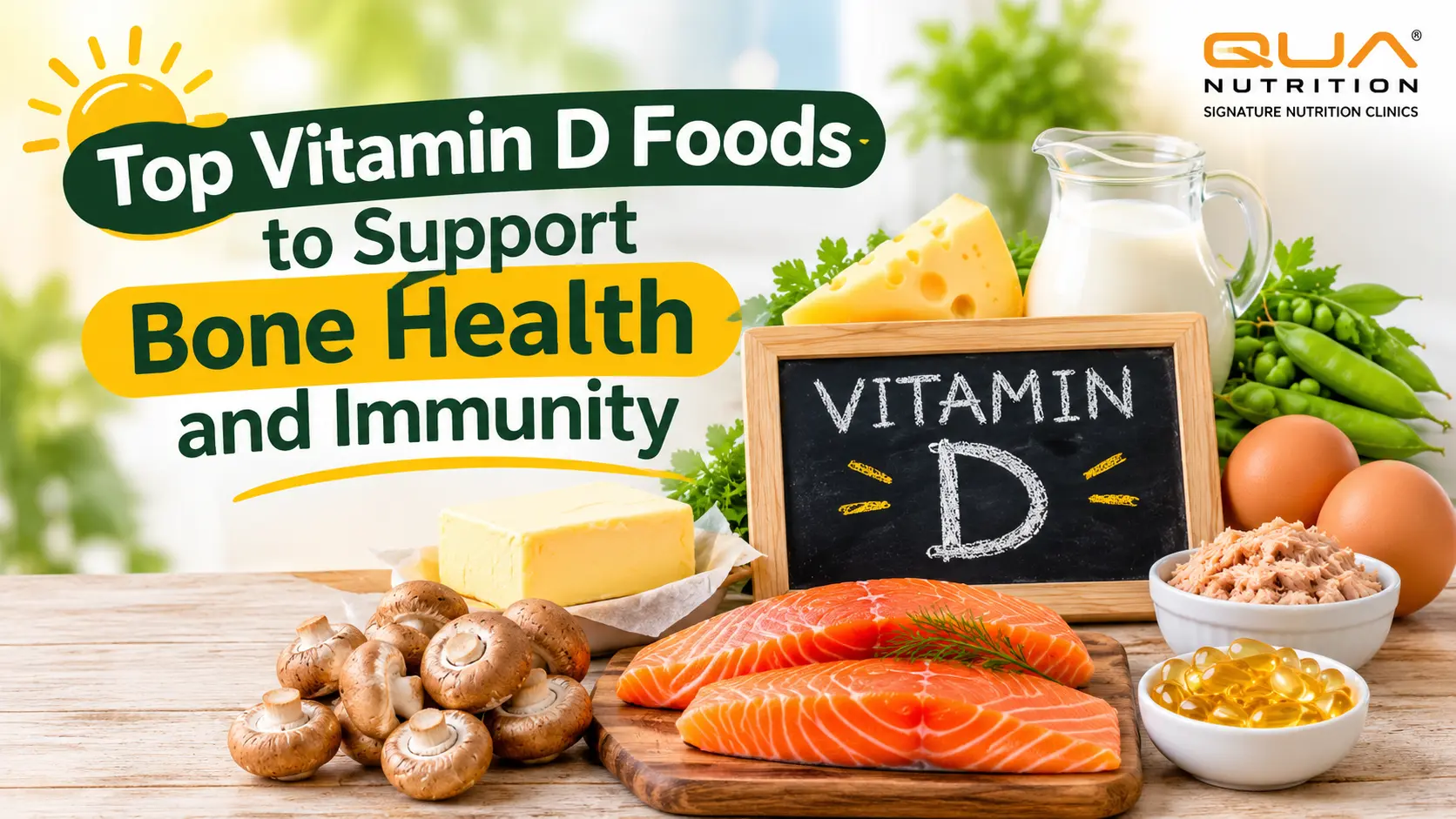
Fatty fish are the prime sources of vitamin D. Qua Nutrition recommends salmon, sardines and mackerel. Two to three servings should be enough for the sufficient dose of vitamin D. Fish liver oils, such as cod liver oil, are also very high in vitamin D.
Eggs and dairy
The vitamin D is found in the yolk of an egg. One yolk gives a small but useful amount. In India, many brands of milk, curd and cheese are fortified. Natural dairy contains little vitamin D, so check the pack.
Mushrooms
Mushrooms another rich source of vitamin D. Qua Nutrition recommends mushrooms exposed to UV light or sun dried. You can sauté them with garlic in a stir-fry, add them to omelettes, pulao or soups, or blend into a sandwich filling.
Fortified foods
If you are a vegetarian, we recommend consuming fortified foods. Many cereals, oats, atta, edible oils, plant-based milks (soy, almond, oat) and tofu are fortified. Check the labels to understand the fortification levels.
Other sources
Beef liver and other organ meats contain modest amounts for non-vegetarians, but they are not an everyday food. The honest reality is that most foods alone fall short of daily needs. That is why vitamin D foods work best when combined with sunlight and the right supporting nutrients.
Vitamin D and Calcium: Building Stronger Bones Together
Vitamin D cannot work alone. They need partners for functioning properly. Calcium is a building block for your body. Vitamin K directs calcium into bones, and magnesium helps activate vitamin D in the body.
We recommend combining vitamin D with the calcium rich foods. Some of these include
- Milk, curd, paneer and cheese
- Ragi (finger millet), a standout plant source
- Sesame seeds (til)
- Leafy greens like methi, amaranth and moringa leaves
Sunlight, Food, and Supplements: Getting Enough Vitamin D
This is perhaps more important for vegetarians. They would need to have a complete combination of food, sunlight and supplements.
Sun exposure
The skin makes vitamin D when exposed to UVB rays. Around 15 to 30 minutes of sunlight exposure should be enough for an average person. People with darker skin may need a little longer, while those with fair skin need less.
Food
In fact, when it comes to vitamin D, sun exposure is a better choice than food. Food and diet can be a dependable choice if you tend to be indoors most of the times.
Supplements
If your vitamin D levels are extremely low, we recommend taking supplements. However, take care about the dose and duration.
Sample Vitamin D-Rich Meal Ideas
The table below offers you an ideal meal plan for a vitamin D rich diet.
| Meal | vegetarian | Non-vegetarian |
| Breakfast | Fortified oats with fortified milk and sesame seeds | Masala omelette (with yolk) and a glass of fortified milk |
| Lunch | Mushroom and paneer pulao with methi raita | Grilled mackerel with ragi roti and sautéed greens |
| Snack | Fortified curd with fruit, or roasted mushrooms | Boiled egg with a handful of nuts |
| Dinner | Tofu and mushroom stir-fry with vegetables | Baked salmon or sardine curry with vegetables |
How a Nutritionist for Bone Health Can Help?
A nutritionist for bone health ideally looks at the full picture. They will check out your diet, daily routine, sun habits, medical history and blood reports. This will help avoid the guess work and helps you fix the possible gaps.
Ryan Fernando, founder of Qua Nutrition and one of India’s leading celebrity nutritionists, guides the team in providing practical, personalised nutrition advice tailored to real Indian lifestyles.
At Qua Nutrition, the approach starts with assessing your test results and eating patterns, then building a plan with the right foods, timings and nutrient pairings to support bones and immunity, and reviewing progress over time.
Common Myths About Vitamin D
Myth – Living in a sunny area would mean you will not be deficient in vitamin D
Fact – No. You will actually need sun exposure for getting vitamin D. indoor lifestyles can be a concern.
Myth – Sunscreen or glass filled screens give enough vitamin D.
Fact – Both these can block much of the UVB rays needed for synthesis of vitamin D
Myth – More vitamin D is always better
Fact – Any excess of vitamin D from supplements can be harmful
Myth – Vegetarians cannot have enough vitamin D
Fact – UV mushrooms, fortified foods, sensible sun and guided supplementation all help.
Conclusion
Vitamin D is an essential vitamin for bone health and immunity. It should ideally be combined with calcium, magnesium and vitamin K.
Qua Nutrition, can help you build stronger bones and a stronger immune system through simple, sustainable food choices. Connect with Qua Nutrition today to take the first step towards better bone health.
FAQs
1. Which food has the highest vitamin D?
Fatty fish such as salmon, sardines and mackerel are an excellent option for vitamin D. Cod liver oil should be used with caution because of its vitamin A content.
2. Can vegetarians get enough vitamin D from food?
It may not be easy. But, it is not impossible to get enough vitamin D. You can get enough vitamin D through UV mushrooms, fortified foods and dairy. Most vegetarians also need sun exposure and, if deficient, supplements.
3. Can I get enough vitamin D from food alone?
No. For vitamin D, food alone may not be enough. Qua Nutrition recommends a combination of food, sunlight and, when needed, supplements works best.
4. How long does it take to correct vitamin D deficiency?
Under medical supervision, it often takes around two to three months, followed by a retest. This varies with severity and dose.
5. Can too much vitamin D be harmful?
Yes. Excess intake, mostly from supplements, can cause high blood calcium, nausea and kidney problems. Avoid self-prescribing high doses.