
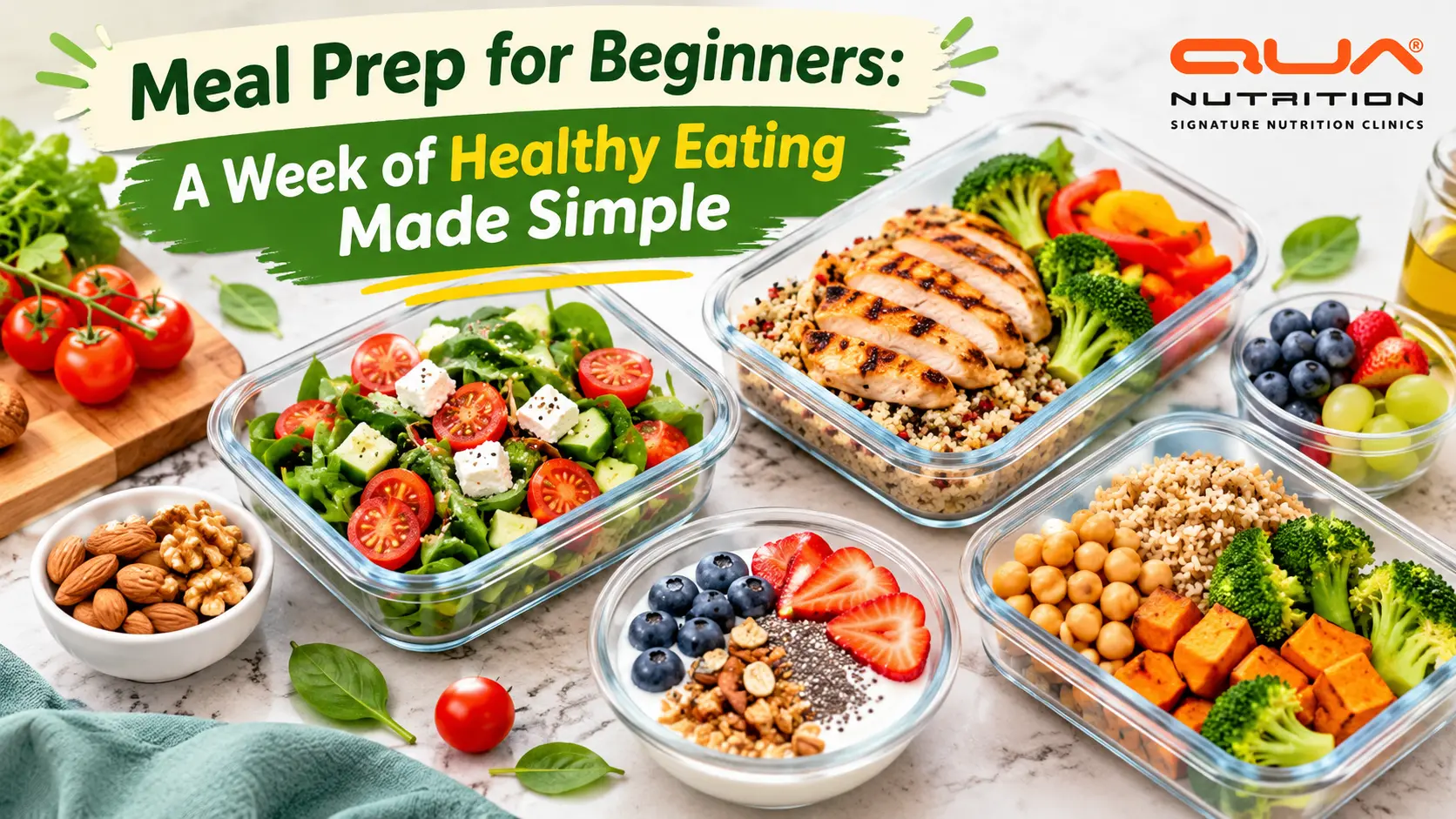
When you have a busy week, finding time to cook every day can be difficult. Meal prep helps by spreading the work across one or two sessions, such as Sunday and Wednesday, so a week of meals is ready when you need it, with less food wasted and fewer unplanned takeaway orders. We explain how to get started, how to build a balanced meal, and how to plan a full week without cooking everything in a single day.
What Is Meal Prep?
Meal prep means preparing part of your food in advance. It does not require cooking every meal for the week. Even washing vegetables or cooking dal on Sunday is a good start.
- Full meals: Cook once, divide the food into containers and reheat a portion each day.
- Ingredients: Chop vegetables, cook grains or boil lentils ahead of time, then combine them differently as the week goes on.
- Grab-and-go snacks: Fruit, nuts, boiled eggs and curd are ready for the rushed afternoons when a packet of biscuits looks easier.
Meal prep can be useful for anyone with a busy schedule, whether you work, study, or manage a household. Start by preparing two meals in advance. Once you get comfortable with the routine, you can gradually prepare more.
Benefits of Meal Prep for a Healthy Lifestyle
Planning your meals ahead helps you make better food choices, even on busy days. When portions and ingredients are decided in advance, you shop from a list, cook to a plan, and reach for a ready meal instead of ordering something quick.
- Balanced meals and portions: When meals are planned in advance, a balanced plate takes very little effort. With dal, a vegetable and a roti or portion of millets already cooked and packed, you do not have to decide what to make when you are tired and hungry.
- Less waste, lower spending: Write the grocery list from your weekly menu. You buy only what the recipes need, so the spinach gets cooked on Tuesday and does not wilt in the fridge by Friday.
- Steadier routine, less stress: Pre-prepared food means you do not have to think about what to eat every day. Even on a hectic day, the next meal is in the fridge, and it is easier to stay with your health goals.
How to Get Started with Meal Prep
Begin by preparing just two or three meals for the week. Check your schedule, choose foods you enjoy, and decide which tasks will save you the most time. A plan that fits your budget and kitchen is easier to repeat.
Plan Your Week
Choose meals for your busiest days first. You may only need to prepare weekday lunches or a few breakfasts. Use ingredients in different ways: Cooked chickpeas can go into a salad one day and a curry later. Leave room for fresh meals and changes to your plans.
Make a Grocery List
Write your grocery list from the menu and check your pantry first. Keep basics such as rice, oats, millets, atta, dals, beans, eggs, paneer, curd, frozen vegetables, and spices.
Buy produce according to when you will use it. Use delicate greens early and longer-lasting vegetables later. Frozen vegetables can save preparation time.
Cook and Store Food Safely
Cook in batches and keep the food in clean, lidded containers marked with the date. Dals, beans, grains and proteins store well, and chopped vegetables or a chutney can be made ahead too.
Let cooked food cool, then divide it into small portions and refrigerate it below 5°C within two hours. Eat refrigerated meals within three to four days. Freeze whatever you will not finish by then. Thaw frozen portions in the fridge and reheat them until steaming hot, and keep raw and cooked foods apart.
How to Build a Balanced Meal for Meal Prep
A balanced meal should include protein, vegetables, whole grains or other complex carbohydrates, and a small amount of healthy fat. Together they keep you full for longer. You can also mix and match these foods to make different meals each day.
- Protein: dal, rajma, chana, eggs, paneer, curd, chicken, fish, tofu or soya chunks. Pick one or two for each meal.
- Vegetables rich in fibre: a cooked sabzi, a fresh salad or a tray of roasted vegetables fills half the plate.
- Complex carbohydrates: roti, brown rice, millets, dalia, oats and sweet potato release energy slowly, so hunger returns later.
- Healthy fats: a few nuts or seeds, or a spoonful of groundnut, mustard or olive oil in the cooking. A small amount is enough.
Most Indian meals already follow this pattern. Dal and sabzi with a roti or millet roti, plus a bowl of curd or a salad, make a complete plate. We usually suggest a small portion of nuts or seeds on the side, if they suit you.
Keep meals interesting by changing ingredients or sides each day. Rajma on Monday, Chana on Wednesday. The effort is the same, the meal tastes different, and the week does not feel repetitive.
A Simple One-Week Healthy Meal Prep Plan
Cook in two sessions instead of preparing all seven days at once. On Sunday, make dal, rice, boiled eggs, or chana, enough to cover the first few days. Around Wednesday, cook a fresh batch of protein or dal and restock your vegetables, so the second half of the week tastes as good as the first. Freeze portions that you plan to use later.
| Day | Breakfast | Lunch | Dinner |
| Monday | Oats with curd and fruit | Dal, rice and beans poriyal | Paneer bhurji with rot |
| Tuesday | Vegetable poha with egg | Chana salad with roti | Grilled fish, chicken or tofu with vegetables and millet |
| Wednesday | Moong dal chilla | Rajma rice with cucumber | Vegetable soup with egg or tofu and wholegrain toast |
| Thursday | Idli with sambar | Lemon rice with chickpeas | Dal, roti and bhindi |
| Friday | Vegetable upma with curd | Fish curry or chana curry with rice | Paneer or tofu with mixed vegetables |
| Saturday | Dosa with sambar | Vegetable pulao with raita | Mixed dal khichdi |
| Sunday | Besan chilla | Leftover bowl with vegetables, grains and protein | A freshly prepared meal of your choice |
You can also keep a few simple snacks ready to make eating between meals easier.
Snack Ideas: Keep fruit, nuts, roasted chana, yoghurt, or cut vegetables ready for quick snacks between meals.
A Small Tip: You don’t have to follow the menu exactly. Swap meals based on your preferences, available ingredients, and daily schedule. The goal is to make healthy eating easier, not to follow a strict timetable
Common Meal Prep Mistakes to Avoid
Meal prep routines usually fail for a few simple reasons: preparing too much food, storing it poorly, repeating the same meals, or shopping without a plan. Choose an amount you can finish, cook foods you enjoy, and check your kitchen before you buy. Change the meals based on what your family enjoys eating.
- Preparing too much: Large batches often become repetitive, and some of the food goes uneaten. Begin with three or four meals and add more once you are finishing them.
- Ignoring storage: Cooked food left at room temperature or kept in the refrigerator for too long can become unsafe. Label each portion with a date and freeze what you will not eat within a few days.
- Repeating the same meals: Eating the same dish every day makes the routine hard to sustain. Change the vegetable, spice mix, protein, or side to keep the meals varied.
- Shopping without a plan: Check your refrigerator and pantry first, then buy only what the weekly menu requires. This prevents duplicate purchases and unused produce.
When to Get Professional Guidance
The same meal plan may not work for everyone, as health needs and daily routines differ. Conditions such as diabetes, PCOS, and high cholesterol can change what you eat, when you eat, and how much. If you take regular medication, it is sensible to speak to your doctor before making changes.
A dietitian and nutritionist in India can adapt your meals to your health needs, regional foods, work hours and family routine. The plan then stays familiar and practical, which makes it far easier to follow week after week.
Common Myths About Meal Prep
Meal prep is often misunderstood, especially if you are new to planning meals. Some people think it takes too much time or means eating the same food every day. Let’s look at what is actually true.
- Myth 1: You have to cook all your meals at once.
Fact: You can prepare ingredients instead. Washing vegetables, cooking dal, or boiling eggs in advance already makes daily cooking easier.
- Myth 2: Meal prep means eating the same food every day.
Fact: One ingredient can serve different dishes. Cooked chana goes into a salad on Monday and a curry on Wednesday.
- Myth 3: Meal prep takes up your entire weekend.
Fact: Two short sessions, one on Sunday and one midweek, are enough for two or three meals.
- Myth 4: Healthy meal prep is expensive.
Fact: Rice, dal, eggs, beans and seasonal vegetables are affordable, and a grocery list keeps you from buying what you do not need.
- Myth 5: Prepared food loses its nutrition or becomes unsafe quickly.
Fact: Food stored correctly stays nutritious and safe. Refrigerate cooked meals promptly, eat them within three to four days, and freeze the rest.
How Qua Nutrition Helps You Build a Healthy Eating Routine
Meal prep does not have to be complicated. Start with a few meals and cook foods you already enjoy. The routine can grow from there. Our dietitian and nutritionist team at Qua Nutrition helps you plan meals around your health goals, food preferences, and daily schedule, using everyday foods like dal, roti, and millets that fit the kitchen you already have. That way, healthy eating stays something you can keep up over time.
FAQs
1. How long does meal-prepped food last in the fridge?
Most cooked meals stay safe in the refrigerator for three to four days. Use airtight containers, cool the food before storing it, and freeze any portions you will not eat within that time.
2. Is meal prep good for weight loss?
Yes, it can support weight loss. Planned portions and balanced meals make it easier to follow your diet, and a ready meal means you are less likely to order something unplanned when you are hungry.
3. How do I stop meal-prepped food from getting soggy or boring?
Keep sauces, dressings and crunchy toppings in separate containers until you eat. Changing the spices, vegetables or side dishes through the week also gives familiar meals a fresh taste.
4. Can I meal prep if I am vegetarian?
Yes, vegetarian meal prep offers plenty of choice. Dal, chana, rajma, paneer, tofu, sprouts and curd provide protein, and vegetables and whole grains complete the meal.
5. Should I consult a dietitian before starting meal prep?
It is not necessary if you have no health concerns or specific goals. If you live with diabetes, PCOS, or high cholesterol, or you want support with a particular goal, a dietitian can plan your meals and portions with you.