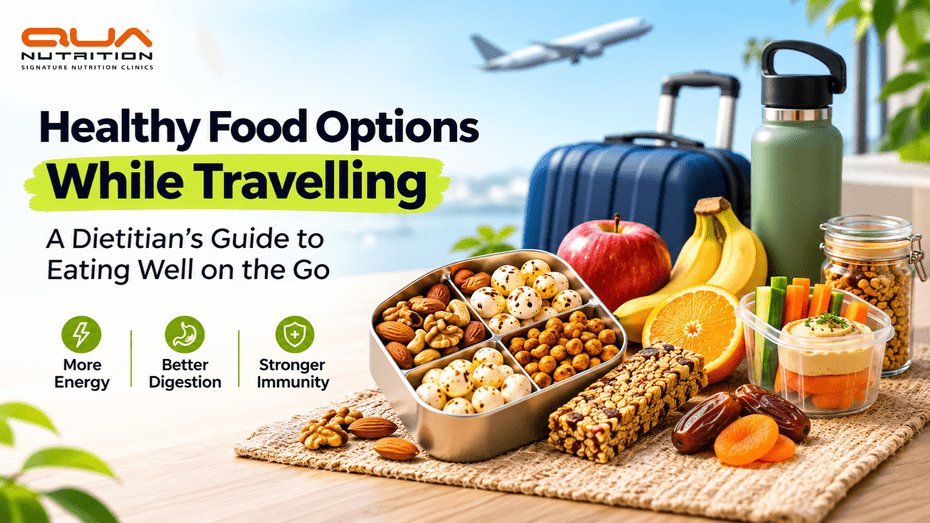
Travel is all about getting to new places, experiencing new cultures, and eating all sorts of good food. The problem with travel is that it’s very difficult to maintain your healthy eating habits. You’ve got irregular meal times, you’ve got very limited food availability, you’ve got long journeys, and you’ve got a lot of time spent in restaurants. All of which makes it very difficult to maintain your dietary regime.
Skipping meals, eating too many packaged snacks and relying on fried and processed foods may also be a cause of the sort of gut discomfort, the fatigue and the odd eating pattern that we’re all familiar with.
But eating healthily on the move doesn’t mean you have to avoid your favourite foods or go on some kind of restrictive diet. With a bit of planning and some mindful eating you can absolutely enjoy your travels and at the same time feed your body properly.
In this guide QUA Nutrition gives you some practical healthy food options, some travel friendly snacks and some meal wise suggestions to help you stay on track with your nutrition wherever you are.
Why Is Eating Healthy While Travelling Important for Your Overall Health and Well-Being?
Good nutrition on the move is good for you in general terms.
Supports digestion: Fibre-rich foods (fruits and vegetables) will help with regularity.
Maintains energy: Balanced meals will provide the energy you need for the long journeys and the physical exertion.
Supports immunity: sufficient protein, vitamins, and minerals for normal immune function.
Controls hunger: having regular meals and nutritious snacks will help to prevent you from getting excessively hungry and thus prevent you from snacking when you don’t need to.
Promotes digestive comfort: selecting foods which are appropriate for your own digestive tolerance may go some way to minimising the discomfort of travel.
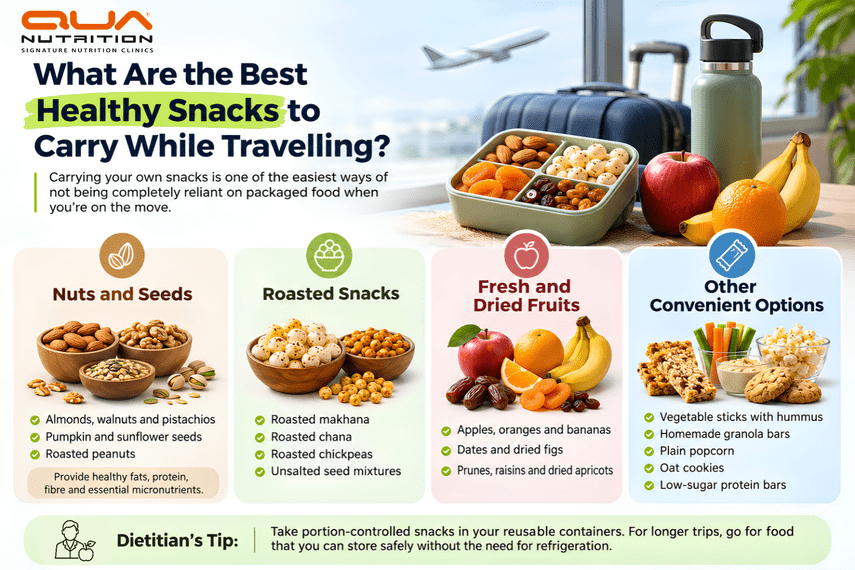
What Are the Best Healthy Snacks to Carry While Travelling?
Carrying your own snacks is one of the easiest ways of not being completely reliant on packaged food when you’re on the move.
Nuts and Seeds
- Almonds, walnuts and pistachios
- Pumpkin and sunflower seeds
- Roasted peanuts
These provide the healthy fats, protein, fibre and essential micronutrients.
Roasted Snacks
- Roasted makhana
- Roasted chana
- Roasted chickpeas
- Unsalted seed mixtures
Fresh and Dried Fruits
- Apples, oranges and bananas
- Dates and dried figs
- Prunes, raisins and dried apricots
Other Convenient Options
- Vegetable sticks with hummus
- Homemade granola bars
- Plain popcorn
- Oat cookies
- Low-sugar protein bars
Dietitian’s tip: take portion-controlled snacks in your reusable containers. For longer trips, go for food that you can store safely without the need for refrigeration.
How to Choose Healthy and Nutritious Food Options When Eating Out During Travel
Eating in restaurants, at airports, and on the train doesn’t mean you’re going to compromise your nutritional goals. The trick is to pick balanced meals.
Choose Healthy Carbohydrates
- Whole-wheat chapati and bread
- Brown or steamed rice
- Millets and oats
- Baked or boiled sweet potatoes
Include Protein-Rich Foods
- Boiled eggs
- Grilled chicken and fish
- Paneer and tofu
- Dal, chickpeas and rajma
- Plain curd and Greek yoghurt
Add Vegetables
- Steamed vegetables
- Cooked vegetable curries
- Freshly prepared salads
- Grilled mushrooms
- Vegetable soups
Make Smarter Restaurant Choices
- Go for the grilled or baked rather than the deep-fried.
- Go for the tomato sauces on the pasta rather than the cream-based ones.
- Go for the vegetable sandwiches and wraps.
- Try burrito bowls (with rice, beans, and vegetables)
- Use less butter, mayonnaise, cream, and added oil.
Remember gluten-free foods aren’t automatically healthier. Choose them only if you have a medical need or if they have been recommended by your doctor.
What to Eat for Breakfast, Lunch and Dinner While Travelling: A Dietitian’s Guide
Plan your meals around your travel schedule, as this will help you to keep to a fairly consistent eating pattern.
Breakfast: Start Your Day Right
Choose a breakfast that has some carbs, some protein, and some fibre.
Healthy options include:
- Idli with sambar.
- Vegetable oats.
- Whole wheat toast with eggs.
- Paneer sandwiches.
- Vegetable dosa.
- Plain curd with fruit and nuts.
Tip: Don’t just rely on tea, coffee, or fruit juice. Include a protein source to help with satiety.
Lunch: Build a Balanced Plate
Your lunch should have carbs, protein, and vegetables.
Consider:
- Rice with dal, vegetable poriyal, and curd.
- Chapati with paneer or chicken curry.
- Grilled fish with rice and veg.
- Vegetable pulao with raita.
- Whole wheat wraps with grilled chicken or paneer.
Don’t go overboard with fried foods, creamy gravies, and mayonnaise-based dishes.
Dinner: Keep It Light and Nutritious
After a long day’s travel, go for meals that are filling without being overly heavy.
Options include:
- Moong dal khichdi with curd.
- Vegetable soup with grilled paneer or chicken.
- Chapati with dal and vegetable curry.
- Grilled fish with sautéed vegetables.
- Vegetable dalia.
- Rice with sambar and cooked vegetables.
A lighter meal should still provide sufficient protein and the other essential nutrients.
Why Is Staying Hydrated While Travelling Essential for Digestion and Energy?
Hydration is key to maintaining energy levels, aiding digestion, and helping to regulate body temperature.
Follow these simple tips:
- Carry a reusable water bottle.
- Drink water at regular intervals during your journey.
- Include water-rich fruit such as watermelon and oranges.
- Go for plain water rather than sugary drinks.
- Limit excessive caffeine if it’s affecting your sleep or digestion.
- Consider appropriate electrolyte replacement during prolonged physical activity or significant fluid loss.
Tender coconut water can also be a good option, just don’t use it as a substitute for plain water as your main source of hydration.
Which Foods Should You Avoid or Limit for Better Health While Travelling?
You don’t need to eliminate your favorite foods during the holidays. However, try to moderate:
- Deep-fried snacks (chips, samosas, French fries)
- Highly processed packaged foods.
- Sugary soft drinks and energy drinks.
- Excessively creamy sauces and gravies.
- Foods containing large amounts of mayonnaise.
- High-sugar desserts.
- Excessively salty snacks.
Also, of course, food hygiene. Go for freshly prepared food from hygienic sources and avoid unsafe drinking water and food that’s been stored inappropriately.
Healthy Travel Nutrition Tips for Fitness Enthusiasts, Vegetarians and People with Health Conditions
Your nutrient requirements will vary according to your lifestyle, your health and your level of activity.
- Fitness enthusiasts: include protein-rich foods such as eggs, paneer, chicken and legumes to aid muscle maintenance and recovery.
- Frequent business travellers: take nuts, roasted chana and some other convenient protein rich snacks so that you can maintain a regular eating pattern.
- People with digestive sensitivities: go for the familiar, keep the spice and oil to a minimum and of course follow individual dietary advice.
- People managing diabetes: don’t skip meals and make sure you’re having balanced meals with fibre rich carbohydrates and protein.
- Vegetarians: include dal, chickpeas, rajma, paneer, tofu and curd to meet your protein needs.
How Can QUA Nutrition Help You Maintain Healthy Eating Habits While Travelling?
At QUA Nutrition, we believe that healthy eating should work with your life rather than against it. Our approach to nutrition is very much personalized to your individual needs, taking into account your health requirements, your food preferences, your level of activity, and your individual wellness goals.
Here’s how our nutrition experts can help:
- Personalised nutrition plans: get practical meal suggestions based on your travel itinerary, dietary preferences, and nutritional needs.
- Gut health advice: Get some dietary advice to help with your digestive sensitivities and to identify the foods that may be causing you problems.
- Weight Management Support: Learn about portion control, how to choose the right food at a restaurant, and how to adopt sustainable eating habits.
- Sports and fitness nutrition: Understand your protein, carbohydrate, and hydration needs when you’re combining travel with physical activity.
- Metabolic health support: Receive nutritional advice for managing conditions such as diabetes, high cholesterol, and so on.
Our aim is to help you build sustainable eating habits that work at home and on the move.
Frequently Asked Questions About Healthy Eating and Food Choices While Travelling
1. What are the healthiest snacks to take with you when you're travelling?
Roasted makhana, roasted chana, almonds, walnuts, fresh fruit, dried fruit, our own granola bars, and plain popcorn are all convenient options.
2. How do I avoid unhealthy eating on long journeys?
Plan your meals, take appropriate nutritious snacks with you, and stay hydrated. When you’re eating out, aim for a balanced meal with protein, vegetables, and carbs.
3. What should I eat for breakfast when I'm on the move?
Idli with sambar, vegetable oats, eggs with whole wheat toast, paneer sandwiches, and curd with fruit and nuts are all quite nutritious breakfast options.
4. How can I prevent constipation whilst I'm on the move?
Maintain adequate hydration, include fibre-rich foods, eat fruits and vegetables regularly, and take short walking breaks during long journeys.
5. Can I eat fast food while following a healthy diet?
Yes. Choose grilled or baked preparations, vegetable-rich meals, and suitable protein sources. Practise portion control and enjoy your favourite foods in moderation.
Conclusion: Enjoy Your Travels Without Compromising Your Health and Nutrition Goals
Healthy eating on the move isn’t about having a perfect diet or absolutely avoiding all the goodies. It’s about making sensible food choices, drinking plenty of water, planning your meals, and staying balanced.
Take nutritious snacks, eat meals that contain protein and vegetables, stick to good food hygiene, and, of course, choose the foods that are appropriate for your own digestive system.
Your health journey doesn’t have to go on holiday just because you do!
Eat mindfully, travel freely, and fuel your journey with QUA Nutrition.