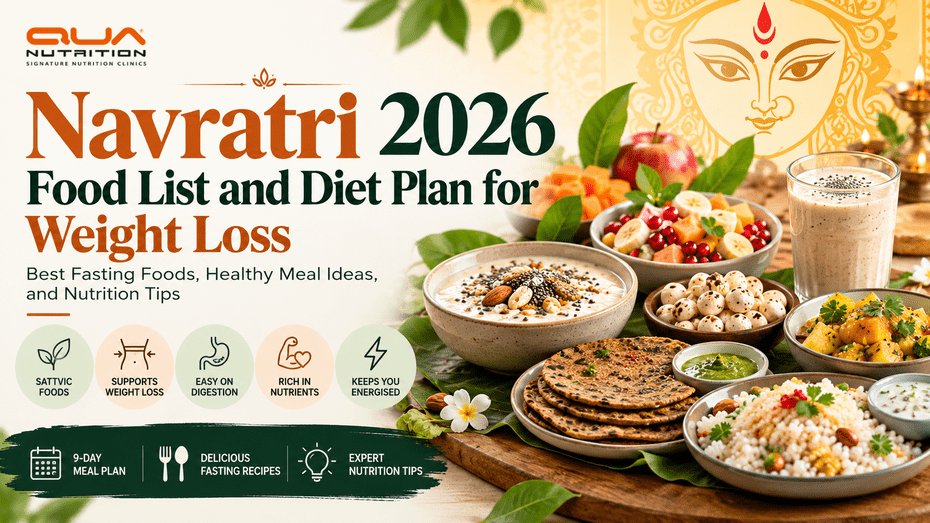
Navratri is a festival that celebrates devotion, discipline, and conscious living; during the period when Sharad Navratri 2026 occurs from October 11 to October 19, a large number of people follow traditional fasting practices while at the same time looking after their everyday duties and health goals. Consuming nutritious food at this time can help in maintaining steady energy levels, induce a sense of fullness, and thereby make the fast easier to carry out.
The usual foods eaten during Navratri 2026, including Kuttu, rajgira, singhara flour, samak rice, fruits, dairy products, nuts, and seeds, are appropriate for a well-balanced list of Navratri foods. They can likewise contribute to a sensible Navratri diet plan intended for weight loss, provided that they are eaten in the right amounts and are prepared using healthier cooking methods.
The guide from QUA Nutrition examines the best foods to consume when fasting, offers a practical diet plan for losing weight, recommends a number of healthy meal choices, and gives some nutrition advice to help you make informed decisions throughout Navratri.
Navratri 2026 Food List: Essential Fasting Foods for Energy, Nutrition, and Healthy Eating
Choosing the right foods during Navratri can help maintain energy, support muscle health, and provide essential nutrients while following traditional fasting practices. A balanced Navratri 2026 food list should include fasting-friendly grains, protein sources, fruits, vegetables, nuts, seeds, and hydrating drinks.
1. Fasting-friendly grains and flours
- Kuttu (buckwheat flour): 13g protein per 100g and contains fibre. Can be used to make Kuttu rotis, cheelas, and pan-cooked dishes.
- Rajgira (amaranth flour): 13–14g protein per 100 g, plus calcium and iron. Can be made into porridge with milk, nuts, and chia seeds.
- Singhara (water chestnut flour) is a traditional fasting flour used to make rotis and other Vrat friendly meals.
- Samak rice (a popular fasting alternative to regular rice) can be used to make vegetable pulao or khichdi with bottle gourd, carrots, and beans.
- Sabudana (tapioca pearls) gives about 350 kcal for every 100 g of dry pearls. It mainly contains carbohydrates. You can make sabudana khichdi with peanuts and vegetables. Eat it with curd to get more protein.
2. Protein-Rich Foods
- Paneer: can be shallow-fried with rock salt and pepper or combined with capsicum to make paneer sabzi.
- Curd: Add plain curd with your rotis, sabudana khichdi, or fruit bowls to boost your protein intake.
- Milk: Use milk to make rajgira porridge, banana smoothies, or warm drinks before bed.
- Amaranth: Gives you plant protein and can be incorporated into your fasted meals.
- Peanuts: Add them to sabudana khichdi or combine peanut butter with bananas.
- Nuts and seeds: almonds, walnuts, chia seeds, and flaxseeds. All of these provide some protein as well as healthy fats.
3. Fruits to Include During Navratri
Eating a mix of these fruits can make your meals more varied and enjoyable during the festival.
- Banana: a source of energy (carbohydrates) and can be eaten with peanut butter or blended into a milkshake.
- Apple: a handy fruit; can be served with walnuts.
- Papaya: can be included in fruit bowls with curd.
- Pomegranate adds flavor and variety to fruit bowls and salads.
- Raisins: can be used in small amounts with soaked nuts.
You can also make fruit chaat with rock salt and lime or a mixed fruit bowl with chia seeds.
4. Vegetables for Healthy Navratri Meals
- Bottle gourd (lauki): Add it to lauki sabzi, soups, or vegetable curries.
- Pumpkin: Prepare pumpkin curry to go with Kuttu or singhara rotis.
- Sweet potato: Roast or bake it to make sweet potato tikkis rather than deep-frying.
- Potato: Add a medium amount to lauki-potato curry or sabudana khichdi.
- Cucumber: add to salads or make into cucumber raita with curd and mint.
- Tomato: in soups, salads, or as a vegetable.
- Carrot: add to samak rice pulao or mixed vegetable dishes.
- Beans: in vegetable pulao or khichdi (if your fasting rules allow).
- Capsicum: combine with paneer to make a protein-rich vegetable dish.
- Mint: to make mint curd chutney or cucumber raita.
5. Nuts, seeds and healthy fats
- Almonds: can be eaten soaked as part of a morning snack.
- Walnuts: provide healthy fats and can be served with apples or other fruit.
- Peanuts make a good addition to sabudana khichdi.
- Chia seeds: Add to porridge, fruit bowls, and smoothies.
- Flaxseeds: Supply healthy fats and fibre.
- Coconut: Can be used in traditional fasting preparations.
Use moderate amounts of ghee for cooking and flavor.
Although nuts and seeds are certainly nutritious, they are also very high in calories, so portion control is important if you’re on a Navratri diet to lose weight.
6. Healthy Navratri Snacks
Instead of frequently choosing deep-fried fasting snacks, consider these alternatives:
- Dry-roasted makhana
- Banana with peanut butter
- Apple with walnuts
- Fruit chaat with lime and rock salt
- Paneer cubes sautéed with sendha namak and pepper
- Roasted sweet potato tikkis
- Fruit bowl with curd and chia seeds
- A small handful of almonds or walnuts
7. Drinks to Keep You Hydrated During Navratri
- Plain water: Your main source of hydration during the day.
- Coconut water: Supplies fluids and electrolytes.
- Buttermilk: A refreshing drink that provides fluids and some nutrients.
- Lemon water: A simple option for staying hydrated.
- Milk: Gives you protein and calcium.
- Green tea: Can be drunk without any added sugar.
- Herbal tea: Another unsweetened option.
A nutritious Navratri fasting diet is not simply about cutting food. You can actually maintain a good balance of nutrition by combining appropriate sources of carbohydrates with protein, vegetables, healthy fats, and sufficient fluids.
Navratri Diet Plan for Weight Loss: Practical Tips for Balanced Meals and Healthy Fasting
A healthy diet for Navratri should consist of balanced meals, the correct portion sizes, enough protein, proper hydration, and some form of physical activity; weight loss cannot be assured simply by fasting since the total amount of energy taken in also has to be considered.
Follow these practical strategies:
Include protein: Be sure to include some protein by mixing your fasting grains with paneer, curd, or milk so as to enhance the feeling of fullness and to aid in keeping your muscle mass.
Healthy cooking style: Eat more healthily by roasting, steaming, or pan-frying your food rather than eating deep-fried puris, pakoras, and sabudana vadas.
Eat in moderation: Eat a moderate amount of it because sabudana is very low in both protein and fibre and should be served with peanuts and curd. Eat every 3-4 hours to avoid bulk eating.
Do not skip meals: You should not skip your meals since eating too little can later on result in feeling tired and eating excessive amounts.
Hydration: Stay properly hydrated by drinking water frequently and also taking in other suitable fluids according to your needs, aiming for at least 8 to 10 glasses of water.
Stay active: Exercise by engaging in activities like walking, doing some yoga, and stretching, as these can help keep you active while you are fasting; if you feel weak or dizziness occurs, then reduce the intensity of your exercise.
Sleep: Poor sleep could increase cravings, so ensure at least 7-8 hours of sleep
Weight loss should be gradual and sustainable, not based on severe food restriction.
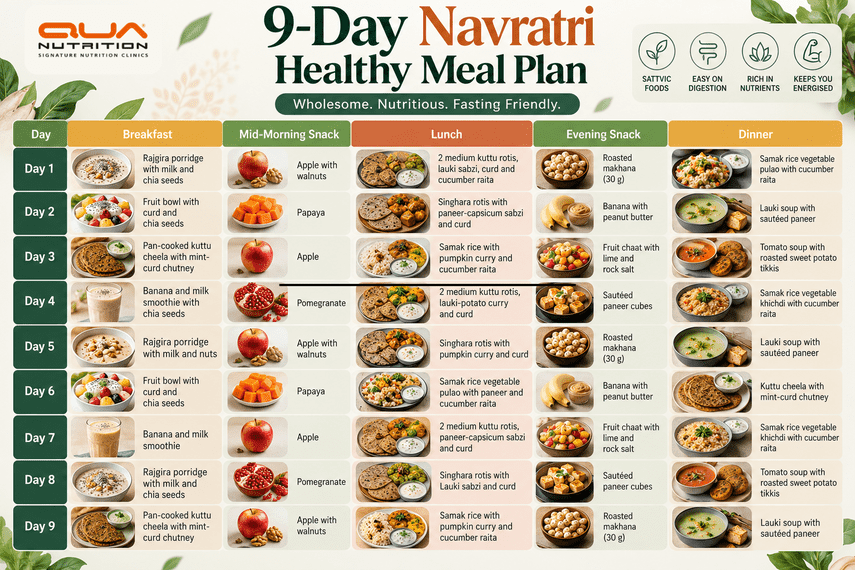
Navratri 2026 Weight Loss Diet Plan: Healthy Meal Ideas and a Balanced Fasting Menu
This Navratri weight loss diet plan combines traditional fasting foods with protein, fruits, and vegetables. It should be noted that it is a general guide and not a personal calorie recommendation. You should adjust the amounts according to your individual nutritional requirements, level of activity, and health objectives.
| Day | Breakfast | Mid-Morning Snack | Lunch | Evening Snack | Dinner |
| Day 1 | Rajgira porridge with milk and chia seeds | Apple with walnuts | 2 medium kuttu rotis, lauki sabzi, curd and cucumber raita | Roasted makhana (30 g) | Samak rice vegetable pulao with cucumber raita |
| Day 2 | Fruit bowl with curd and chia seeds | Papaya | Singhara rotis with paneer-capsicum sabzi and curd | Banana with peanut butter | Lauki soup with sautéed paneer |
| Day 3 | Pan-cooked kuttu cheela with mint-curd chutney | Apple | Samak rice with pumpkin curry and cucumber raita | Fruit chaat with lime and rock salt | Tomato soup with roasted sweet potato tikkis |
| Day 4 | Banana and milk smoothie with chia seeds | Pomegranate | 2 medium kuttu rotis, lauki-potato curry and curd | Sautéed paneer cubes | Samak rice vegetable khichdi with cucumber raita |
| Day 5 | Rajgira porridge with milk and nuts | Apple with walnuts | Singhara rotis with pumpkin curry and curd | Roasted makhana (30 g) | Lauki soup with sautéed paneer |
| Day 6 | Fruit bowl with curd and chia seeds | Papaya | Samak rice vegetable pulao with paneer and cucumber raita | Banana with peanut butter | Kuttu cheela with mint-curd chutney |
| Day 7 | Banana and milk smoothie | Apple | 2 medium kuttu rotis, paneer-capsicum sabzi and curd | Fruit chaat with lime and rock salt | Samak rice vegetable khichdi with cucumber raita |
| Day 8 | Rajgira porridge with milk and chia seeds | Pomegranate | Singhara rotis with Lauki sabzi and curd | Sautéed paneer cubes | Tomato soup with roasted sweet potato tikkis |
| Day 9 | Pan-cooked kuttu cheela with mint-curd chutney | Apple with walnuts | Samak rice with pumpkin curry and cucumber raita | Roasted makhana (30 g) | Lauki soup with sautéed paneer |
Foods to Avoid During Navratri Fasting: Common Eating Mistakes That Can Affect Weight Loss
Even though traditional fasting foods are available, they can be too high in calories if portions are large or they are made with a lot of oil and sugar.
- Deep-fried foods: Eat fewer puris, pakoras, and fried sabudana vadas.
- Eating large quantities of sabudana results in the intake of a substantial amount of carbohydrates together with only a small amount of protein or fibre.
- To avoid exceeding your total energy intake, you should use only moderate quantities of ghee and nuts.
- If you are having meals that contain a lot of potatoes, then you should combine them with bottle gourd, pumpkin, and suitable protein sources.
- If your objective is to lose weight, then you should cut down on sugary foods and packaged drinks, for example halwa, kheer, sweets, and sweetened beverages.
- Skipping meals: Do not practice restrictive eating since it may cause you to feel tired or poorly nourished.
After Navratri, you should gradually return to your normal balanced diet rather than eating large and heavy meals immediately. Continuing with your healthy eating habits will aid in long-term weight management.
How QUA Nutrition Can Help You Follow a Personalised Navratri Diet Plan for Weight Loss
People’s nutritional requirements will depend on their health situation, mode of life, degree of activity, and individual aims. For instance, someone who is attempting to lose weight will have to follow a different approach from someone who is trying to retain their muscle mass or someone who wishes to carry out regular exercise.
At QUA Nutrition, our nutritionists will help you to produce a personal Navratri fasting diet plan by advising you on which foods to select, on the correct portion sizes, on when to eat your meals, on how much protein to take, and on the importance of remaining hydrated.
It is possible to get professional advice as to whether or not it is appropriate for you to fast when you have conditions such as diabetes, thyroid problems, or PCOS, and also on how to plan your meals safely.
This year’s Navratri should be a celebration of tradition and wellbeing. If you want to find out more about getting personal nutrition advice for your health and for your weight-management goals, please get in touch with QUA Nutrition.
Frequently Asked Questions
1. What foods should be included in the 2026 Navratri food list?
In keeping with your practices regarding fasting, you should include Kuttu, rajgira, singhara flour, samak rice, fruits, vegetables, paneer, curd, milk, nuts, seeds, and suitable hydrating drinks.
2. Can one lose weight when they are fasting during Navratri?
Definitely yes! You’ll lose weight if you continue to eat light and nutrient-rich foods that have no high calorie content, and it will be difficult to control your weight if you often eat fried snacks, have large portions, and consume sweet foods.
3. Is sabudana suitable to be part of a Navratri diet if the object is to lose weight?
Even though sabudana does contain carbohydrates it has very little protein or fibre; it is therefore advisable to eat only moderate amounts and to serve it with a protein source and curd in order that the meal may be more balanced.
4. Can I exercise during Navratri?
Definitely yes! Just keep it light to moderate. Stick to yoga, walking, or stretching. If you’re an athlete, you can see a nutritionist to get a feel for how much to eat.
5. Can people who have diabetes adhere to a Navratri fasting diet plan?
If you have diabetes, you should choose foods with a low GI, for example, samak rice, paneer, nuts, and vegetables. You might wish to reduce the amount of potatoes and fried foods that you consume. You could also consider seeing a nutritionist for some personal advice.
Conclusion: Follow a Healthy Navratri 2026 Diet Plan for Better Nutrition and Weight Management
A balanced diet for Navratri 2026, together with a carefully planned diet for weight loss, can help you make healthy food choices without having to give up your fasting traditions. Rather than relying heavily on fried foods or skipping meals, you should concentrate on protein, fruits, vegetables, suitable fasting grains, keep well hydrated, and eat moderate portions.
You will be able to feel more confident about the food that you select during Navratri while at the same time keeping your own health needs in mind throughout your fasting experience by getting personal guidance from QUA Nutrition.