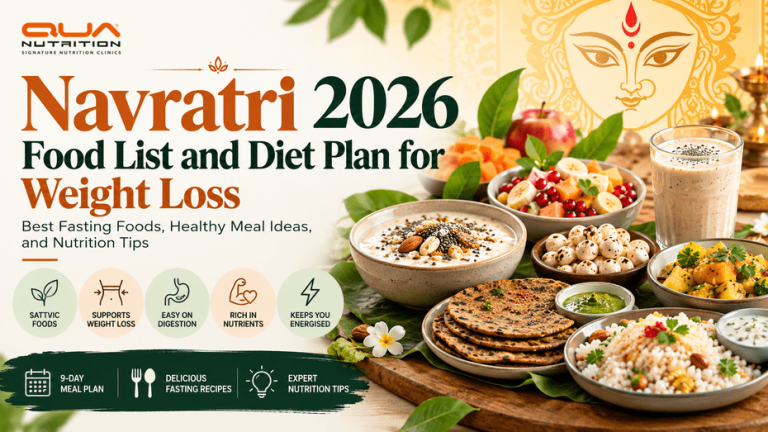

Navratri is more than merely a festival – it’s a procession of spirituality, devotion, and discipline. While millions of people across India and worldwide will observe fasting during the nine holy days dedicated to Goddess Durga, fasting involves spiritual satisfaction. However, it also poses a dilemma: how do you conserve energy, stay healthy, and still meet your nutritional needs when you limit your eating habits?
This blog will take you through a nutritious Navratri fasting diet plan with evidence-backed science and traditional cultural wisdom. This blog also provides the best eating practices and foods during Navratri and what to avoid, as well as personalizing it with QUA Nutrition.
Why Nutrition Matters During Navratri Fasting
Fasting during Navratri is a little different than regular fasting. Unlike intermittent fasting, which places restrictions on meal timing only, fasting during Navratri places restrictions on the type of food you eat. Grains (like wheat and rice), lentils, and certain vegetables are usually avoided. Foods that are considered “vrat-friendly” are consumed. These foods include fruits, dairy (milk, yogurt, etc.), nuts, seeds, potatoes, and special flours such as rajgira (amaranth) and singhara (water chestnut).
If planning is not done properly, fasting any time – but especially during Navratri—on these restrictions may lead to:
- Fatigue and weakness due to a lack of complex carbohydrates.
- Nutrient insufficiencies, especially protein and fiber.
- Dehydration; often not considered because many forget to add hydration with food.
- Fluctuations in blood sugar, especially for those with diabetes.
This is why it is very important to follow a scientifically planned Navratri diet plan for 9 days to nourish your body, give you energy, and make you feel full.
The Science Behind Fasting
Fasting from a nutritional perspective has both some positive aspects and some negatives, depending on how you fast:
Positives:
- Fasting may promote detoxification, especially when fasting gives your digestive system a break.
- It could support fat metabolism when your body is using stores of fat for energy.
- Fresh fruits, nuts, and dairy contain antioxidants that help with immunity.
Negatives (if you don’t plan for it):
- Overeating fried vrat foods like sabudana vadas or pakoras can lead to acidity, weight gain, and low energy.
- Giving up on protein-rich foods or meals may lead to muscle weakness and cravings for sugar.
- Not hydrating properly may lead to headaches, fatigue, and constipation.
So, it’s time to ask yourself: How can I enjoy fasting during Navratri while ensuring that my body receives all essential nutrients?
Navratri Diet Plan: A Balanced Daily Menu
Here is a balanced Navratri diet plan for a single day. It includes foods that provide complex carbohydrates, protein, healthy fats, vitamins, and minerals. The 9-day menu further down simply rotates these meals.
Morning Ritual:
- Warm lemon water and soaked nuts: almonds, walnuts, or raisins (a source of antioxidants and healthy fats).
- Coconut water or buttermilk: good for hydration and electrolytes.
Breakfast:
- Sabudana khichdi with peanuts: provides carbohydrates for energy. The protein comes almost entirely from the peanuts, so keep the portion small and add vegetables.
- Amaranth (rajgira) porridge: rajgira is a good source of protein, calcium, and iron.
- Fruit bowl with chia seeds: provides fiber and antioxidants for gut health.
Mid-Morning Snack:
- Roasted makhana: a crunchy, low-fat snack. A 30 g handful gives roughly 3 g of protein.
- Banana with peanut butter: a good mix of carbohydrates and protein.
- Apple with a handful of walnuts: helps with satiety and supports brain health.
Lunch:
- Kuttu (buckwheat) or singhara rotis with curd.
- Potato or pumpkin curry made with a moderate amount of oil.
- Cucumber raita with mint for cooling.
- Salad of cucumber, tomato, pomegranate, and a pinch of rock salt.
Evening Snacks:
- Green tea or herbal tea with roasted nuts.
- Paneer cubes sautéed with sendha namak and pepper.
- Fruit chaat sprinkled with rock salt and lime.
Dinner:
- Samak rice pulao with vegetables such as bottle gourd, carrot, or beans.
- Lauki (bottle gourd) soup or tomato soup.
- Sweet potato tikki, roasted instead of fried.
Bedtime:
- A glass of warm milk with nutmeg or turmeric. Milk adds protein and calcium before bed.
(Helps improve sleep quality and supports muscle recovery)
Navratri Diet Plan for Weight Loss: How to Lose Weight Safely While Fasting
A Navratri diet plan for weight loss works when you stay in a moderate calorie deficit and still get enough protein, fiber, and fluids. Nine days of skipping meals or living on fruit alone mostly costs you muscle and energy, not fat.
What is realistic in 9 days
Health bodies such as the WHO and NHS recommend losing 0.5–1 kg per week as a safe pace. Over nine days, that works out to roughly 0.6–1.3 kg of body fat. The scale may drop faster in the first few days, but early loss is largely water and stored glycogen, not fat. Losing faster than 1 kg a week raises the risk of muscle loss, nutrient deficiencies, and weight regain.
The calorie math
About 7,700 kcal equals 1 kg of body fat. A daily deficit of 500–750 kcal is commonly recommended for steady loss, which is roughly 0.5–0.75 kg per week. Your own target depends on your age, sex, weight, and activity level, so a dietitian can calculate it for you. Very low-calorie diets are not advised without medical supervision.
Why Navratri can support weight loss
- Refined flour, packaged snacks, and sugary drinks are usually off the menu.
- Meals are simpler and mostly home-cooked.
- Fruit, curd, makhana, and nuts are easy to portion.
Where vrat food quietly adds calories
| Common vrat food | Why it slows weight loss | Better choice |
|---|---|---|
| Kuttu puri, sabudana vada, pakoras | Deep-fried, so very high in fat and calories | Pan-cooked kuttu or singhara roti, baked sabudana tikki |
| Large bowl of sabudana khichdi | About 350 kcal per 100 g dry sabudana, almost no protein, and a high glycemic index (reported around 67–80) | A small portion with peanuts, curd, and vegetables |
| Ghee-roasted makhana and big handfuls of nuts | Ghee-roasting and heavy nut portions add calories quickly | Dry-roasted makhana, about 30 g, and a small handful of nuts |
| Potato-heavy meals | Starchy and can spike blood sugar | Mix potato with lauki, pumpkin, or cucumber |
| Kheer, halwa, sweets, packaged drinks | Added sugar | Fruit, or a small portion of a swe |
Ground rules for weight loss during Navratri
- Put protein in every meal and snack: curd, paneer, milk, nuts, and amaranth.
- Fill half your lunch and dinner plate with vegetables such as lauki, pumpkin, cucumber, and tomato.
- Eat every 3–4 hours. Long gaps lead to overeating at the next meal.
- Drink 8–10 glasses of water, plus coconut water or buttermilk.
- Cook light: steam, roast, or sauté instead of deep-frying.
- Stay active. Aim for around 150 minutes a week of moderate activity such as brisk walking, and keep it light to moderate while fasting.
- Sleep 7–8 hours. Poor sleep increases cravings.
What to avoid
Do not follow a water-only, juice-only, or fruit-only fast to lose weight faster. It can cause dizziness, headaches, fatigue, and muscle loss, and the weight usually returns once you eat normally.
After Navratri
Reintroduce wheat, rice, and dal gradually, and avoid a heavy, sweet-filled meal on the day you break the fast. Carrying the habits forward, such as protein at every meal and fewer fried foods, is what keeps the weight off.
Navratri Diet Plan for 9 Days Weight Loss: Day-by-Day Menu
This Navratri diet plan for 9 days weight loss rotates light, protein-rich vrat meals so you never repeat the same heavy dish and never go hungry for long. Dates follow Sharad Navratri 2026 (11–19 October). Start every day with warm lemon water and a few soaked almonds or walnuts, and end it with a glass of warm milk.
| Day | Breakfast | Lunch | Snacks | Dinner |
|---|---|---|---|---|
| Day 1 | Rajgira porridge made with milk, topped with chia seeds | 2 kuttu rotis, lauki sabzi, curd | Roasted makhana, green tea | Samak rice pulao with vegetables, cucumber raita |
| Day 2 | Fruit bowl with curd and chia seeds | 2 singhara rotis, paneer-capsicum sabzi, salad | Banana with peanut butter, buttermilk | Lauki soup, 2 roasted sweet potato tikkis |
| Day 3 | Small bowl of sabudana khichdi with peanuts and vegetables, plus curd | 1 cup samak rice, pumpkin curry, cucumber raita | Apple with walnuts, herbal tea | Tomato soup, paneer cubes sautéed with sendha namak |
| Day 4 | Milk smoothie with banana and chia seeds | 2 kuttu rotis, lauki sabzi, curd, salad | Roasted makhana, coconut water | Samak rice vegetable khichdi |
| Day 5 | Rajgira porridge with chopped nuts | 2 singhara rotis, lauki-potato curry (small potato portion), curd | Fruit chaat with rock salt and lime | Lauki soup, sautéed paneer |
| Day 6 | Pan-cooked kuttu cheela with mint-curd chutney | Samak rice pulao, cucumber raita, salad | Roasted makhana, buttermilk | Tomato soup, 2 roasted sweet potato tikkis |
| Day 7 | Banana, apple, and papaya bowl with curd | 2 kuttu rotis, pumpkin curry, curd | Apple with walnuts, green tea | Samak rice pulao with beans and carrot, salad |
| Day 8 | Rajgira porridge with chia seeds | 2 singhara rotis, paneer sabzi, cucumber raita | Fruit chaat, herbal tea | Lauki soup, small bowl of samak rice |
| Day 9 | Fruit bowl with milk and chia seeds | 2 kuttu rotis, pumpkin curry, curd | Roasted ma |
How to use this plan
- Portions are a guide: about 1 cup cooked samak rice, 2 medium rotis, and 30 g makhana. Adjust to your hunger and size.
- Cook with 1–2 teaspoons of oil or ghee per dish, and dry-roast makhana.
- If you have diabetes or prediabetes, replace the sabudana day with rajgira porridge or a paneer and fruit meal.
- Skip any food your doctor has asked you to avoid, and see the section below on who should check with a doctor first.
- This is a general template. Calorie needs vary widely, so a dietitian can adjust portions to your weight, goals, and health conditions.
Nutrition Facts of Common Navratri Foods
Kuttu, rajgira, and makhana give you far more protein and fiber than sabudana, which is why they anchor this Navratri diet plan and why sabudana is best kept to a small portion.
| Food (per 100 g) | Energy (kcal) | Protein (g) | Worth knowing |
|---|---|---|---|
| Makhana (popped) | About 330–360 | About 8–10 | A 30 g serving gives roughly 100 kcal and 3 g protein. Ghee-roasting adds calories. |
| Kuttu (buckwheat) flour | About 343 | About 13 | Around 10 g fiber, a low-to-moderate glycemic index (about 54), gluten-free. |
| Rajgira (amaranth) flour | About 370 | About 13–14 | Around 7 g fiber, a good source of calcium and iron, gluten-free. |
| Sabudana (dry pearls) | About 350 | Less than 1 | About 86 g carbohydrate, almost no fiber, and a high glycemic index (reported around 67–80). Protein in khichdi comes from the peanuts. |
Values are approximate and vary by brand, processing, and cooking method.
Foods to Include in Navratri Diet
While planning your Navratri fast diet plan, these are the foods that you should include in your diet for a healthy fast.
- Complex carbohydrates: Samak rice, kuttu, rajgira, singhara.
- Protein sources: Paneer, curd, milk, nuts and seeds, and amaranth.
- Healthy fats: Ghee (in moderation), coconut, flaxseeds, and walnuts.
- Hydration: Coconut water, lemon water, buttermilk, and plain water.
- Micronutrient boosters: Fruits (banana, apple, papaya, pomegranate) and vegetables (lauki, pumpkin, cucumber).
Foods to Avoid During Navratri Fasting
To stay healthy during the Navratri fasting, you should understand which foods you should avoid.
- Fried snacks such as puris and pakoras.
- Excess sugar or sweetened foods from refined sources.
- Excess potatoes (they can create a sudden blood sugar increase).
- Soda and packaged drinks.
- Skipping meals (it causes you to eat more later in the day).
Tips for a Healthy and Energetic Navratri Fast
To make the most of your Navratri fast, here are some easy tips to help you stay healthy, active, and spiritually focused
- Focus on protein: Incorporate paneer, nuts, and amaranth to reduce muscle loss.
- Stay hydrated: Drink 8–10 glasses of water a day.
- Cook light: Steam, roast, or sauté instead of deep-frying.
- Be wary of portion sizes: Eat smaller meals every 3–4 hours.
- Don’t skip the fruit: It provides quick energy and antioxidant value.
- Eat mindfully: Select sattvic foods that nourish both body and mind.
How QUA Nutrition Can Help You During Navratri
Each person’s experience with fasting is different. Some may want to lose weight, while others want to preserve muscle mass. If you’re an athlete, you may be gaining energy for training during Navratri. That’s why QUA Nutrition offers individualized diet plans.
At QUA Nutrition, our dietitians will:
- Assess your health status, goals, and lifestyle.
- Write an individualized Navratri diet plan for 9 days tailored to ensure an appropriate mix of nutrients.
- Give specific guidance on portion sizes, food timing, and fluids to ward off fatigue.
- Manage specific medical conditions like diabetes, thyroid, or PCOS.
With evidence-based meal plans and individualized coaching, QUA Nutrition ensures your fast is spiritual but healthy, energizing, and fruitful.
Stay Healthy During Navratri With Experts Guidance
Navratri marks a period of worship, positivity, and purification of body and mind. By adhering to a healthy, nutritious Navratri fasting diet plan, you can stay energized and health-driven and enjoy the real benefits of fasting. Avoid processed and fried foods, drink plenty of liquids, and choose conscious food options like amaranth, buckwheat, paneer, nuts, and fresh fruits.
If you are looking to elevate your fasting nutrition even more, QUA Nutrition can craft a plan just for you—whether your objectives are weight management, fitness, or just wanting to stay more active during the festival. This Navratri, let your fasting be a celebration of health in addition to devotion. Contact us now!
FAQs
- Am I able to reduce weight while I am fasting for Navratri?
Definitely, if you stick to eating light, nutrient-dense foods that do not contain fried snacks, you can lose weight. However, if you eat a large amount of high-calorie vrat foods such as fried sabudana, you can gain weight.
- Which flour for rotis would be good for fasting during Navratri?
Kuttu (buckwheat), rajgira (amaranth), and singhara (water chestnut) flours are great options because they are gluten-free, protein-rich, and a vegetable-based energy source.
- How do I ensure I can fast with diabetes?
If you have diabetes, it’s best to stick to low GI foods, such as samak rice, paneer, nuts, and vegetables. You may want to limit the amount of potatoes and fried foods that you eat. You may want to see a nutritionist to get personal feedback, too.
- Can I exercise during Navratri?
Definitely yes! Just keep it light to moderate. Stick to yoga, walking, or stretching. If you’re an athlete, you can see a nutritionist to get a feel for how much to eat.
- How can QUA Nutrition help me during fasting?
QUA Nutrition will work with you to develop a diet plan that is catered specifically to you, your goals for fasting, medical history, and lifestyle habits. You will feel energetic, you will not have any deficiencies, and you will be able to fast for the rest of the week without causing you any health concerns.